Many products are
manufactured and assembled on a production line. Before the introduction
of computer control and robots production lines were operated by people.
Each person would carry out a limited number of tasks or even just one
task and the product would then be passed down the production line to the
next person. This would continue until the product was completely
assembled.
Some modern production lines still operate in the same way whilst others
rely on robots and computer control or a combination of people and
machines.
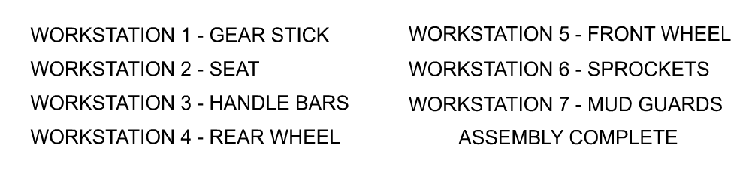
The example production line
seen below has been simplified. This production line is for the assembly
of a bicycle (seen above). As the bicycle frame travels down the
production line each person at a workstation workstation has a specific
task to carry out ( see below).
ADVANTAGES: A production line is a very efficient way of manufacturing and
assembling a product. A car is composed of thousands of components and yet
hundreds of cars roll of the production line of a typical car plant every day.
If each car was to be assembled by a group of individuals in a garage rather
than on a production line it could take months to produce just one.
DISADVANTAGES: However, the workers on production lines often complain that
little skill or training is required to complete their individual tasks and that
working on a production line is extremely boring and unfulfilling. Workers often
see their task as not being very important as they are just producing one small
part of a larger product made up of thousands of components.
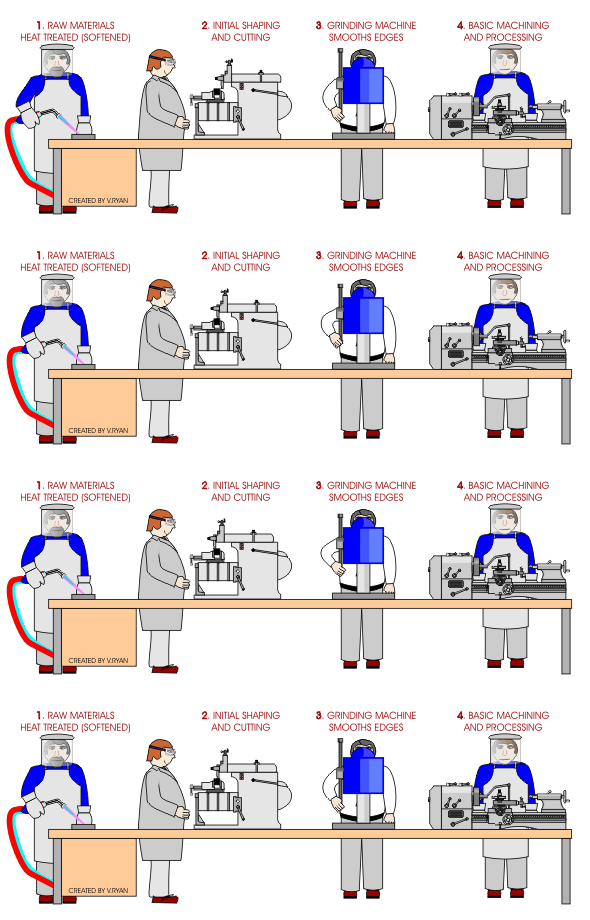
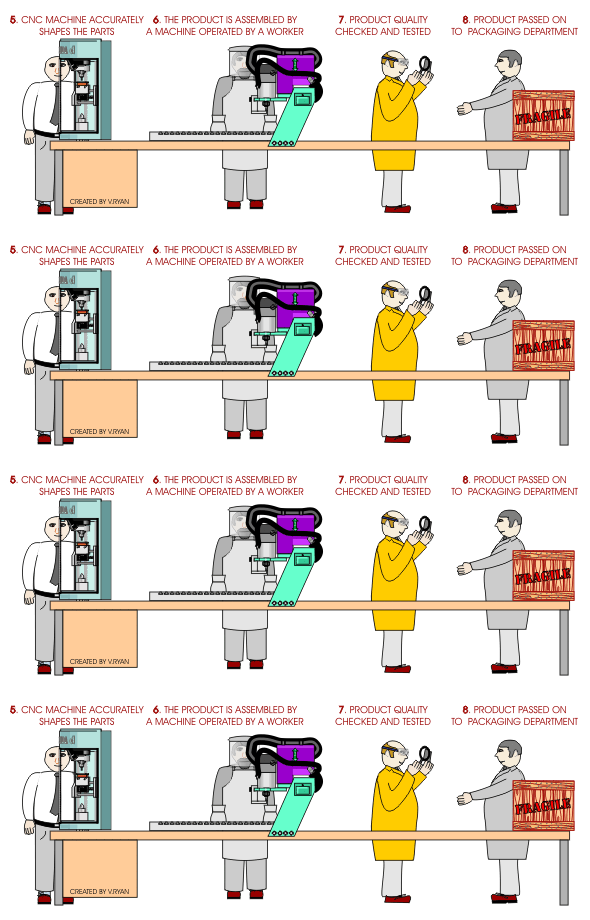
Products go through a number of stages during the
manufacturing process, whether they are manufactured in a full scale factory
employing hundreds / thousands of people OR in a small factory unit
employing two or three people. The basic stages of production are shown
below.
The way products are manufactured depends on the
quantity required. For example, cars are continually manufactured in
hundreds of thousands , a prototype is a ‘one off’ (just one made) and DIY
furniture is made in batches of thousands or hundreds. There are three
main types of production and they are described below.
SCALE OF
PRODUCTION
SAMPLE
PRODUCTS
DESCRIPTION / DETAIL
CONTINUOUS
CARS
PETROL / OIL PRODUCTS
BRICKS
MANY FOOD PRODUCTS
1. PRODUCTION LINE SET UP 2. PRODUCTION LINE SPLIT INTO SEPARATE
OPERATIONS. UNSKILLED AND SEMI SKILLED WORKFORCE REQUIRED. 3. PRODUCTION LINE RUNS 24 HOURS A DAY 365
DAYS A YEAR. 4. HIGH LEVEL OF FINANCIAL INVESTMENT NEEDED
AS SPECIALIST MACHINERY IS USUALLY REQUIRED. 5. QUALITY CONTROL AT EVERY STAGE.
1. FLEXIBLE PRODUCTION
LINE SET UP - MUST B E ABLE TO CHANGE WHEN THE PRODUCT CHANGES 2. PRODUCTION LINE SPLIT INTO SEPARATE
OPERATIONS. UNSKILLED AND SEMI SKILLED 3. PRODUCTION LINE RUNS FOR A SPECIFIED
AMOUNT OF TIME UNTIL THE CORRECT NUMBER OF PRODUCTS HAVE BEEN MANUFACTURED 4. WORKFORCE FLEXIBILITY REQUIRED. WORKERS
MUST BE ABLE TO SWITCH FROM ONE JOB TO ANOTHER. 5. OFTEN COMPONENTS ARE BOUGHT FROM OTHER
COMPANIES AND ASSEMBLED INTO THE NEW PRODUCT
SCALE OF
PRODUCTION
SAMPLE
PRODUCTS
DESCRIPTION / DETAIL
SINGLE ITEM /
ONE
OFF
PROTOTYPES
SPECIALIST MODELS
HANDMADE ITEMS
SPECIALIST ENGINEERING
ONE OFFS
1. SMALL SPECIALIST COMPANIES. 2. A SKILLED WORKFORCE - SPECIALIST SKILLS
eg. ENGINEERING. 3. SPECIALIST MATERIALS OFTEN REQUIRED eg.
SPECIALIST MODELLING MATERIALS. 4. HIGH QUALITY PRODUCTS MANUFACTURED. 5. FINAL PRODUCTS OFTEN EXPENSIVE DUE LEVEL
OF SKILL REQUIRED TO MANUFACTURE THEM AND COST OF SPECIALIST MATERIALS. 6. A HIGH STANDARD OF QUALITY CONTROL 7. PRODUCTS MANUFACTURED FOR AS SPECIALIST
MARKET / CLIENTELE.
The way products are manufactured depends on the
quantity required. For example, cars are continually manufactured in
hundreds of thousands , a prototype is a ‘one off’ (just one made) and DIY
furniture is made in batches of thousands. Single item production is
described below.
SINGLE ITEM
PRODUCTION
SAMPLE PRODUCTS
PROTOTYPES
SPECIALIST MODELS
HANDMADE ITEMS
SPECIALIST ENGINEERING
ONE OFFS
CHARACTERISTICS
1. A highly specialised company.
2. Small highly skilled workforce,
possibly one or two workers, sometimes more.
3. Constant communication with the client,
constant discussion regarding the design.
4. Company specialises in particular
areas such as engineering or musical instruments etc...
5. Specialist materials are often required
eg. specialist woods or modelling materials
6. The final product is expensive due to
the level of skill needed to manufacture the
product and the cost of specialist materials
and equipment.
7. A high standard of quality control
8. Products are manufactured for
a specialist market / clientele
eg. musicians, medical profession, aerospace.
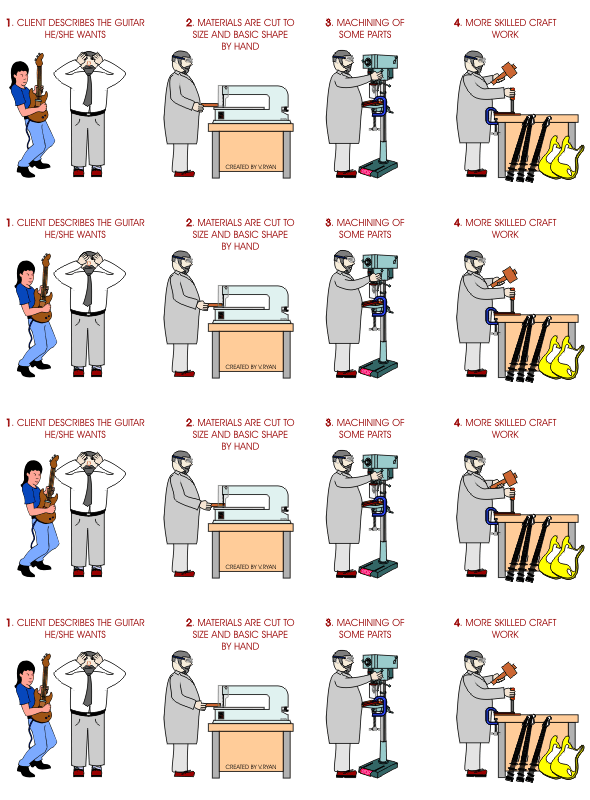
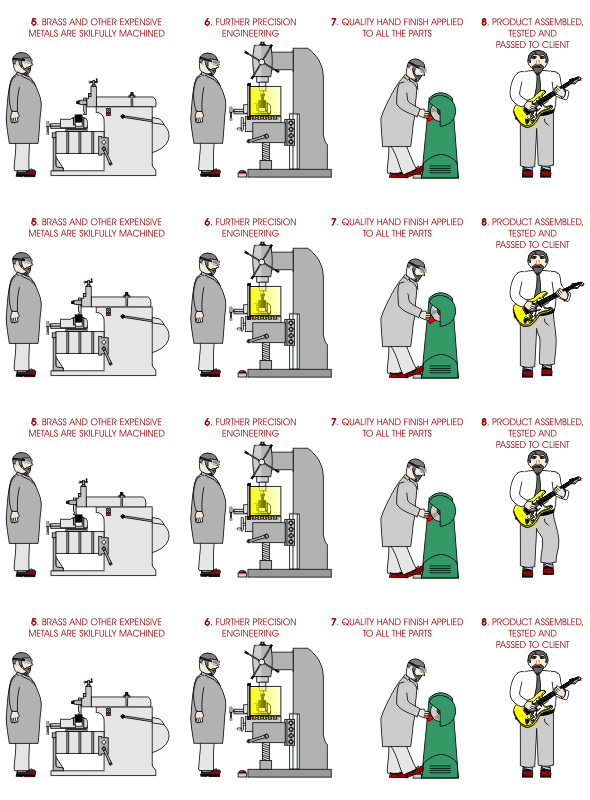
The example specialist company (shown below) has a small
workforce. In this example one highly skilled worker manufactures the entire
item. The skilled worker is highly trained / skilled and makes the product
by hand. The example shown is a specialist a specialist company
manufacturing hand-made guitars. They design and make guitars for
professional musicians.
This is when only one item is made and is sometimes
called ‘one-off production’. Sometimes a company will make one item and
test it to see if it works or if it needs to be improved. This is called a
prototype. Single item manufacture usually involves skilled people
carefully making a special product for a customer, such as a piece of
jewellery.
CASE STUDY - SPECIALIST GUITAR
MANUFACTURERS
The company described below specialises in
manufacturing guitars. These are not mass produced, this means they are
made individually by highly skilled people. They are made from top quality
materials and are expensive. Consequently, only professionals and those
with a great interest in guitars would normally approach a small company
like this to manufacture a one for them. The client (customer) expects a
personal service in which he/she is interviewed several times before a
design is produced and manufactured. A specialist item such as a handmade
guitar may take months to complete.
Question:
In each of
the boxes of the flow chart shown below, write the key words representing
each stage. Starting with the customer (client) approaching the company
about a design to handing the manufactured guitar to the customer.
This company is made up of two people. They make guitars
for customers who are serious musicians and want an ‘exclusive’ design. When
made, the guitar will be expensive because it will be hand made from quality
materials and its manufacture will require individual craft skills as well
as a long time.
Usually a customer will want an unusual or special item
made, in this case a five string bass guitar for a professional musician. An
ordinary guitar will not produce the quality of sound that is needed.
A customer who is prepared to spend a lot of money on a
specially made product will want individual attention. A professional
musician will want to try out a selection of guitars and see examples before
deciding on the final design. This will include meeting regularly with the
designer.
When the customer has discussed designs, materials and
cost with the company he/she has to make the final decision regarding
exactly the design they want. The designer often meets the musician to help
him/her take important decisions until they are ready to make the bass
guitar.
The guitar is made by skilled workers. This takes a long
time and may take weeks to complete.
The way products are manufactured depends on the
quantity required. For example, cars are continually manufactured in
hundreds of thousands , a prototype is a ‘one off’ (just one made) and DIY
furniture is made in batches of thousands. Batch production is described
below.
1. A production line is set up.
2. Each worker completes one task and passing
down the production line to the next worker.
3. The workers are semi skilled or unskilled.
4. The workers must be able to switch from
one part of the production line to another.
They are called a flexible workforce
5. The production line can be changed
quickly, so that different products can be made.
6. Often individual parts of the product are
bought from other companies and assembled
on the production line.
7. The production lines runs for a certain amount
of time and then the product is changed.
The example production line (shown below) is that of an
engineering company, manufacturing small steel products such as hinges and
locks. They manufacture batches of five hundred at a time. The workers are
unskilled and semi skilled. As each task is completed the item being
manufactured is passed down the production line to the next worker, until it
is complete.
If a design was to be manufactured by batch production
several hundred would be made on a production line. Each person/machine on
the production line would complete one part of the product and then it
would be passed on to the next person/machine. Many items in your home
will have been manufactured by batch production - can you name any ?
CASE STUDY - BICYCLE
MANUFACTURE
Modern bicycle manufacture is component based. The
company buys parts such as pedals from other manufacturers and puts the
bicycle together on a production line. This is typical of a company
manufacturing through batch production. Usually a company will manufacture
a certain number of a particular model of bicycle (two to three thousand
at a time) and then move on to another model.
Question:
In each of
the boxes of the flow chart shown below, write the key words representing
each stage.
The tube for the bicycle frame is cut to size. One person
will do this job and they cut enough tube for a batch of several hundred
bikes in a week. The tubes are set up in a ‘jig’ which holds the frame
together. The frame travels along the production line and the joints are
preheated to save time. A gas torch is used to weld the frame together.
After welding the frames and the front forks need
cleaning in the ‘Grit-Blaster’. This shoots tiny particles of sand, at high
speed, at the frame and cleans away the ‘residue’ left behind by the welding
process. All frames are checked to ensure that they are straight. Small
adjustments can be made at this stage.
The frames are now ready for painting. This is done by
using a fine spray which covers every part of the frame with paint. The
frame then moves down the production line into a special oven which ‘bakes’
the paint giving it a tough finish. The wheels are assembled by hand and
they are individually tested in a machine which automatically tensions each
spoke to ensure that they are perfectly straight.
The frames are machined so that other parts such as the
handle bars and the bottom bracket (pedals) can be attached. People operate
the machine tools but they need some training before they can use the
machines safely and efficiently. The bicycles are now ready for the shops
where they will be viewed by customers and agents. Agents will buy ‘batches’
of bicycles for large stores.
Before sending the bicycles to the shops, agents view
them and suggest changes for the next batch. This helps the manufacturer
improve the design and production of bicycles.
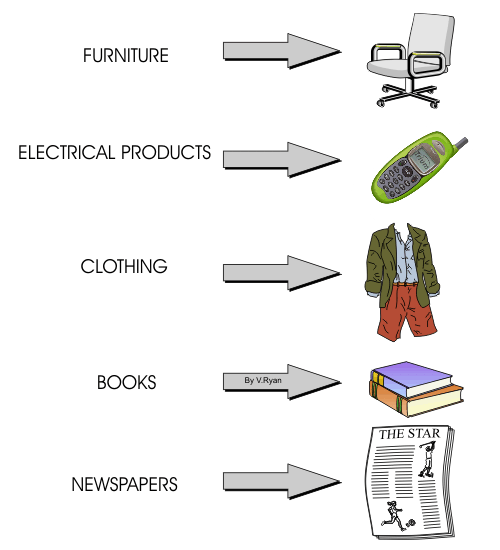
Hundreds / thousands of the same product are
manufactured over a period of time. Good examples include parts or
components for cars. Other examples are seen to the below.
1. Draw a diagram similar to the one shown
below. Your diagram should name some products that are batch manufactured,
and include diagrams/pictures. Present your work in an imaginative way.
The way products are manufactured depends on the
quantity required. For example, cars are continually manufactured in
hundreds of thousands , a prototype is a ‘one off’ (just one made) and DIY
furniture is made in batches of thousands. Continuous production is
described below.
CONTINUOUS
PRODUCTION
SAMPLE PRODUCTS
CARS
PETROL / OIL PRODUCTS
BRICKS
MANY FOOD PRODUCTS
WASHING POWDER
WASHING-UP LIQUID
CARS
CHEMICALS
ELECTRONIC COMPONENTS
PAPER / PULP PRODUCTS
CHARACTERISTICS
1. An semi-automated production line is normally set up.
Relying on computer control as well as human labour.
2. Workforce comprised of skilled and unskilled workers.
Workers less flexible than those working in batch production
as the product rarely changes.
3. Production line runs 24 hours a day,
365 days a year.
4. A high level of investment in machinery,
equipment.
5. Limited training of staff as the product and
equipment changes slowly. Training only needed when
up-dated equipment is introduced or new staff start.
6. Quality control at every stage of production. Sampling
takes place at different stages of production.
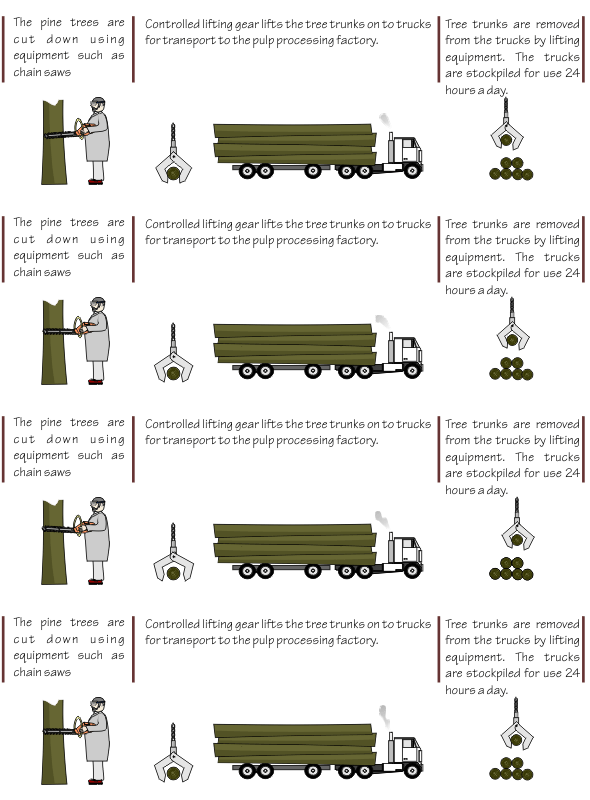
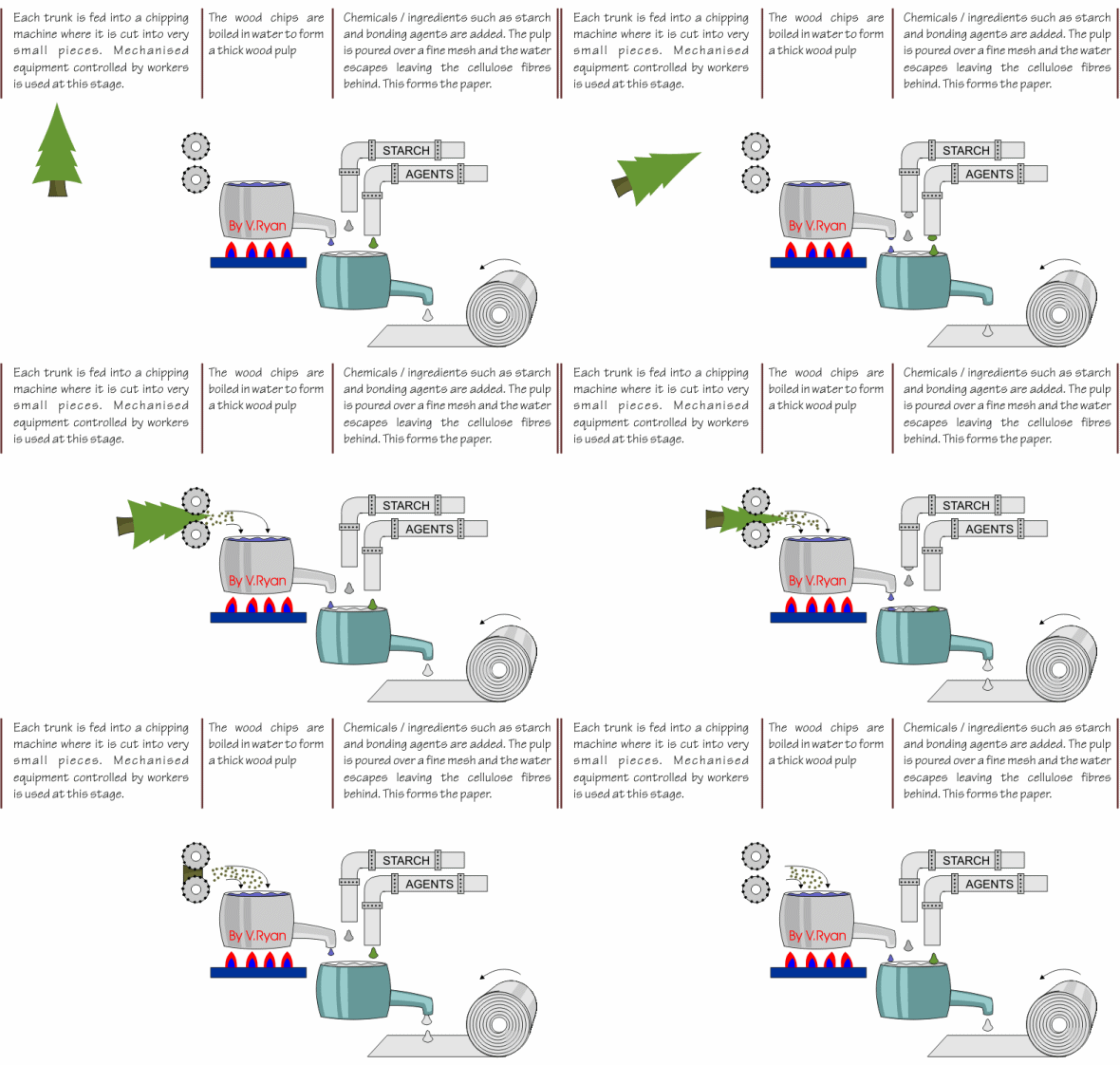
The example company (shown below) processes trees (pine)
into wood pulp for the paper / card and newspaper industries. Demand for
these products is so high that production is continuous, twenty four hours a
day. Semi skilled workers are required for the cutting of the trees,
replanting and transportation. Once processing starts, computer controlled
automated equipment takes over.
If a design is to be manufactured by continuous
production (sometimes called LINE production) the factory / production
line will operate continuously day and night. In this way thousands of the
product can be manufactured. All machines are arranged on the factory
floor so that the product is passed from machine to machine.
CASE STUDY - CAR BODY
CONTINUOUS PRODUCTION
Take time to look at the body of a car. It is a complex
piece of engineering. It is designed to be strong, light and to prevent
rust even in the worst weather.
Question:
In each of
the boxes of the flow chart shown below, write the key words representing
each stage.
A design team will take months to design a car body.
Prototypes will be made and tested to ensure that they can withstand extreme
conditions like rough roads and to ensure that they will not rust. A car
body is made from steel sheet. To help prevent it rust it is coated with
zinc. Rolled steel sheet is ‘dipped’ into a number of zinc plating cells
after it has been cleaned. This is a continuous process.
Once coated with zinc, the steel is pressed into panel
shapes for various parts of a car body. The ‘press’ is very powerful and is
kept behind safety cages so that people cannot get close. When a sheet of
steel is pressed into a shape it is automatically moved out of the way.
Panels are usually made up of two sides. They are joined by glue and then
pressed together.
Robots are used to weld all the panels together. This is
done with great precision and can be carried out twenty four hours a day.
The robots do not get tired and only need maintenance occasionally. The car
body is cleaned very carefully before it can be painted. At this stage the
body is called ‘the body in white’. Without careful cleaning the paint will
not take to the steel body properly and it will have a poor finish.
The underneath of the car body is sealed with a PVC
sealant. This will prevent water getting into areas where it will eventually
cause rust. Eventually, the entire underneath of the car is sealed. This
helps prevent stones from the road causing damage. The car body is now ready
for painting. The paint is applied with special sprays which coat the steel
several times with primer paint, coloured paint and a clear finish.
Wax is injected into cavities which could hold rain
water. The wax stops water entering and so the car body will not rust for
many years
New models of car are tested on the test track. The aim is to make the car
body rust. The test results of the tests are used by designers to improve
the design so that rust will eventually be a thing of the past.
This is the complete automation of a manufacturing
facility such as a factory. All functions are under computer control. This
starts with computer aided design, followed by computer aided manufacture,
followed by automated storage and distribution. One integrated computer
system controls all that happens.
The animation below shows how a computer control room
directs all operations inside the factory. The factory below manufactures
DVD / CD Storage units. The computer system is in control of every stage
from design and the ordering of materials to the manufacturing processes
and distribution to customers.
This is the complete automation of a manufacturing
facility such as a factory. All functions are under computer control. This
starts with computer aided design, followed by computer aided manufacture,
followed by automated storage and distribution. One integrated computer
system controls all that happens.
Stage One -
Computer Aided Design. A product is designed totally on computer.
When complete it is tested or its functions simulated on screen before
even a prototype is made. If a circuit is involved it is designed by using
software and tested on screen. Improvements / alterations are made to the
design using the same CAD software.
Stage Two -
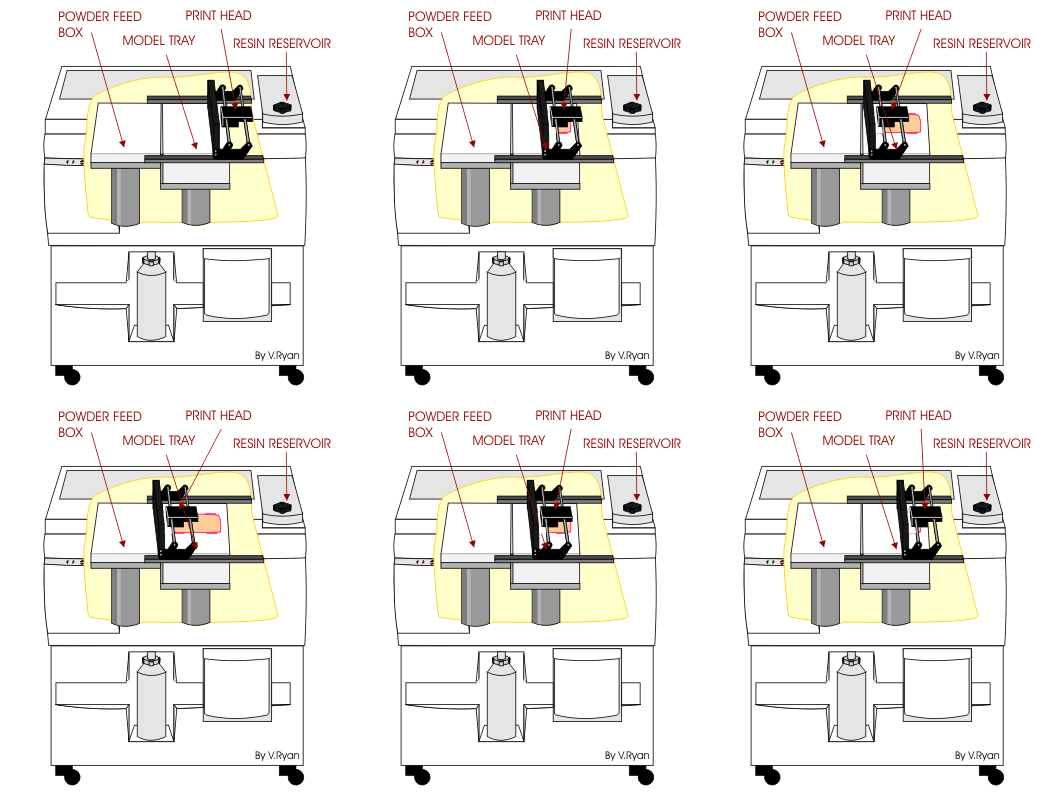
Prototype Manufacture. Prototypes are manufactured on machines such
as 3D printers which produce an accurate 3D model. CNC routers and laser
cutters may also be used to produce a realistic model. Sometimes working
models are manufactured.
Stage Three - The computer system
controlling the plant works out the most efficient method of manufacture.
It calculates costs, production methods, numbers to be manufactured,
storage and distribution.
Stage Four - The computer system
orders the necessary materials to manufacture the product. Keeping costs
to a minimum. The ‘just in time’ philosophy is applied. This means that
materials / components are ordered as needed. Very little is stored at the
factory. Usually only enough materials are stored to keep the factory
going for a small number of days. Materials are automatically reordered
when required, to keep the factory working smoothly and continuously.
Stage Five - Manufacturing begins with
the product being made using CAM (Computer Aided Manufacture). Computers
control CNC machines such as laser cutters, CNC routers and CNC lathes.
Stage Six - Quality control is applied
at every stage. The product is tested using computer control inspections.
For instance, the accuracy of manufacture is tested automatically. This
ensures that the product is manufactured to the correct sizes.
Stage Seven - The product is assembled
by robots. This is automated (controlled) by the computer system.
Stage Eight. The product is quality
checked before being stored for distribution to the customer. All storage
is automated. This means that computer controlled vehicles move the
finished product from the manufacturing area to storage. The computer
systems keep track of every individual product. Products are bar coded
which are constantly scanned and recorded by the computer system.
Stage Nine - The product is
automatically moved from store to awaiting lorries / trucks for
distribution to the customer.
Stage Ten - Financial accounts are
updated, bills chased up and paid by the computer system.
1. A DVD / CD
storage unit is designed using CAD (computer aided design software).
2. A prototype /
accurate model of the DVD storage unit is manufactured on a 3D printer.
This allows the design team to check that the design is perfect, before
full scale manufacture takes place.
3. Once the design
has been agreed by management materials are ordered. Once production of
the DVD storage unit starts all ordering is carried out automatically by
the computer system. The system monitors the use of materials in the
factory and reorders materials and components as they are required.
Spreadsheets are used for this purpose.
4. Computer
controlled injection moulding machines are used to manufacture the DVD
storage units. The computer system controls the amount of polystyrene
granules fed into the machine, it monitors the temperature as it rises and
controls the injection of the fluid polystyrene into the moulds.
5. The computer
system monitors the quality of the products manufactured. In this example
the DVD storage unit is tested for accuracy of manufacture by measuring
vital distances.
Storage units that are too small or large are rejected and their materials
recycled.
6. The finished
items are packaged and stored for distribution to customers. This process
is automated, controlled by the computer system. The finished items are
moved efficiently round the factory to the storage area. Computer
controlled vehicles carry out this job.
When designing and manufacturing it is usual to carry
out these functions in the same place. For instance, for many decades the
car manufacturing industry in the UK designed and manufactured cars on the
same site.
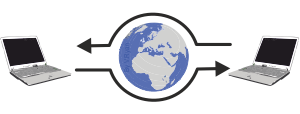
Today it is common to have designers in one country sending their designs
across the world to another country where manufacturing takes place. This
is part of what is known as the global economy. Often it is cheaper to
manufacture products in the Far East, in countries such as China whilst
designing in Europe or the USA.
A typical example is seen below. The book publishing
industry in the UK has seen a shift in its printing (manufacturing) from
Europe to Hong Kong or Korea. However, the layout design and content of
books remains in the UK.
The book seen below is written by its author in Manchester. The book title
is ‘English Castles and Fortifications’. Although this is a book for a
limited market , it makes sense to write and complete all the layout and
planning in the UK. Then all the details and information can be sent
electronically to the printing works in Hong Kong. It is cheaper to print
in the Far East and then transport the books back to the UK for sale. This
called remote manufacturing.
Multiple copies of the first edition are
printed. The first batch numbers five thousand. It may be necessary to
print more batches if sales go well back in the UK.
1. Describe another
industry that relies on remote manufacturing. Explain the stages of design
and manufacture.
2. Explain
the advantages and disadvantages of Remote Manufacturing.
When designing and
manufacturing it is usual to carry out these functions in the same place.
For instance, for many decades the car manufacturing industry in the UK
designed and manufactured cars on the same site in the UK.
Today it is common to have designers in one country sending their designs
across the world to another country where manufacturing takes place. This
is part of what is known as the global economy. Often it is cheaper to
manufacture products in the Far East, in countries such as China whilst
designing in Europe or the USA.
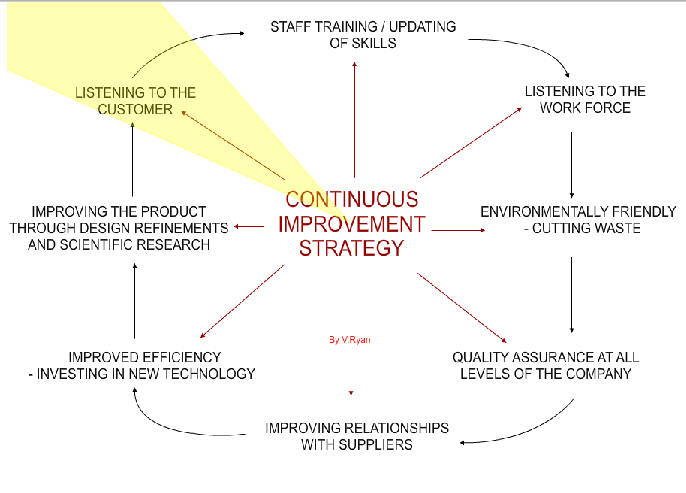
Companies and businesses around the world operate in a
competitive marketplace. For example the Car Manufacturing Industry.
Companies such as Ford, Peugeot, BMW and Toyota are competing directly
against each other. In order to ensure their survival it is essential that
they continually improve their products and customer service. This process
is called ‘Continuous Improvement’.
The aim of companies operating a Continuous Improvement system is to
improve their manufacturing system, their product and to create
opportunities for further improvement.
IMPROVING THE MANUFACTURING
SYSTEM
This is usually achieved by improving the efficiency of
the production line. One way of doing this is by reducing waste. Waste
materials can be recycled and used again or sold as scrap rather than
being thrown away.
Quality Assurance will ensure that the entire
manufacturing system is more efficient and that time is not wasted. (See
Quality Assurance sheet).
IMPROVING MANUFACTURING TECHNOLOGY
A company continually improving its manufacturing
efficiency will invest in new up to date technology. An example is seen
below. This is a laser cutter which cuts materials extremely accurately
and quickly. Companies that invest in this type of hi-tech equipment will
be more efficient than their competitors. Although machines like this can
be expensive the efficiency improvements to a production line makes it
worthwhile. The laser cutter seen below is being used by a company
manufacturing boomerangs. The laser cutter makes it possible for
boomerangs to be manufactured to high accuracy and at speed.
CUSTOMER SATISFACTION SURVEYS
Companies must always ask their customers for feedback.
Feedback means asking the customer what they like about the product and
how they think it could be improved. Customers are very important to any
company selling products. Without customers the product will fail to sell.
Listening to the needs of customers is a high priority to any company
aiming to continuously improve.
IMPROVING THE RELATIONSHIP WITH SUPPLIERS
Forming a good relationship with the suppliers of raw
materials and components for the manufacture of a product is another
important factor in the Continuous Improvement Strategy.
Suppliers are more likely to act swiftly to enquiries and to supply
materials and components if communication between a company and supplier
is professional and pleasant. A company that pays its suppliers bills
quickly are always going to get a better service from the supplier than
one that pays late.
Improving staff training means that staff are more
efficient on the production line, in the offices including marketing
staff. This will lead to product and sales improvements. Although it is
costly to spend time training staff, in the end it means the company makes
more money as it is more efficient and the staff feel valued. Better job
satisfaction is the result of good training and employees tend to be loyal
to the company that employs them.
IMPROVING THE PRODUCT
If the product is continually improved by the designers
it should become more efficient and have a better level of performance.
Workers on the production line are encouraged to suggest improvements to
the product they are making. The boomerang shown below has been improved
so that it is more accurate.
Customers are also interviewed regularly as to any improvements that can
be made to the product. This is a continuous process.
The design team constantly seek to update and improve
the design so that its performance is improved. This may involve constant
scientific research such as improving the materials used or the
style/shape of the product. Often research scientists will work with the
design team.
A Flexible Manufacturing System is one that can be
changed or adapted rapidly to manufacture different products or components
at different volumes of production. Flexible manufacturing systems are
usually seen at their most efficient when manufacturing components rather
than finished products.
MACHINE FLEXIBILITY:
When machines are used to manufacture a variety of products/components
this is called ‘machine flexibility’.
A good example is a company that specialises in manufacturing injection
moulded components. The component design may change very quickly but as
long as the mould is updated / modified the injection moulding machine can
still operate. Computers monitor the supply of materials, monitor the
operating temperatures and quality control. Machines of this nature are
adaptable and are ideal for FMS.
The
products below are CD /DVD storage units. The injection moulding machine
is an example of machine flexibility because the mould can be changed
quickly and different designs can be manufactured.
ROUTING FLEXIBILITY:
When the manufacturing system is flexible enough to absorb changes in
manufacturing capacity such as an increase in the number of units being
made this is called ‘routing flexibility’. This may be achieved by
selecting the right path through which the product or component flows
through the production line. A production line that has enough
manufacturing capacity that can be utilised quickly is one that has
routing flexibility. For example a CD/DVD manufacturing facility may have
a number of manufacturing units in standby mode until their capacity is
required. When not required units can be shut down rapidly. This makes a
manufacturing plant more efficient.
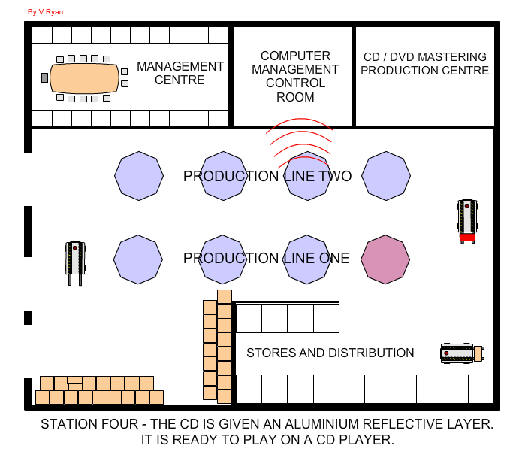
The example below shows a CD/DVD manufacturing plant. It
has two production lines. Each production line is automated and can be
activated very quickly. For example, if there is a need to increase the
manufacture of a new music CD, both production lines can be used. Also, if
there is a need to speed up any stage of manufacture, for instance the
screen printing of each completed CD - then the screen printing bay of each
production line can be used. This system has built in flexibility.
The music is then transferred on to a MASTER CD which
will eventually be used to manufacture thousands of CDs. At this stage the
master CD is made of two layers - glass and a photoresist layer. The laser
burns pits into the surface of the photoresist and this is how the music
is stored on the disc.
A nickel layer is added to protect the delicate glass
with its music burnt into the surface. Nickel is a metal and cannot be
damaged easily.
This is the MASTER CD-ROM and it will be used to press the music into
other blank CDs.
The CD you buy in the shops is mainly made of
polycarbonate (plastic). Before music can be stamped into its surface, the
blank CD is made by injecting hot plastic into a mould, at very high
pressure. When the mould opens the blank CD is removed automatically and
then a new blank is made. Computers monitor the temperature of the plastic
and the pressure.
The MASTER CD is now used to stamp the music into the
surface of the blank plastic CD. An automatic stamping machine is used for
this process. It is computer controlled so that just the right amount of
pressure is used to press the master CD into the blank plastic CD. The
plastic CD is then moved onto the next process.
The plastic CD is then given an aluminium layer.
Without this the laser beam in the CD player would shine straight through
the plastic CD. The aluminium reflects the light from the laser making it
possible for the CD player to change the reflected light into music.
Lacquer is then sprayed on the surface of the CD. This
helps protect it from scratches and damage. The lacquer can withstand most
scratches although with effort it can be damaged to such an extent that
the CD will not play.
A screen printer is then used to apply all the colour -
pictures and text - to the final surface of the CD. Ink is used as this
gives a good finish and it is permanent. Click
here for basics on screen printing.
‘Just in Time’ is a
system based on efficient organisation, from receiving a customer order,
the manufacture of the product on the production line and finally
distribution. This system is often called ‘lean manufacture’. Just in Time
relies on a good, efficient working relationship between the supplier /
suppliers, the manufacturer and the distributer. If one of the links is
inefficient, the entire system slows or fails, leading ultimately to
customer dissatisfaction.
JIT - BASIC STAGES
When an order for a batch of products arrives
at the manufacturing company, it is dealt with quickly and processed by
administrative staff.
Materials / components are ordered from a
supplier or suppliers. Contractual agreements between the supplier and
manufacturer, ensure that they arrive at the manufacturing plant within
twenty four hours (or sooner).
As soon as the materials / components arrive,
they are processed on the production line, so that the batch is manufactured
without delay.
When the batch of products is ready,
distribution to the customer takes place. Distribution is often
subcontracted to a haulage company.
ADVANTAGES OF JUST IN TIME (JIT)
Only the amount of components / materials for
the customer order are purchased from the supplier/ suppliers. Consequently,
money is not wasted on extra materials / components that then need storing.
The money saved can be invested in staff training, updating equipment and
machinery, advertising and even research into new products.
Just in Time means that the customer is supplied with an order quickly. This
builds a reputation for reliability, helping some companies to establish a
brand.
Just in Time demands efficiency at every stage and this becomes the business
culture of suppliers, manufacturers and distributors.
The production line must be efficient and flexible, so that orders of
varying quantities can be manufactured on time and within cost limitations.
CIM (Computer Integrated Manufacturing) is central to JIT, as this is often
the only way to ensure efficiency at all stages. Also, modular manufacturing
(sometimes called flexible manufacturing) is important to JIT, as this
allows rapid changes to be made to the production line.
Staff must be well trained and often multi-skilled, so that they can be
switched to and from different manufacturing processes, according to the
orders on the production line.
Manufacturing / production downtime is kept to a minimum.
A logbook being used at every stage of manufacture
A log book is a simple method of keeping track of the
manufacturing process. Using a Logbook has many advantages:
1. It allows the manufacturer to list
every stage of making a product. 2. Logbooks are essential when a
prototype is being made as it records all the manufacturing problems and
suggested solutions. This means that improvements can be made to the
manufacturing process. The product can then be manufactured on a large
scale. 3. During full scale manufacturing,
problems/improvements are often discovered. If they are noted/listed in a
logbook the manufacturing process can be changed or updated. This may
include suggestions regarding saving manufacturing time which may lead to
reducing costs so that the product is cheaper for the customer to buy. The
logbook may suggest changing the way tools and equipment are used. A
simple improvement to the way a product is manufactured may lift the
overall quality of the finished product, attracting more customers. 4. A good manufacturing log will
outline every stage of making the product. This means if the product is
designed in one country (e.g. the UK) and manufactured in another country
(e.g. China), the manufacturing workers will be able to follow the logbook
and manufacture the product with few problems. 5. A logbook incorporates quality
control procedures which means that the product is constantly checked
during its manufacture. This should ensure that the finished item is
manufactured to a high standard. 6. Keeping a logbook ensures that the
workforce is fully engaged and feel valued. Often it is the workers on the
production line that have to deal with manufacturing problems and find
solutions quickly. Management often reward workers for good suggestions
regarding improving the manufacturing process and consequently the overall
quality of the final product improves. 7. A logbook plays a significant part
in keeping a factory efficient, productive and competitive. If a factory
is not able to compete with a rival factory manufacturing the same
product, it will eventually become unprofitable and shut.
MANUFACTURING DESCRIPTION:
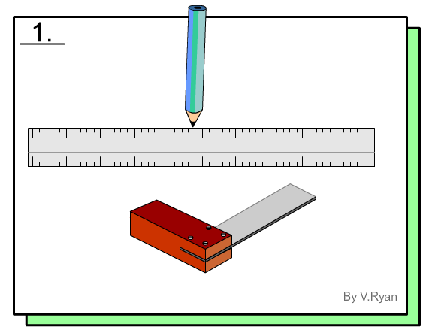
The materials are marked out using a range of tools including rulers, try
squares and marking gauges.
The materials were marked out accurately and checked twice before being
cut to size by hand tools and using machines.
IMPROVEMENTS:
Next time I will ask another person to check my marking out. In industry
this would mean asking a quality control manager to check my work.
Next time I will consider using card templates when marking out difficult
joints.
MANUFACTURING DESCRIPTION:
The materials are cut to size using a fretsaw and hand saws. All
measurements are checked before cutting. Using the fretsaw meant that the
work was cut accurately and with relative ease.
IMPROVEMENTS:
In future I will consider cutting some of the more difficult pieces using
a CNC machine, especially if several of the same type of pieces need
cutting.
MANUFACTURING DESCRIPTION:
A number of joints were cut using hand tools such as tenon saws and chisels.
The fretsaw was also used and this time and increased accuracy.
IMPROVEMENTS:
I will consider using simple joints or even experimenting with stronger
glues. I may be able to avoid cutting joints. This will save time and money.
FLOW CHART REPRESENTING THE SCHOOL MASS PRODUCTION LINE
Flow charts are often used to
plan the flow of manufacturing on a production line. Each box of a flow
chart represents a particular process. Draw a flow chart representing the
stages of manufacturing the envelope holder.
A variety of
communication hardware systems, platforms and software, work together to
allow us all to communicate with each other. They help the industrial and
business world, to work quickly and efficiently, on a global scale.
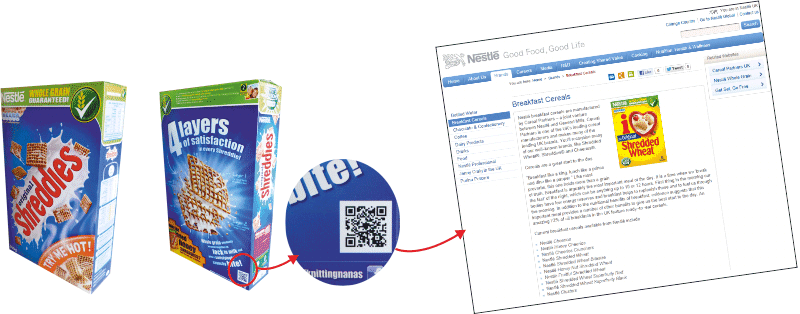
QR codes (Quick Response Codes) are seen
on packaging. They are a type of 2D barcode and they can be used as a form
of advertising. QR codes are accessed by smart phones with the right ‘app’
installed. The QR scanner reads the QR in a similar way that bar codes are
read, converting it to a URL (website address), text, email, or phone
number. If the OR code directs the customer to a website, it appears on
the screen of the smart phone. Specific information can be read by the
customer / potential customer.
QR codes are often used as part of an advertising strategy. Research shows
that access by potential customers to websites through the use of QR
codes, often converts to sales of the product. For instance, the QR code
on a package or product, could lead directly to a Youtube video
demonstrating the product.
QR codes allows the customer/potential customer to have an almost
interactive relationship with the manufacturer.
The packaging seen below, is for a well known cereal. The
QR code is found on the back and when scanned leads to the manufacturers
website. The site gives the customer access to information about the
product, advice and dietary information. Consequently, the QR code helps
to promote the product. A potential customer may pick up the package in
the supermarket and if more information about the product is needed, the
QR code can be scanned. This is helpful to the potential customer and
manufacturer, often leading to a sale.
QR codes are used in other ways. The sample
below shows how a ‘calling card’ can be used in conjunction with a QR code.
The calling card is scanned and it directly leads to a website, promoting
the free service on offer by the card. In this case it is being used to
access more information, animations and diagrams about Design and
Technology.
Planned obsolescence is when a
product is deliberately designed to have a specific life span. This is
usually a shortened life span. The product is designed to last long enough
to develop a customer’s lasting need. The product is also designed to
convince the customer that the product is a quality product, even though
it eventually needs replacing. In this way, when the product fails, the
customer will want to buy another, up to date version.
Take for example a washing machine. Planned obsolescence means that the
washing machine (seen opposite) is designed to last about two years,
before it breaks down outside the guarantee time. Most of the components /
parts have been manufactured from quality materials with the exception of
some vital parts. Two years after purchase, the washing machine will only
need minor inexpensive repairs. However, between 4 to 5 years the vitals
parts begin to wear out and a replacement machine is required.
For planned obsolescence to work, the customer must feel that he/she has
had value for money. Furthermore, he/she must have enough confidence in
the manufacturer/company, to replace the original washing machine with the
modern equivalent machine, from the same manufacturer.
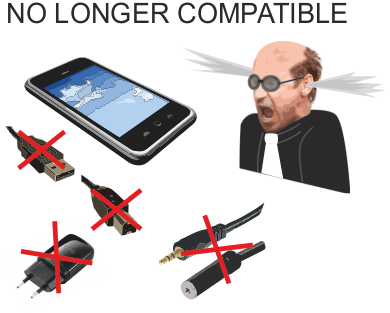
Planned obsolescence is sometimes
designed into a product, in order to encourage the customer to buy the next
upgrade. A good example of this is a mobile phone. Mobile phones are often
designed with only current technology in mind, despite the manufacturers
knowledge of future technological developments. For instance, a mobile phone
may have USB / connections / jack plugs, that fit current products, such as
head phones and computers. This means that the phone is not future proof.
The manufacturer may already be working on updated phones, that connect
using different sizes of USB ports / connections. Although the current phone
can be upgraded with software, eventually the ‘old’ USB / connections / jack
plugs will make the product obsolete. The customer will need a new phone,
even though there may be nothing wrong with his / her existing phone. The
old phone becomes obsolete.
Designers following the philosophy
of ‘Built In Obsolescence’, ask themselves, ‘how can a product be designed
so that it breaks down quite quickly, but it still leaves customer
confidence in the product and manufacturer intact’.
Planned obsolescence can be regarded as bad for the environment, because it
leads to products being ‘dumped’ by customers, so that new updated products
can be acquired. The quandary that good designers face, is to design
desirable products, with components / parts that can be recycle or reused,
when the product is thrown away, by fashion/style conscious consumers.
Planned obsolescence is sometimes
deliberately and openly built into products for safety reasons. Sell by
dates and use by dates on foods, are a guide to both the retailer and
customer, highlighting when a food product is safe to eat and at its best.
Further examples are disposable cutlery and soft drinks bottles, which are
manufactured cheaply and designed to be used once / twice. These products
are sometimes manufactured from biodegradable polylactide (PLA), which can
be thrown away and yet is safe for the environment.
Perceived Obsolescence is when a
customer is convinced, that he / she needs an updated product, even though
his /her existing product is working well.
This is often based on style rather than functionality. For example, a
simple mobile phone, with keys and buttons may be perfect for most
customers. However, with the advent of touch screen phones, phone
manufacturers have had to persuade phone users, that their old phones are
out of date.
Advertising is used constantly by manufacturers, to persuade potential
customers that their existing product is out of date, old fashioned and
lacks style. Key to the success of perceived obsolescence, is the
customers perception of himself/herself. The role advertising plays, is to
persuade a potential customer, to purchase a new product. Potential
customers sometimes perceive that their existing gadget makes them look
‘uncool’, old fashioned and out of touch with modern trends. Successful
advertising leads to the customer replacing his / her existing product and
buying the new up dated version.
Another good example of perceived
obsolescence is a football shirt, for a supporter. Professional football
clubs change their design of kit in subtle ways, in time for the new season.
The colour scheme remains the same. This puts pressure on many supporters,
as they do not wish to be seen in last seasons shirt.
The perception is that a supporter in the old shirt, is a less committed
supporter, than one in the new shirt. Also, wearing a shirt that is out of
date, could be embarrassing in a crowd of supporters wearing the new
version. Subtle pressure is applied, so that the supporter buys the new
shirt, which may be only slightly different from last seasons.
The automobile industry uses advertising to
promote new updated models. Updated models are often restyled, in order that
they have increased visual appeal. Manufacturers have the advantage of
asking existing customers, what they would like to see changed or updated in
a new model. This reinforces perceived obsolescence. Once a new model is
launched, the older model looks dated.
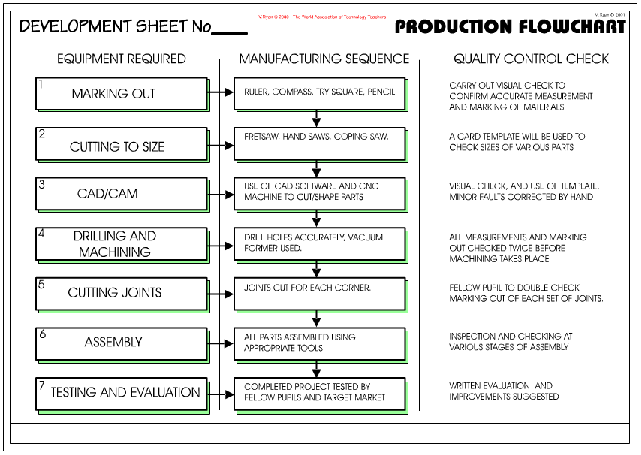
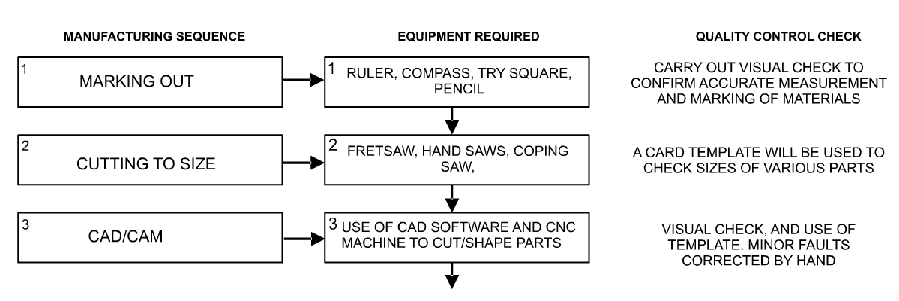
A flowchart is an excellent way of planning a project. Each stage of the
project is set out as a sequence of events. Part of a typical, standard
flowchart is shown below. It shows the sequence of events in the manufacturing
of a small table. The flowchart below is split into parallel columns with
headings;
Manufacturing Sequence, Equipment Required and Quality Control Check.
Designers use flowcharts to plan their design work and research, also to plan
the manufacture of a product. They can be extremely complex and involve many
stages. Constructing a flowchart allows the designer to consider every stage of
the design and manufacture of a product, in minute detail. When used to plan
manufacture of a product, each stage is represented. Errors or mistakes in the
production process are usually solved, before the first production run takes
place. This saves money and time.
STANDARD FLOW CHARTS USED BY
DESIGNERS
Part of a production flow chart
is drawn below. This shows three of the stages of the manufacture of a
product. The manufacturing sequence, the equipment that is required for each
stage and the quality checks, are all aspects of the flow chart. Designers
plan the manufacturing sequence using this type of flow chart.
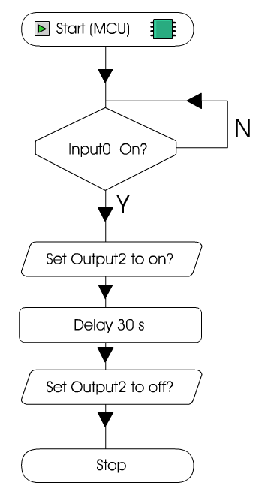
Designers of electronic devices, program ‘programmable circuits’ using flow
charts like the one seen below. This is a relatively simply flow chart that
controls a set of security lights. Electronics dominates our lives and often the
devices we use have been programmed by designers.
Designers involved in the design of programmable circuits use flow charts.
They are used to plan the way a circuit will work, when it is programmed.
Programable circuits usually have three main aspects (see diagram below).
1. They have inputs, such as movement sensors and temperature sensors.
2. A main circuit which monitors the sensors.
3. Outputs such as motors or lights.
The flow chart determines the way the circuits work. For example, a circuit
designer may want security lights to illuminate when movement is detected by
the inputs.
The flowchart opposite shows a simple programme for a programmable circuit.
The designer 'downloads' the programme to the circuit.
When the circuit detects
movement (input0 On?) it turns security lights on for 30 seconds (Output2
ON, Delay 30s). After 30 seconds, the programme turns off the lights
(Output2 to off).
A designer could use this programme as part of a security system for
switching on security lights when movement is detected.
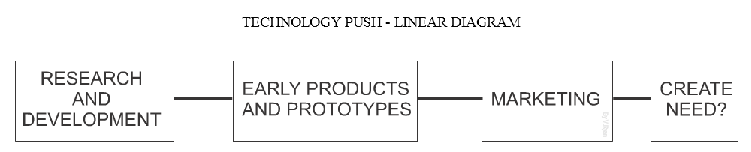
WHAT IS THE TECHNOLOGY PUSH MODEL OF PRODUCT DEVELOPMENT?
The term ‘Technology
Push’, refers to advances in technology and the way in which these are
introduced to the public / consumers, in the form of commercial products.
In this model, research and development in new technology drives the
development of new products.
The technology push models starts with a technological development. A good
example is touch screen technology. It first appeared as published
research by E.A. Johnson at the Royal Radar Establishment UK, in the mid
1960s. The technology began to attract research and development funding.
It was not until the 1980s, when Hewlett Packard introduced a touch screen
computer, that a product was introduced to potential consumers. Later
developments of touch screen technology included hand writing recognition.
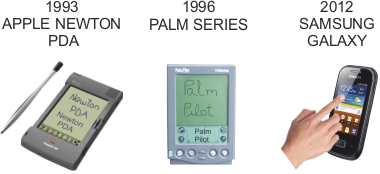
as seen in the released of Apple’s Newton PDA in 1993. By 1996, Palm
introduced its Pilot Series into the growing PDA market. As the technology
advanced, allowing touch screen technology as we know it today, new
product ideas, such as the iPod touch and several iPhone look a likes
followed. Advances in technology was the driving force.
The ‘technology push’ model does
not always work, as it depends on new technology being made available in the
form of new products, which have not always been market tested adequately
first.
A prime example of this
was seen with the introduction of the Sinclair C5 in the mid 1980s, an
electric vehicle aimed at commuters. Although technologically advanced for
the decade, it had a low top speed and short range. Furthermore, it was
fitted with pedals, which were used by the driver when going up hill. The
vehicle was 'dwarfed' by other traffic.
When seen on the TV during its launch, video of it being passed by other
vehicles, especially lorries, created a very negative picture of the
product. Compounding this, was the fact that it was open to the weather. The
C5 was the product of technological development NOT a market need. It failed
as a commercial product.
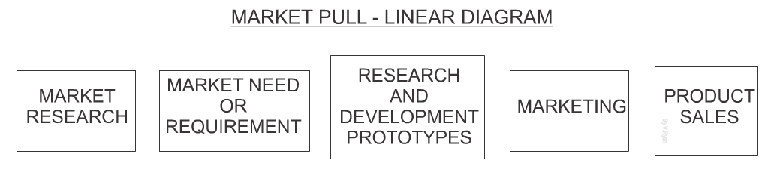
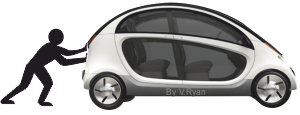
The term ‘Market Pull’,
refers to the need/requirement for a new product or a solution to a
problem, which comes from the market place. The need is identified by
potential customers or market research. A product or a range of products
are developed, to solve the original need.
Market pull sometimes starts with potential customers asking for
improvements to existing products. Focus groups are often central to this,
when testing a concept design or an existing product.
A good example of market pull
influencing product evolution, is seen in the development of the digital
camera. Twenty years ago, there was a ‘market’ requirement for a camera
without a film (saving on developing films), that could take endless
photographs, that could be viewed almost immediately. The technology of the
time did not lead to the manufacture of such a device. However, technology
has a habit of catching up on market needs. Market pull eventually led to
the development of digital cameras, once miniature digital storage,
processing power and improved battery performance was available. Market pull
ensured that photo editing software also developed, in parallel with the
development of digital camera technology.
Market pull does not always work. Sometimes the market ‘calls’ for a
innovative new product, but the technology does not exist to support its
development / manufacture. For example, electric cars are becoming more
popular and the commuter market place, is open to the development of an
environmentally friendly electric motor bike. A motorbike that can match the
performance of petrol driven motor bikes. However, current electric motor
and battery technology, means this is not possible. Eventually, market pull
will influence investment in research and development, ensuring the
continued evolution of electric motorbikes.
WHAT IS TECHNOLOGY PUSH?
Technology Push is when research and development in new technology, drives
the development of new products.
Technology Push usually does not involve market research. It tends to start
with a company developing an innovative technology and applying it to a
product. The company then markets the product.
E.G. OF TECHNOLOGY PUSH
Touch Screen technology appeared as published research by E.A. Johnson at
the Royal Radar Establishment UK, in the mid 1960s. The technology began to
attract research and development funding. In the 1980s, Hewlett Packard
introduced a touch screen computer. 1993 hand writing recognition introduced
- Apple’s Newton PDA. 1996, Palm introduced its Pilot Series. Touch screen
technology now seen in smart phones.
WHAT IS MARKET PULL?
The term ‘Market Pull’, refers to the need/requirement for a new product or
a solution to a problem, which comes from the market place. The need is
identified by potential customers or market research. A product or a range
of products are developed, to solve the original need.
Market pull sometimes starts with potential customers asking for
improvements to existing products. Focus groups are often central to this,
when testing a concept design or an existing product.
E.G. OF MARKET PULL
The digital camera. Twenty years ago, there was a ‘market’ requirement for a
camera that could take endless photographs, that could be viewed almost
immediately.
Market pull (market need) eventually led to electronics companies developing
digital cameras, once miniature digital storage, processing power and
improved battery performance was available. Market pull ensured that photo
editing software also developed, in parallel with the development of digital
camera technology.
E-commerce is a growing feature of the
world economy. Customers / potential customers, use e-commerce every time
they search for products and purchase products, on the internet. Companies
and businesses regularly use ‘e-commerce’, to exchange documents and for
data communication between computer systems. E-commerce is a general term,
that refers to the use of ICT systems by a business / company and
customers.
An example of e-commerce is seen below. A customer orders a product over
the internet and pays using a credit / debit card. The payment / order is
processed electronically and the product is dispatched from the warehouse.
Finally it is delivered direct to the customer’s home and the customer
signs for it.
ADVANTAGES:
1. Shopping online can be carried out twenty four hours a day, everyday of the
year.
2. Online shopping can take place at home, without the need to travel to shops.
Potentially, this is ecologically sound / environmentally friendly, as it saves
on fuel and reduces congestion on the roads.
3. A products features and functions are often listed in detail, on retail
websites.
4. The potential customer can shop when it is convenient for him / her.
5. It is often easier to compare products using internet sites, review sites and
forums. This may lead to a more informed decision, regarding buying a product.
6. Shopping online usually does not require the customer to interact with shop
assistants and other customers (this could be regarded as a disadvantage).
7. Precise searches can be made online, helping the customer to find the right
product.
8. E-commerce deals with credit and debit cards and does not require the
customer to have cash in hand.
9. Disabled people with mobility problems, can shop from home and do not need to
visit a retail outlet.
10. Shopping by e-commerce is fast. Time saved by shopping online, can be used
in other more productive ways.
DISADVANTAGES:
1. A potential customer only sees an image (sometimes a 360 degree image). He /
she cannot handle the product.
2. Images of products are usually taken from favourable angles, with the best
possible lighting conditions. The potential customer only sees what the
manufacturer / retailer wants him / her to see.
3. A shop assistant is not available to question, which means answers to queries
/ questions are not immediate.
4. Returning a product is often more complicated and may involve parcelling it
and taking it to a post office. This may be at the customers own expense.
5. Potential customers must be wary of online fraud and take the appropriate
security measures.
Traditional ‘commerce’ is still popular
today. It generally involves the customer visiting a supermarket / retail
outlet, selecting a product from the shelves, paying at the ‘checkout’ and
transporting the product home.
ADVANTAGES:
Most people enjoy visiting shops, browsing and handling a selection of products.
Traditional ‘commerce’ often involves paying by cash, at the checkout. This
means that the cash must be in the customers possession. This reduces the
temptation to spend too much.
The customer can question an assistant about the product and get immediate
feedback.
The product can be tested (tried on, if clothes are being purchased) at the
retail outlet. This means that it is more likely that the customer will be happy
with the product, after purchase. Returning the product for a refund is much
less likely.
When shopping in a retail outlet, the potential customer can often use other
facilities, such as cafes and restaurants, which enhance the shopping
experience.
DISADVANTAGES:
The potential customer must visit the retail outlet in order to buy the product.
This requires physical effort and sometimes inconvenience.
Retail outlets tend to be open at certain times and are not usually open twenty
four hours a day. This restricts when a product can be purchased.
Browsing products takes along time, as it may mean visiting separate retail
outlets, in different locations.
Some disabled people may find traditional shopping more difficult, due to access
and mobility issues.
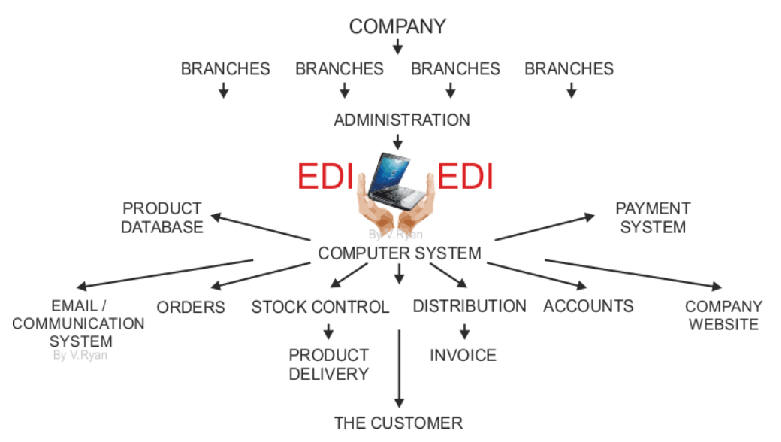
Companies that use e-commerce often use
Electronic Data Interchange (EDI). EDI involves using standardised
document / file formats across the entire company. This means that
employees use the same system to order materials, track customer orders,
control stock levels, produce invoices and to carry out accounting.
Companies that use EDI, can transfer data from one branch to another and
even across the world, with full confidence that the data can be accessed,
edited and updated, without problems.
A very good example of a standardised document format is PDF. This type of
document can be emailed and opened on most computer systems, including
smart phones.
ADVANTAGES:
Reduces the overall costs of running a business, as the computer system carries
out difficult and complicated tasks automatically.
The computer system monitors and controls most aspects of the business. Stock
levels, order levels, accounts and invoices are known immediately, without the
need for labourious manual intervention and accounting.
EDI eliminates the need for most paperwork, helping the environment.
Efficiency levels are very high, as human error is minimised. The effective flow
of business is assured.
EDI systems enhance security for the customer and company.
Improved communication between employees and branches, due to the use of
standardised document and data formats.
DISADVANTAGES:
Systems need continual electronic protection, from viruses, hacking and
potential fraud.
EDI systems need regular software updates.
In case of a systems failure, manual systems must also be in place to ensure
that business continues.
Staff must recieve training, every time the EDI system is updated. This is a
continuous investment.
Companies relying on EDI must invest in backup systems, in case the primary
system fails.
Human input error is still potentially a problem, although the software being
used should highlight most errors.
Data Protection Laws, protecting customers and employees, must be applied and
adhered to by employees and the company.
WHAT IS E-COMMERCE?
Customers / potential customers, use e-commerce every time they search for
products and purchase products, on the internet. Companies and businesses
regularly use e-commerce, to exchange documents and for data communication
between computer systems. E-commerce is a general term, that refers to the
use of ICT systems by a business / company and customers.
ADVANTAGES OF
E-COMMERCE
1. Shopping online is carried out twenty four hours a day, everyday of the
year.
2. Online shopping can take place at home and at a convenient time.
3. Precise searches can be made online, helping the customer to find the
right product.
4. E-commerce helps companies become efficient.
5. E-commerce deals with credit and debit cards and does not require cash in
hand.
6. Shopping by e-commerce is fast for customers and companies.
WHAT IS ELECTRONIC DATA
INTERCHANGE (EDI) ?
EDI - companies use standardised document / file formats. Employees use the
same computer system to order materials, track customer orders, control
stock levels, produce invoices and to carry out accounting.
Companies that use EDI, can transfer data from one branch to another and
even across the world, with full confidence that the data can be accessed,
edited and updated, without problems.
An example of a standardised document format is PDF.
ADVANTAGES OF EDI ?
Reduces the overall cost of running a business.
Stock levels, order levels, accounts and invoices can be viewed immediately,
due to the computer system.
EDI eliminates the need for most paperwork.
Efficiency levels are very high, as human error is minimised. The effective
flow of business is assured.
EDI systems enhance security for the customer and company.
Improved communication between employees and branches.