CUSTOMERS: CUSTOMERS are people who buy
products. Imagine that you are the owner of a company selling computers. Anyone
entering your shops can be called POTENTIAL CUSTOMER. This is a person who could
buy if he/she finds the right product. Anyone that actually buys one of your
computers from your shop is a CUSTOMER
CLIENTS: Imagine you own
an advertising company. Your company designs advertising campaigns which may run
on TV, Radio and even the internet. A car manufacturing company approaches your
advertising company to prepare a series of advertisements to promote a new model
of sports car. The car manufacturing company can be regarded as CLIENTS as they
are buying a service from you.
This is where a company/design
team takes an initial design concept for a product and tests it out on
potential customers or the general public. This is done through
questionnaires, interviews and a range of other activities.
WHAT ARE THE AIMS OF MARKET
RESEARCH?
Market research has several
aims:
The most important is to determine if the design concept has any chance of
economic success. Potential customers will soon express their opinion and
say if they would be interested in buying the product.
Market research often leads to suggestions regarding improving the product
so that it is more likely to be successful. This may be as simply as an
alteration to the colour scheme or a dramatic change in the style of the
product or the functions it performs.
The price the customer is prepared to pay for the product is often
determined during market research. This sets an upper limit of cost to the
design and production teams.
Market research may suggest how many individual ‘units’ are likely to
sell. If production goes ahead, this will help determine the number of
products manufactured during the first run on the production line.
WHY SPEND TIME AND MONEY ON MARKET RESEARCH?
A new product can cost millions
of pounds to develop at the design stage. Setting up a production line or
arranging its manufacture somewhere in the world can also cost millions.
Therefore, it is essential that the company developing the product is
convinced that it has every chance of being an economic success and be
popular with potential customers - before the enormous cost of designing and
manufacturing takes place.
In the early 1980s Sir Clive
Sinclair designed and manufactured a range of popular home computers. His
designs/products were innovative as existing home computers were very
expensive and difficult to use. Sinclair developed a range of home computers
that were cheap, effective, educational and fun. Inevitably market research
played a crucial role in determining the overall design of the computers and
the software available for them. He went on to design the one of the first
hand held TVs with a slim, flat, futuristic battery.
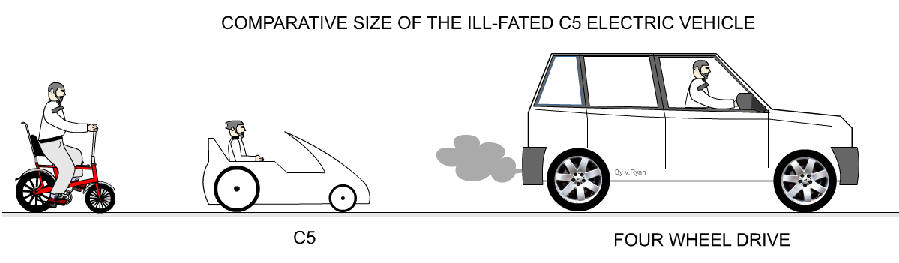
However, Sir Clive Sinclair will be unfairly remembered for the small
battery powered single seater car his company developed called the C5. It
was developed as a commuter vehicle for business men. The vehicle was very
small and was dwarfed by other vehicles on the road. It had a limited
driving range and speed and consequently looked dangerously out of place. If
adequate, targeted market research had been carried out before manufacturing
had started the designers would have realised that this was never going to
be a successful product. Millions of pounds in design and manufacturing
costs were lost and the product did not sell. Sir Clive Sinclair’s
reputation as being an innovator was severely dented.
Market research is
carried out in a number of ways:
A focus group of potential customers will discuss the ‘pros’ and ‘cons’ of
the design concept. They also may suggest improvements to the product so
that it is more likely to be successful.
‘Cold calling’ over the telephone. This is where potential customers and
sometimes the general public will be called and asked to answer several
questions about a particular product. This technique is often frowned open
because it often causes annoyance to the person answering the telephone.
Volunteers can be interviewed individually or in groups and asked about
the design concept / product.
A model of the product or computer simulation can be put on display at a
conference (eg. a motor show) and those passing the stand can be asked for
their opinion and suggestions.
A computer simulation can be tested by potential customers and their likes
and dislikes recorded. Alternatively a promotional video could be shown to
potential customers.
FROM DESIGN IDEA TO DESIGN CONCEPT (INCLUDING MARKET
RESEARCH)
Market research is an essential
aspect of the design process. Product designers usually start with an idea
which they develop into a design concept. Market Research then follows
helping in refine the product /design concept further.
For instance, a designer may consider designing a small, cheap, solar
powered car. This is an idea. The idea is then developed into an overall
concept. In the case of a solar powered car the designer may discuss
his/her idea with a team of designers who may suggest that the car be
aimed at young, environmentally aware people, who would consider using the
car every day for short journeys to work and to the shops. The team may
also emphasise that the car should be cheap to buy, easy to service and
maintain and have a storage compartment. It should be fashionable and
supplied in a range of styles including retro designs. Furthermore, the
aim would be to develop a brand name rather like the ‘Smart’ cars seen on
our roads today.
When the overall design concept has been developed in-depth market
research should take place. The market research will suggest if the design
concept is likely to be popular as a product with potential clients.
Aimed at young, environmentally
aware people.
For everyday use, to travel to work and the shops.
Cheap to buy, easy to service and maintain.
Supplied in a range of styles including retro designs.
Must have a storage compartment.
Develop a brand name rather like the ‘Smart’ cars seen on our roads today.
WHY INFORMATION COMMUNICATION TECHNOLOGY
IS A VITAL MARKETING TOOL
WITH REFERENCE TO THE DVD / CD INDUSTRY
Using information Communication
Technology (ICT), is crucial to most businesses, regardless of size. It is
important to a company aiming to expand and to improve efficiency. The use
of good ICT also improves customer services and customer demand.
From database development, website design to market research, translation
software, direct mail marketing and training, the application of ICT is
critical for a economic success.
The internet
is one of the ways in which media companies / businesses advertise.
The main form is advertisements or ‘prompts’ on media focussed websites.
One example is the i-Tunes website, through which millions of people
purchase and download music. The site automatically recommends similar CDs
/ DVDs to the one being purchased by the customer. This is direct
marketing, taylor-made for the individual customer. Precise and deliberate
programming, ensures that the customer is directed potential to further
potential purchases. Furthermore, previous customer purchases are
recorded, allowing the software to build an accurate customer profile on
each I-Tune member.
Tele-marketing is
often used by media companies, especially ‘sales departments’ to generate
appointments with potential customers. Company Directory Software is used
to identify decision makers within companies, capturing their details.
Often electronic versions of customer database lists are purchased,
allowing sales to contact potential customers directly. The objective
being, to secure appointments that lead to orders.
Direct mailing
is a way in which DVD production companies send material / product
information, directly to potential customers. The aim is to focus on real
customers rather than sending catalogues / information to people who have
very little interest in the product.
Direct mailing takes two forms. Mailing through the post and emails.
DVD production companies keep up to date customer databases, saving
thousands of pounds on future marketing campaigns. This ensures that
advertising is directed to the people who have a potential interest in their
products or services.
Questionnaires are
used as a marketing and research tool. A well designed questionnaire will
allow companies to compile up to date and accurate information. The
questionnaire should be composed of appropriate questions, with proper
wording and flow. DVD production companies use this approach, especially
when gathering information on the internet.
DVD companies use questionnaires to gain information that will increase
sales. Questionnaires have always been an appropriate instrument for
gathering information. These are often customer satisfaction questionnaires
Free software such as Google Docs allows online questionnaires to be
compiled and then analysed automatically. This software is available for all
to use.
A noteworthy DVD
production company has its own website. For example,
Sonymusic.co.uk promotes new releases. Often a media company will produce a
website, for a specific artist or their most recent album. Free downloads of
tracks encourage the purchase of further tracks and promote live events.
Video trailers are produced to encourage attendance at cinemas or the
purchase of films / music.
Promotional Presentations
such as; PowerPoint presentations, video presentations and animation
software are used to promote DVD and CD products, usually new releases. Sony
promote new music releases through YouTube, sonymusicSME's Channel. Videos
promote singles and music from a range fo bands and artists. Sony also
promotes its music CDs through the Twitter website (twitter.com/SONYMUSICGLOBAL).
Reporting and
Analysis include the production of glossy brochures and catalogues.
This is driven by DTP and Graphics software. CD and DVD covers are produced
using specialist graphics software. All companies report annually to
investors, often in the form of pamphlets and booklets, often available in
electronic form.
Accounting and spreadsheet software is used to keep accurate records of
sales, manufacturing, advertising and distribution costs.
Translation Services
are key to a business wishing to expand overseas. The DVD industry is
international and so translation, in terms of the written word and
literature is extremely important. Translation software is used to translate
DVD and CD covers into a variety of languages.
ICT provides companies with a
range of tools, crucial to marketing and success. ICT drives the
manufacturing process, at almost every stage of production, including the
production line to quality control.
In todays world it is unlikely that a business can be successful, without
applying ICT solutions. Much of the worlds economy is driven and managed by
ICT. Governments, companies and often individuals rely on the use of ICT.
In order to secure a business future, DVD production companies, constantly
look for the next step in the use and application of ICT, hoping to ahead of
their competitors.
BARCODES IN MANUFACTURING, DISTRIBUTION AND SUPPLY
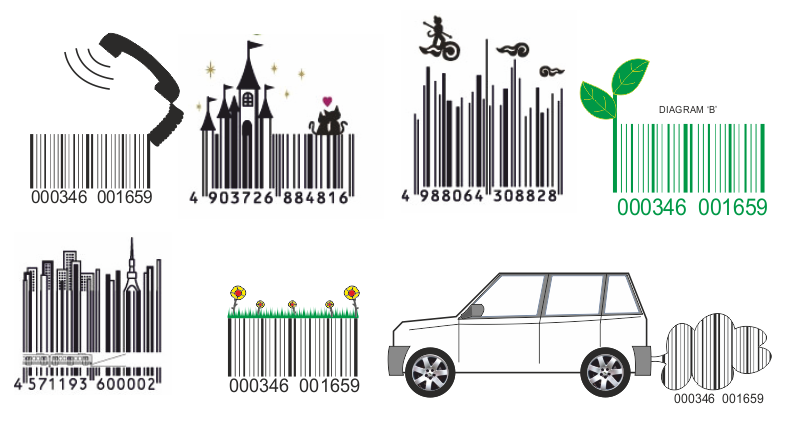
A barcode is a number of
vertical black strips, usually forming a rectangular shape (see samples
below). The strips are a graphical method of representing numbers.
Computer system can read barcodes more efficiently than optically reading
numbers and letters. Modern optical readers and their computer systems can
read barcodes from almost every angle
SAMPLE BARCODES
Although barcodes are often
plain, they can be presented in a more graphical form. This makes them
appear more appealing and interesting. However, they are still a number of
vertical black lines that vary in their thickness and distance apart.
SAMPLE GRAPHICAL BARCODES
Barcodes are used to control the
manufacturing process (production line) and they play an important role in
‘supply and demand’, including the distribution and transport of products to
the customer. Computer systems use barcode technology to keep track of
products as they are manufactured and progress down the production line.
Barcodes are used to track the progress of products as they are distributed
to customers. In shops and supermarkets, the barcodes on the packaging of
products, are used by computer systems to monitor sales and the order
further supplies.
1. On a production line a component / product will be
issued with a barcode. As the product progresses down the production line
the barcode is scanned repeatedly. This allows the computer system to
monitor the products progress, as it is assembled and quality checked. The
assembled product is then ready for distribution. The computer system also
records the number of products/units manufactured, keeping accurate records
such as times and dates. At every point on the production line and in stores
awaiting for distribution, the computer system will know exactly where the
product is located.
The example production line seen
below has been simplified. This production line is for the assembly of a
bicycle. As the bicycle frame travels down the production line each person
at a workstation workstation has a specific task to carry out ( see below).
Each component/part has a barcode, ensuring the computer system can keep
track of the products progress, along the production line.
INFORMATION COMMUNICATION TECHNOLOGY
DEVELOPING AND MODELLING IDEAS
Computer Aided Design (CAD), is
vital to a Product Designer in the development of a product. 3D design
software such as AutoCAD or Google Sketchup, allow the designer to draw a
product in detail, applying materials and textures to its surfaces. CAD
software can also be used to test a product, during its development,
helping to identify problem areas and even faults. For example, CAD
software is often used to test designs of bridges and other structures.
They can be tested ‘on screen’, to check that they will withstand the
massive stresses they will face when built. Testing of this type, allows
the designer to evaluate and improve a product before a prototype is made.
COMPUTER AIDED
MANUFACTURE
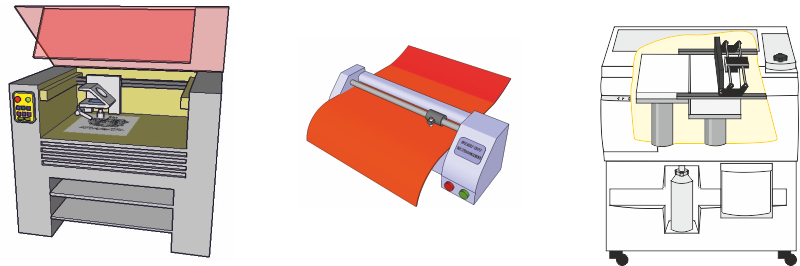
Once a prototype design
has been produced, it can be manufactured on a CNC machine or Rapid
Prototyping machine. Professional CAD software will interface (link /
communicate) with CNC machines, allowing the prototype to be manufactured,
directly from the design. CAD software can link to CNC routers, vinyl
cutters, digital 3D printers and plotters. The prototype/model, can then
be shown to potential clients / customers.
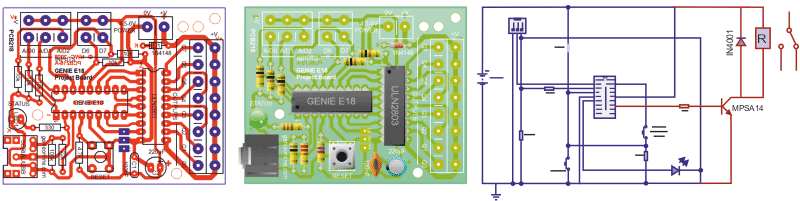
CIRCUIT SIMULATION SOFTWARE
A range of
circuit design software is available, allowing the circuit designer to
develop and test circuits. Circuit Wizard software is a good example.
Software such as this, means that there is no need to manufacture real
circuits, during the development stage. Faults can be identified and
corrected by simulating the software on screen, before an actual circuit
is made. This saves time and money. The ‘modelled’ circuit can be shown to
potential customers / clients and alterations made, before the expensive
manufacturing stage.
SCREEN IMAGES OF CIRCUIT WIZARD
SOFTWARE AT WORK
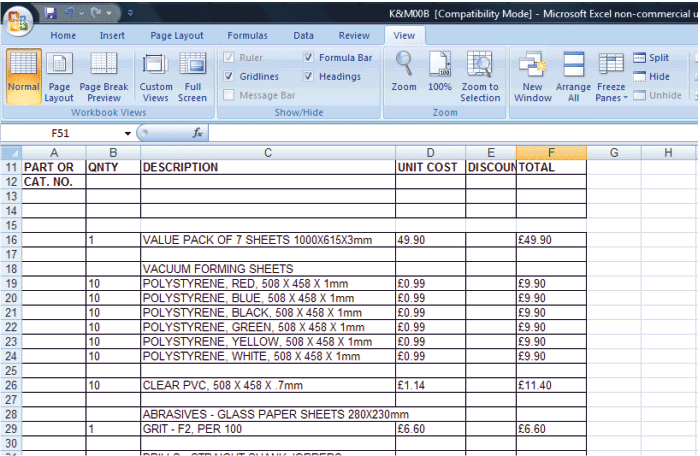
COSTING A PROJECT -
SPREADSHEETS
A spreadsheet is an ideal way of tracking costs, during the development of
a product. This type of software can also be used to estimate the cost of
manufacture, of the final product or of a variety of possible designs.
Spreadsheet software can also be used to model ‘systems’.
SAMPLE SPREADSHEET FOR COSTING A
PROJECT
FILE SHARING
Products are often designed by a team of Product Designers. During the
development of a product, CAD files are often shared and designs constructed
collaboratively. The internet allows designers located in different regions
of the world, to share in the design and development of a product.
PRESENTING IDEAS TO A
CLIENT AND FOCUS GROUPS
Discussions with a client normally take place during the development of a
product. Presenting potential designs using CAD and presentation software
such as PowerPoint, allows the designer to explain ideas for products
clearly. Potential customers/clients can be influenced by a good,
professional presentation. The same approach can be used when discussing
products with Focus groups.
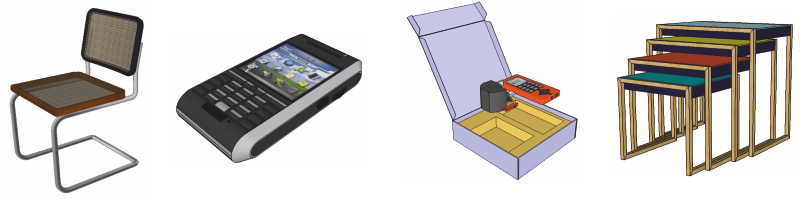
Product analysis can take
different forms but in general it means asking questions about a product
and forming answers. It can mean experts analysing a product or members of
the general public or potential customers/groups of people. Product
analysis can take place at almost any stage of the design process.
Product analysis can be carried out by:
1. An individual product being analysed.
2. Alternatively a number of similar products can be compared with each
other using the same criteria.
WHAT IS THE PURPOSE OF
PRODUCT ANALYSIS?
A product may need analysing by a potential customer to help him/her
decide whether it is worth buying.
A product may need analysing so that the design can be improved.
Sometimes a prototype or model may be analysed. In this way improvements
can be made before the full sized, costly product is manufactured.
WHAT IS A CRITERIA?
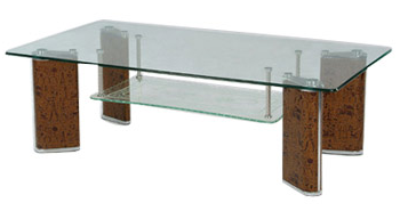
When analysing a product first prepare a list of questions, this is known as
a criteria. Look at the table (above). For example, the criteria listed
below could apply to the table when it is being analysed.
ERGONOMICS
Is the table the right size(height, length and width). Will a potential
customer need to stretch too far when using the table? Will this make it
uncomfortable for the customer?
COST
How much will it cost to manufacture the product and how much will it sell
for in the shops?
AESTHETICS
Does the product look good? Is it stylish? Is the style to the customers
liking.?
CONSTRUCTION METHOD
How has the product been made? What joining methods/ techniques have been
used? Is the product well constructed (will it fall apart when in use? Will
it scratch easily? etc.....)
CLIENT REQUIREMENTS
Is the product what the customer wants? What changes are required to make
the product suitable for the client/customer? Does the customer like the
product?
HEALTH AND SAFETY
Is the product safe? Does it fulfil Health and Safety Laws?
COLOUR AND TEXTURE
Is the colour/texture of the product effective? Or is it what the customer
wants?
MATERIALS
Are the materials suitable for this type of product? Are they quality
materials or do they make the product look cheap?
ENVIRONMENTAL IMPACT
What is the environmental impact of the product? Is it manufactured from
materials supplied by sustainable sources? For example, if manufactured from
natural woods have they been supplied from sustainable forests?
When a
product is manufactured, its existence needs to be made known to the
general public, otherwise the product will not sell.
Advertising draws the attention of potential consumers to a product.
Advertising is a way persuading potential customers to buy the product.
Advertising informs potential customers of the products functions and
features.
Good advertising creates a demand for a product.
Good advertising may even create a brand identity for a product or series
of products.
Advertising seeks to create an image surrounding a product, so that
customers feel that they need it.
Advertising can promote a new product and increase sales of existing
products.
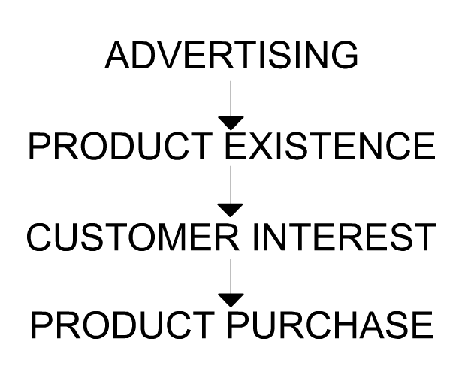
STAGES OF ADVERTISING
Advertising begins to work when
the general public become aware of a products existence. Advertising then
aims to develop customer interest, so that potential customers want to know
more about the product. This should be followed by potential customers
feeling a need to own the product and finally purchasing.
DIFFERENT METHODS OF
ADVERTISING
Placing advertisements on TV,
running as commercials between programmes.
Product placement in TV programmes, such as a well known actor drinking from
a branded can.
Audio advertisements on the radio.
Printed advertisements in a newspaper or magazine.
Place advertisements on the Internet, through one of the major search
engines such as Google.
Sports sponsorship, such as Formula One Racing.
Direct Marketing, sending letters / leaflets to the homes of potential
customers.
Telephone marketing, attempts to interest potential customers by ringing
them directly.
When a company or a product
achieves ‘brand’ status, it normally means that it has been extremely
successful. Also the logo / symbol / image built up by a successful
company, can become a brand in its own right. Meanings, feelings and
values are usually associated with a brand (sometimes called ‘brand
identity’), making the branding of products an effective form of
marketing.
Brand identity is often
associated with the way a product looks (aesthetics). This includes its
style, colour scheme, name, functions (what it does) and symbol / logo.
Brand identity is also associated with the way customers feel about the
product. Brands names are often trusted by the general public. All these
factors contribute to the characteristics of brand identity.
The term brand identity can apply to a single product such as the Mini
car. It can also be applied to a group of products such as the Apple
iPhone, iPod and iPad. Harley Davidson Motorbikes is another well known
and respected brand, having a distinct brand identity.
Brand identity often helps
customers distinguish between similar products. Successful brands usually
have customers who display their customer loyalty by buying the same
product, time after time. People like to be associated with brand names,
as it helps them build their own personal image. People tend to want to
associated with groups, this is human nature. This is one reason people
buy products with a brand identity.
Apple computers was
formed in 1977, manufacturing personal computers. It has led the way with
its innovative software and cutting edge technology, since the early days of
personal computers . From the 1980s, Apple has designed and manufactured
communication devices leading to the iPhone, iPod and iPad. It has a growing
loyal customer base.
The Apple brand identity stands for innovative products, the application of
ground breaking technology, high quality products that are well made and
superior to their rivals.
The symbol / logo that represents the company is instantly recognisable.
Customers buy Apple products because they want to be associated with high
quality and innovative technology.
Harley Davidson
Motorcycles was formed in the early twentieth century. The company has
survived for a long time, despite competition form Japanese rivals. Harley
Davidson is associated with powerful, distinctive cruiser motorbikes.
Furthermore, it is associated with freedom on the road with a little of the
rebel thrown in. Licensing of its well known logo is profitable for Harley
Davidson, as many other manufacturers want to be associated with the image
conjured up by the name.
It has a loyal customer, from every section of society, including executives
to shop floor workers.
People buy Harley Davidson motorbikes and associated products such as
clothes, because they want to associated with powerful cruiser motorbikes
and the freedom of the road.
Brand identity is an effective
form of advertising and marketing.
Brand identity helps create an image for the public and potential
customers.
Brand identity develops over time due to successful products.
Brand identity is associated with quality products.
Branded products are normally trusted by the public and customers.
It is assumed that branded products have been extensively tried and tested
before release.
Brands usually help build up customer loyalty.
Branded products are often used by individuals to help them build their
own personal image. People, especially young people, build their desired
image through their use and display of branded products.
Brand identity helps customers distinguish between similar products,
manufactured by different companies.
Brand identity is often associated with innovation.
Brand identity is usually associated with good design.
Companies try to emulate and even copy branded products.
Brands always have a distinctive logo/symbol.
Brand identity creates and maintains interest in products.
Presenting an idea or design to a client is an
essential aspect of Product Design. Presentations are important for the
following reasons;
1. If you have spent time
designing a product a good presentation will allow the client to see your
product at its best. A bad or poor presentation will probably deter the
potential client from buying the product and they may go to another
designer or design team.
2. Being a Product Designer is a responsible and professional job. Every
aspect of your work should be aimed at the highest possible standards.
This includes the presentation.
3. The presentation should be regarded as one of the most important
aspects of the design process.
4. A good presentation will promote the product and ensure that potential
clients are confident that your product is the right one for them.
5. Often there will be more than one Product Design company after the same
contract. If your design team is trying to secure a deal with potential
clients it is essential that you produce the best presentation. Otherwise
the contract will be signed with a competitor.
6. A presentation produced on software such as PowerPoint can be emailed
to potential clients thousands of miles away. This means that someone in a
different country will determine whether you get the contract based on the
presentation alone. The presentation must to the highest possible
standard.
7. The consequences of losing a contract due to a poor presentation is
that all the time put into the development and manufacture of a product
will be lost. Often a company will survive from one contract to another.
If a company fails to win a contract it could fail as a business.
8. A good presentation will give a good impression of you and your
business to a potential client. Even if you do not win the contract you
should still aim to impress the potential client as he/she may offer you
business in the future. Your reputation will grow.
9. Preparing and fronting a presentation may be the only time you work
with other people as a real team. Members of a design team often have
separate jobs during the development of a product. However, delivering a
good presentation often requires good team work.
PRESENTATION
- HINTS
1. Do not simply stand up and
talk about your product.
2. Discuss the product with a potential client using a manufactured model or
computer model. The model may be complex so that it can be disassembled and
discussed in detail.
3. Have a handout/leaflet ready so that the potential client has some paper
work including pictures/photographs to take away and to consider. You could
prepared a CD/DVD for the client.
4. Spend time on a PowerPoint presentation. This can be used as part of the
presentation and the potential client can take away a copy to view at
his/her leisure. It can also be emailed to clients / potential clients.
5. Try to face your client when talking about the product although expect
the client to be looking most of the time at the product. If he/she is not
looking at the product then it may not be impressing the client.
6. If it is possible, demonstrate the product and get the potential client
involved.
7. Always treat your potential clients as intelligent and objective business
people. Do not be afraid to use technical language but be ready to explain
difficult concepts. Expect questions. It is usually a good sign if potential
clients ask plenty of searching questions.
8. Plan your presentation carefully. Spend time on the presentation and try
it out on colleagues before facing a real client.
The way products are manufactured depends on the
quantity required. For example, cars are continually manufactured in
hundreds of thousands , a prototype is a ‘one off’ (just one made) and DIY
furniture is made in batches of thousands or hundreds. There are three
main types of production and they are described below.
SCALE OF
PRODUCTION
SAMPLE
PRODUCTS
DESCRIPTION / DETAIL
CONTINUOUS
CARS
PETROL / OIL PRODUCTS
BRICKS
MANY FOOD PRODUCTS
1. PRODUCTION LINE SET UP 2. PRODUCTION LINE SPLIT INTO SEPARATE
OPERATIONS. UNSKILLED AND SEMI SKILLED WORKFORCE REQUIRED. 3. PRODUCTION LINE RUNS 24 HOURS A DAY 365
DAYS A YEAR. 4. HIGH LEVEL OF FINANCIAL INVESTMENT NEEDED
AS SPECIALIST MACHINERY IS USUALLY REQUIRED. 5. QUALITY CONTROL AT EVERY STAGE.
1. FLEXIBLE PRODUCTION
LINE SET UP - MUST B E ABLE TO CHANGE WHEN THE PRODUCT CHANGES 2. PRODUCTION LINE SPLIT INTO SEPARATE
OPERATIONS. UNSKILLED AND SEMI SKILLED 3. PRODUCTION LINE RUNS FOR A SPECIFIED
AMOUNT OF TIME UNTIL THE CORRECT NUMBER OF PRODUCTS HAVE BEEN MANUFACTURED 4. WORKFORCE FLEXIBILITY REQUIRED. WORKERS
MUST BE ABLE TO SWITCH FROM ONE JOB TO ANOTHER. 5. OFTEN COMPONENTS ARE BOUGHT FROM OTHER
COMPANIES AND ASSEMBLED INTO THE NEW PRODUCT
SCALE OF
PRODUCTION
SAMPLE
PRODUCTS
DESCRIPTION / DETAIL
SINGLE ITEM /
ONE
OFF
PROTOTYPES
SPECIALIST MODELS
HANDMADE ITEMS
SPECIALIST ENGINEERING
ONE OFFS
1. SMALL SPECIALIST COMPANIES. 2. A SKILLED WORKFORCE - SPECIALIST SKILLS eg.
ENGINEERING. 3. SPECIALIST MATERIALS OFTEN REQUIRED eg.
SPECIALIST MODELLING MATERIALS. 4. HIGH QUALITY PRODUCTS MANUFACTURED. 5. FINAL PRODUCTS OFTEN EXPENSIVE DUE LEVEL
OF SKILL REQUIRED TO MANUFACTURE THEM AND COST OF SPECIALIST MATERIALS. 6. A HIGH STANDARD OF QUALITY CONTROL 7. PRODUCTS MANUFACTURED FOR AS SPECIALIST
MARKET / CLIENTELE.