Chisels and Gouges
|
There are many different types of chisels and each has
a particular use. Some of the more common chisels are shown below. The
handles of most chisels are made from ash, beech, box wood or plastic and
a mallet (not a hammer) is normally used to apply force. |
|
|
Safety is always a consideration when using chisels.
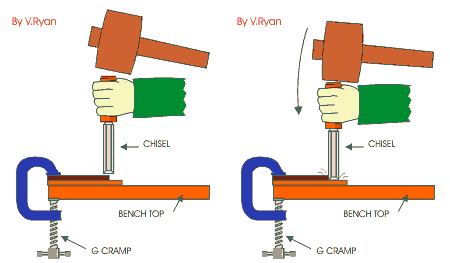
The diagram on the left shows a paring chisel being used to shave the edge
of a piece of wood a small amount. Each time the mallet forces the chisel
downwards a small amount of wood is parred away from the edge. Whatever
chisel is selected to be used they all should be sharp. A blunt chisel
tends to slip off the surface of the material being cut. If the chisel
slips in the direction of the person using it a serious accident can
occur.
Another rule relating to the use of chisels is that the material being cut
should be held firmly in a vice of cramped to a bench top. Furthermore,
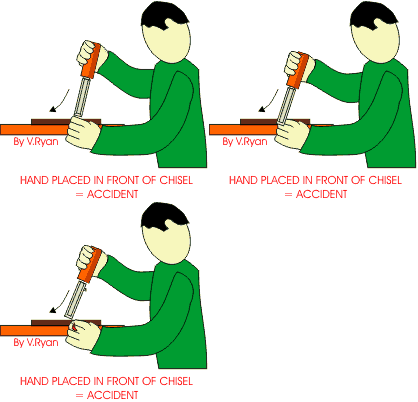
keep both your hands behind the cutting edge, do not be tempted to place
one hand in front of the chisel. One slip with the chisel will cause an
accident. |
|

|
The diagrams on the left and right show how easy it is
to have an accident with a chisel. Think - safety first. |
|
|
|
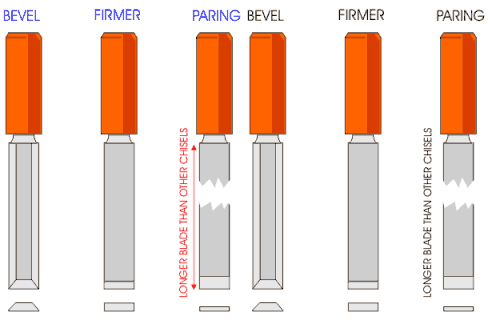
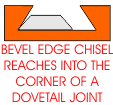
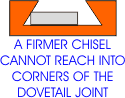
BEVEL edged chisels
are slightly undercut making them easy to push into corners. They are
normally used for finishing dovetail joints.
FIRMER chisels have a blade with a
rectangular cross-section. This means that they are stronger and can be used
for tougher/heavier work.
A PARING chisel is a longer, thinner
chisel which can be pushed into long joints such as housing joints. It is
used for cleaning up the joint and to make it an accurate fit. |
|
|
|
General Chisels
The Mortise Chisel
|
Mortise chisels are used for ‘chopping out’ joints
(chiselling away the waste wood). They are particularly useful for cutting
mortise joints as they are strong enough to withstand heavy blows with a
mallet.
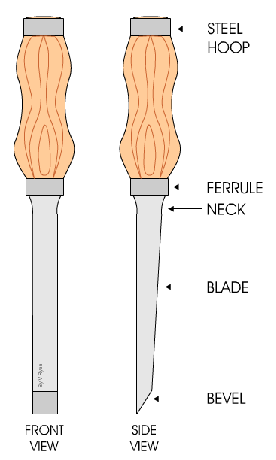
The handle is normally made of ash or beech with a steel hoop at the top to
stop it splitting. It also has a strengthening piece called a ferrule which
prevents the handle from splitting at the bottom when it is hit repeatedly
by a mallet. The blade is made from tool steel and the bevel is ground to an
angle of 30 degrees. |
|
|
|
| |
|
|
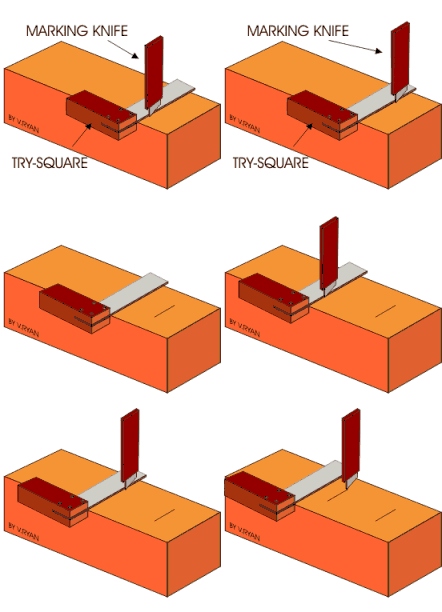
HOW THE MORTISE JOINT IS CUT
1. A try square and a
marking knife are used mark the lines at the top and bottom of the mortise. |
|
|
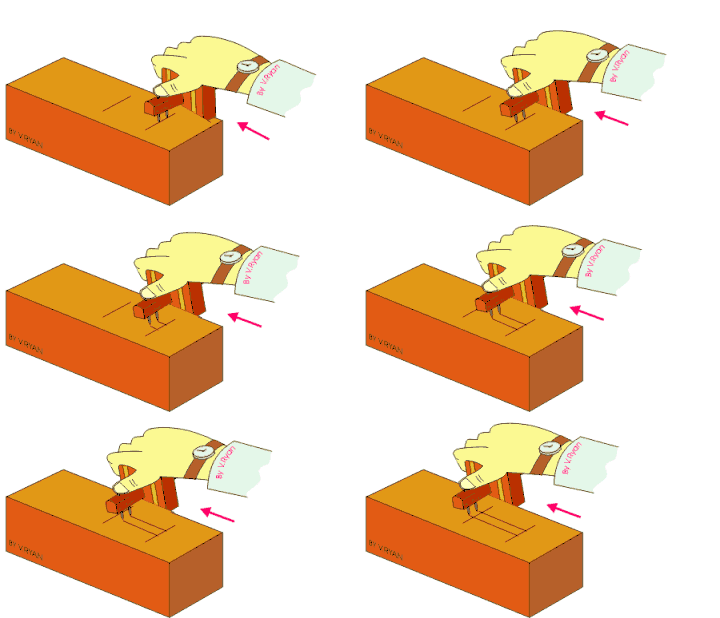
2. The stock of the
mortise gauge is pressed against the side of the wood. It is then pushed
along the wood until the mortise is marked out correctly.
(click
for more detail regarding mortise gauge) |
 |
| |
|
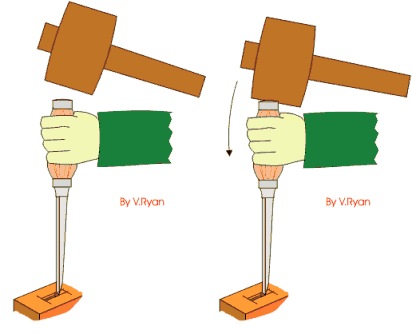 |
3. The mortise chisel
is then used to remove the waste material. A mallet provides the blows to
the chisel. With great care, an accurate mortise can be cut. |
A good straight chisel about 20mm. wide.
Any reputable make will do. Personally I prefer the Japanese laminated
chisels, which stay sharp longer and are quicker to sharpen. Axminster now sells
exactly the sort of thin paring chisel I prefer, which has been unavailable for
some years in England, their stock number for it is 267139. As far as I can see
this is not available from Dick.
A small V gouge and a small U gouge.
The V gouge need only be about 3mm wide, but the U gouge should be about 6mm
wide. These are only needed for the carved back to the pegbox which is an
optional feature of the design. So if you are not going to do this you won't
need these gouges.