Glue pot
Hide glue, also known as Scotch glue, hide glue, hot glue, rabbit skin glue
etc. is by far the best option for instrument making. It was the only glue used
in original instruments.
Do beware of the so-called Liquid Hide Glue, this sounds like a wonderful
idea, but it's no good at all for instrument making.
The glue needs to be heated with some water in a bain-marie so that you can
keep it just below boiling point while you are using it. The electric glue pots
thermostatically controlled designed just for this professional purpose are
rather expensive. But a simple ceramic basin in a saucepan of boiling water is
perfectly adequate.
An ordinary domestic iron held by its handle upside down in a vice will
provide an easily adjustable heat source for a glue pot.
A small separate lid for the brush is another improvement.
If you use the most primitive version of this with an open saucepan with a
glass jar holding the glue standing in the water, the steam arising from the
water partially condenses into the glue jar and keeps it in the right
consistency for longer. On the contrary, a close-coupled basin and water boiler
stops this happening and so the glue tends to evaporate off and become thick too
quickly, hence the special lids.
Some baby bottle warmers or an electric potpourri warmer work well too as
glue pot.
Glue brush
Get a small round hog bristle artists brush to use as a glue brush.
The Hot Glue Gun
|
|
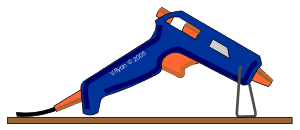
A hot glue gun is a very useful tool for joining
modelling materials and even more substantial materials can be fixed
together with it. ‘Sticks’ of solid glue are pushed into the back of the
gun, the trigger is pressed pushing the glue stick forward and molten glue
comes out of the nozzle. The glue is manufactured from thermoplastics. |
| Thermoplastics are plastics that melt and can
be reshaped when they are heated. Some are suitable as glues. There are
different types of glue sticks and these are selected depending on the
material being glued. Some glue sticks are more suitable for wood based
materials whilst others are for general gluing of a variety of materials.
|
 |
|
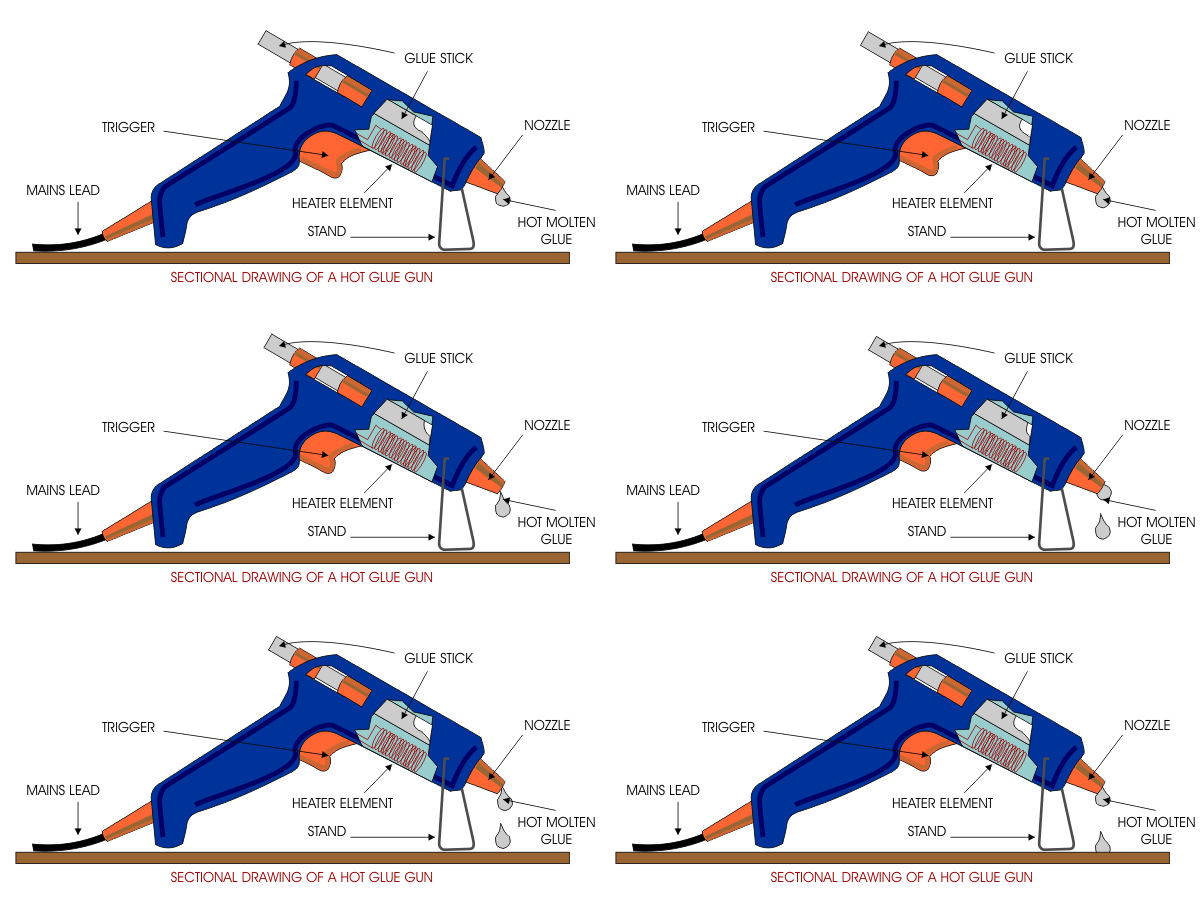
The diagram above shows a typical hot glue gun. Part of
its side has been cut away so that the heating element can be seen. Glue
guns should be switched on at least five to ten minutes before they are
used. This allows the heating element and the glue next to it, to heat up.
The glue stick becomes very hot and melts becoming molten. At this stage it
can be used to glue materials together. However, care should be taken
because hot glue is dangerous. Always keep hands and finger s away from the
glue as it is forced out of the nozzle. |
|
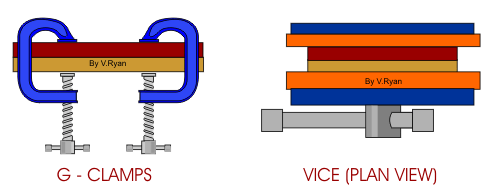
When the glue is applied to two pieces of material, they
should be clamped together for a short time. G-Clamps or a vice can be used
for this purpose. |
 |