
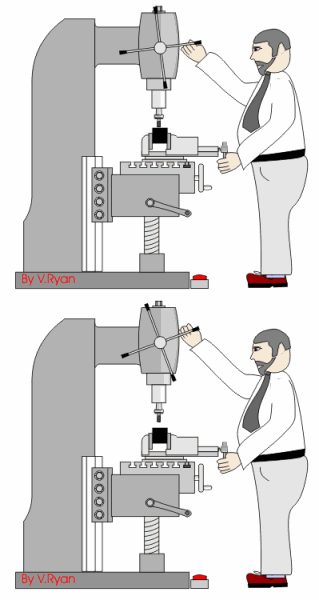
A vertical miller is used to shape metals such as mild steel and aluminium. It can also be used to shape plastics such as perspex and nylon. Full size milling machines such as the one shown below are powerful but also very accurate/precise. The cutting tools are very expensive and are broken easily if the machine operator tries to take too deep a cut, in one go. When using a vertical miller, the machine should be set up to cut away only a small amount of metal each time the cutter passes over the surface of the metal.
A wide selection of cutting tools are available. They are made from high speed steel and are strong enough to cut through mild steel, cast steel and aluminium. Three examples are shown below with an example of the profile they cut into the metal.

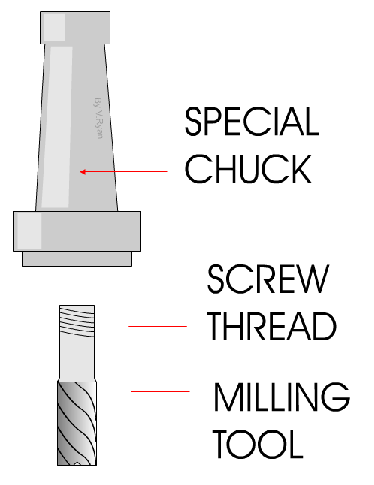
The milling tool has a screw thread at one end. This is turned into the chuck. A cloth is wrapped around the tool before this is done as it can easily cut through flesh. Care must be taken when setting up a cutting tool.
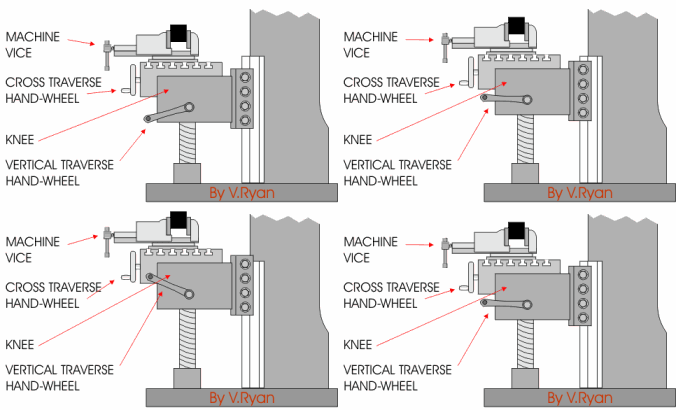
The vertical traverse hand wheel (handle) is turned in order to raise or lower the knee. This means that the machine vice is also raised or lowered towards or away from the cutting tool.
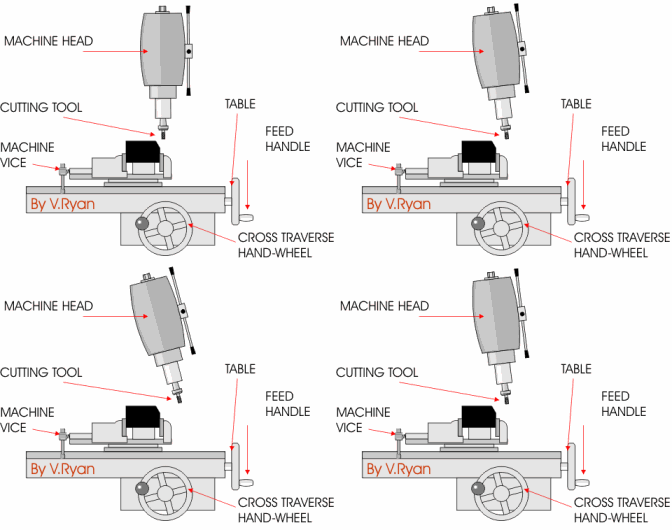
The machine head can be tilted to a variety of angles allowing chamfers to be machined. Normally this is done by slowly loosening a number of bolts and then tilting the machine head to the required angle. Some machines have a gauge on which angles can be read so that it can be set accurately.
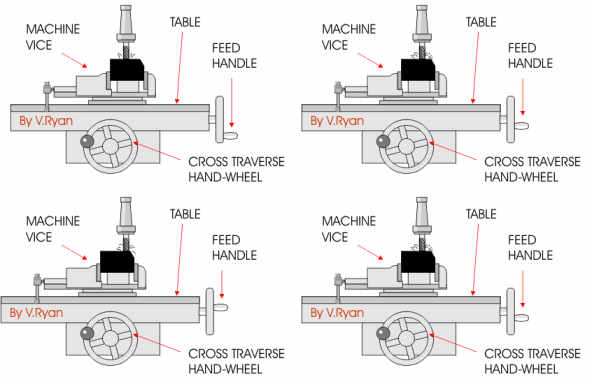
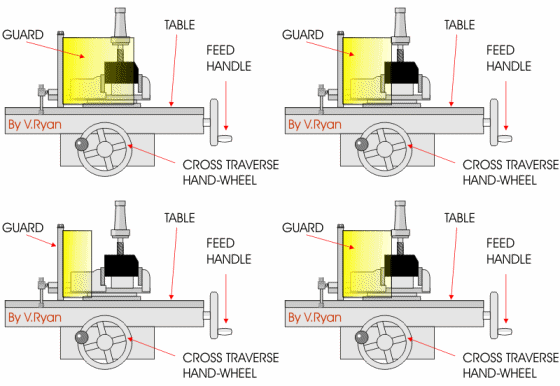
The feed handle is turned by the machine operator. This moves the table and anything bolted to it (such as a vice) towards the cutting tool.
Usually, the ‘feed’ of the machine can be set to automatic so that there is no need to turn the handles manually.
Using a guard or a number of guards is very important as this will further
ensure safety. When the machine is being operated the guards protect the machine
operator by preventing hot cuttings of steel/material flying outwards. The
guards can be 'swung' open and closed.
The operator should wear the usual safety clothing and goggles.
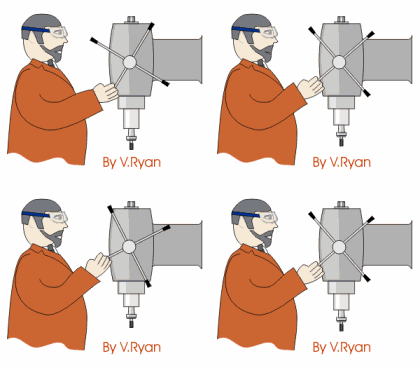
The machine head can be lowered and even used like a drilling machine, by turning the adjusting handles. Some milling machines do not have these. Normally, if the height of the head is altered it is then bolted/locked in position.
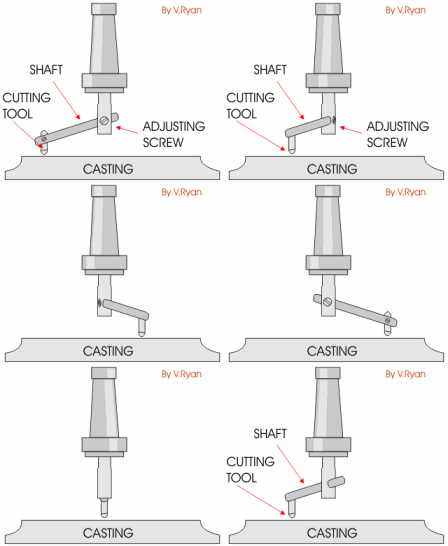
A large range of cutters are available but one of the more useful is the
‘fly-cutter’. In schools they are used to lightly skim the surface of aluminium
castings, resulting in a level surface.
The distance from the centre of the fly cutter to the cutting tool can be alter
by loosening the adjusting screw and sliding the shaft backwards or forwards.
The vertical milling machine is very dangerous if used by someone who has not been trained to use it safely. Never use a machine like this unless you have received precise operating instructions by the teacher. This machine can cut through steel and so it will quickly cut through flesh and bones with great ease. Also, the teacher should be next to you when you use it for the first few times.
Safe Ed has followed the instructions given to him by the teacher.
He has set up the material to be cut in a large machine vice which is bolted to
the milling machine table.
Guards have been paced around the work so that small pieces that fly off the
surface do not hit the machine operator.
Safe Ed has set up the automatic feed so that the cutting tool removes the
excess metal very slowly.
He watches the machine at all times, never moving away from it.
He also wears the correct protective clothing including safety goggles.
His hands are safely a way from the rotating cutter.
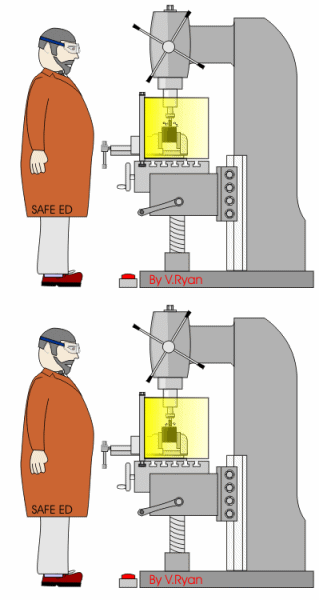
However, Ed the Handyman has decided to start the vertical miller, ignoring
the training he has been given.
As the cutting tool spins round at high speed he plays with the machine vice
handle and pulls down the cutting tool onto the metal.
The Horizontal Milling Machine is a very robust and sturdy machine. A variety of cutters are available to removed/shape material that is normally held in a strong machine vice. This horizontal miller is used when a vertical miller is less suitable. For instance, if a lot of material has to be removed by the cutters or there is less of a need for accuracy - a horizontal milling machine is chosen.

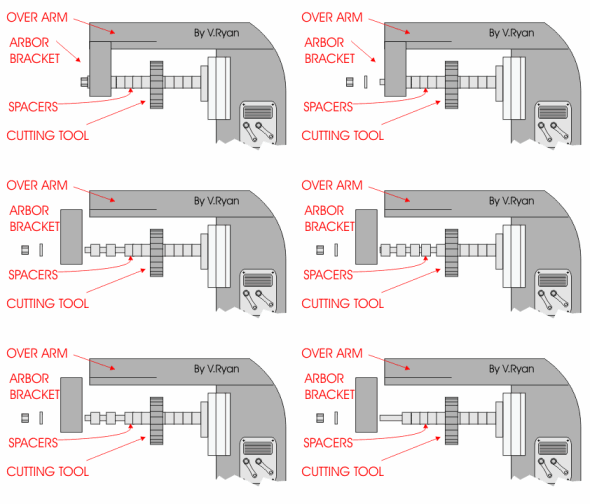
The cutter can be changed very easily. The arbor bracket is removed by loosening nuts and bolts that hold the arbor firmly in position. The arbor can be slid off the over arm. The spacers are then removed as well as the original cutter. The new cutter is placed in position, spacers slid back onto the arbor and the arbor bracket tightened back in position.
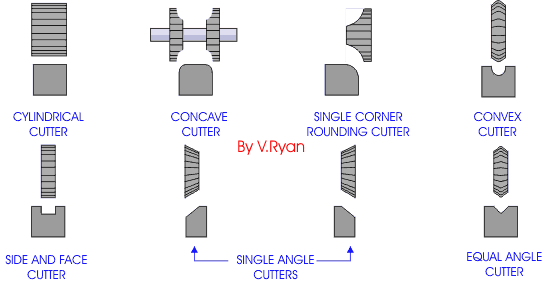
A large range of cutters are available. They are generally made from high
speed steel which means they will cut through metals such as mild steel and
aluminium. Some of the profiles (shapes) of the cutters are shown below.
Cylindrical cutters are used to remove a lot of waste material from a surface.
More detailed cutters, such as concave cutters, are used to machine a shape onto
a surface.
When machining with any of these cutters it is important to use coolant (soluble
oil) as the cutter will heat up as well as the material being machined. The
coolant cools the cutters and the material which means that the expensive
cutters last longer. It is also necessary to remove material a little at a time.
Several slow passes over the material may be needed to manufacture the desired
shape.
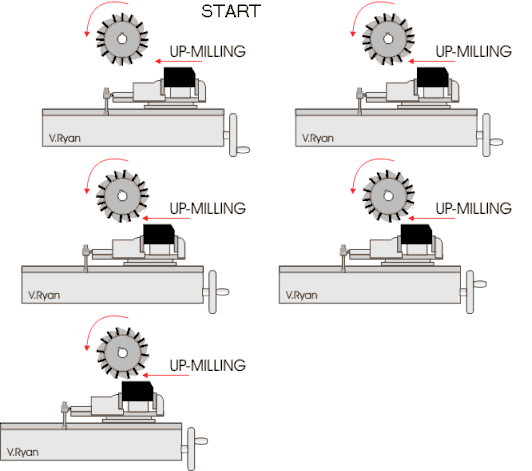
UP-MILLING
The safest way to machine a piece of metal using a horizontal miller is to feed the metal into the cutter, against its rotation. This is called up-milling and it is the technique used in school workshops. The metal must be held very firmly in a large machine vice, usually a nylon or leather mallet is used to hammer round the handle of the vice to ensure it is extremely tight.