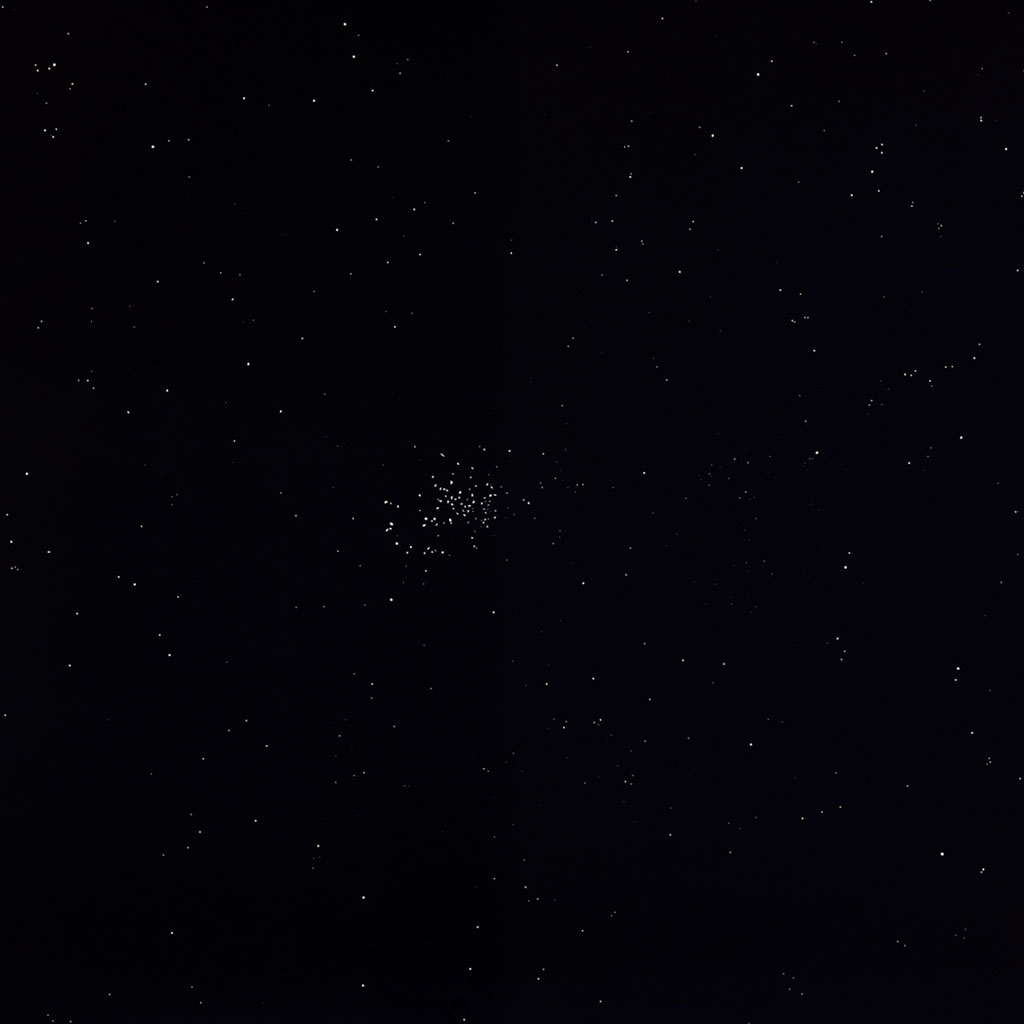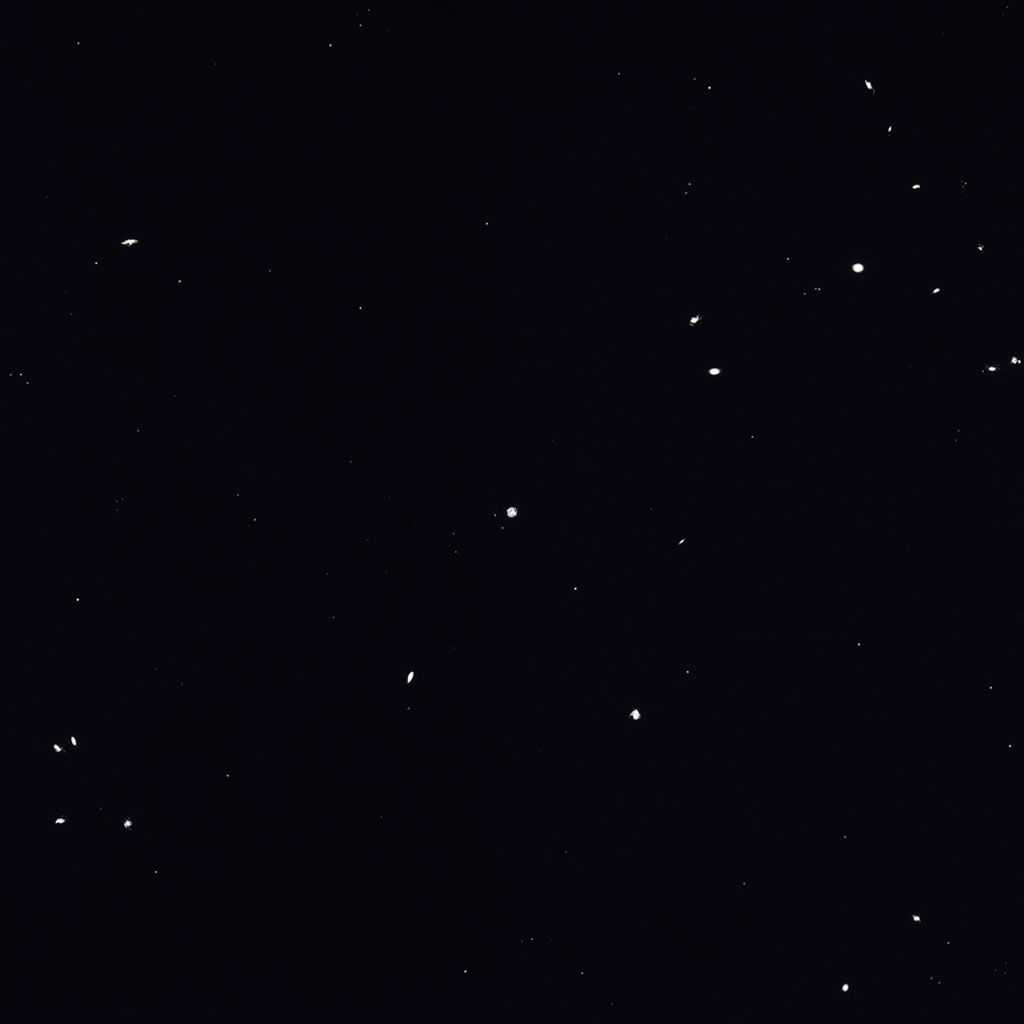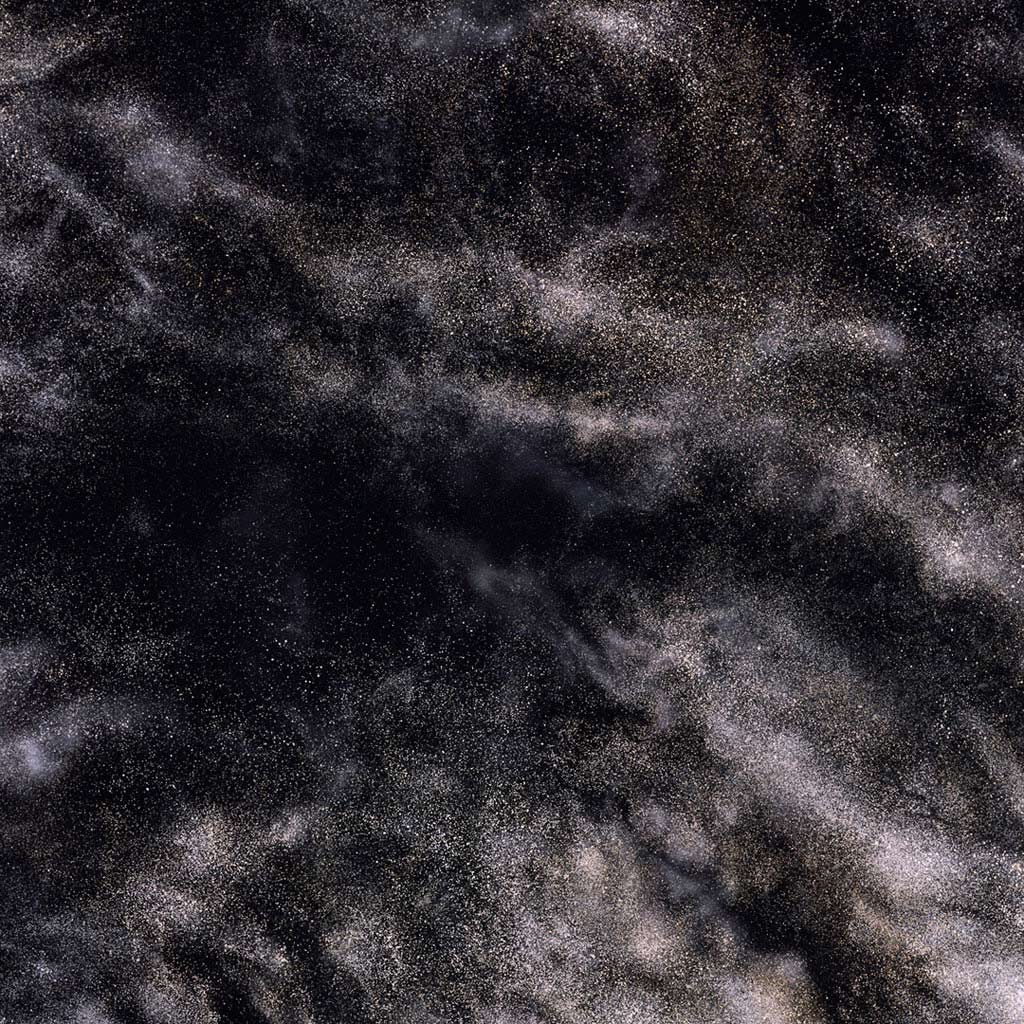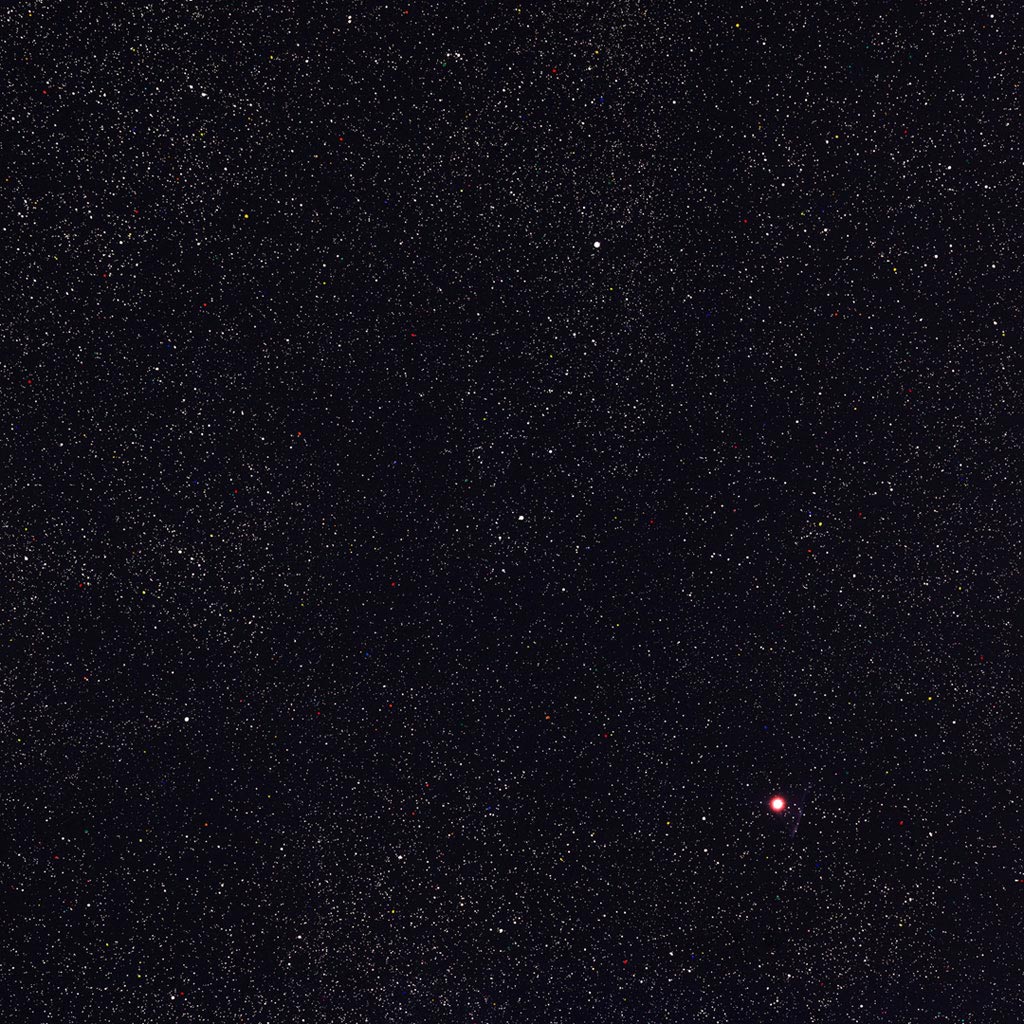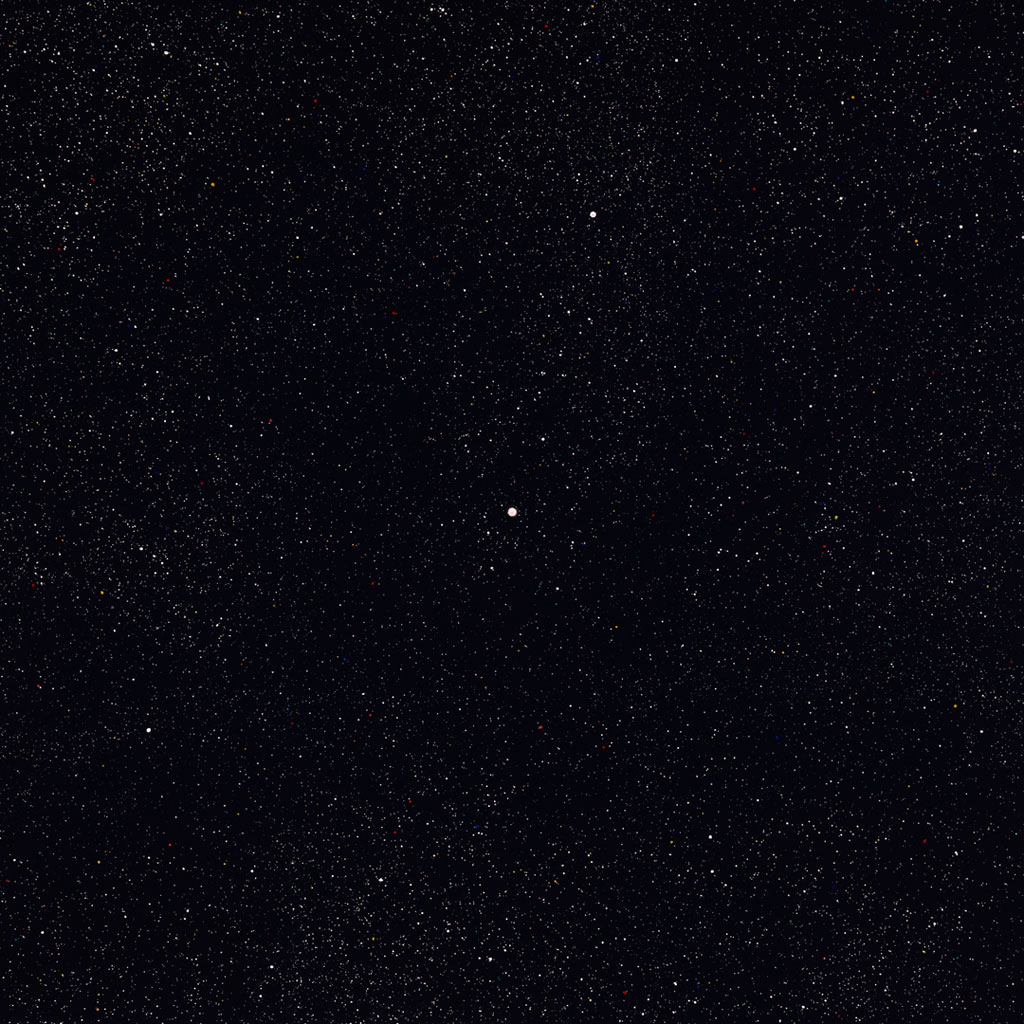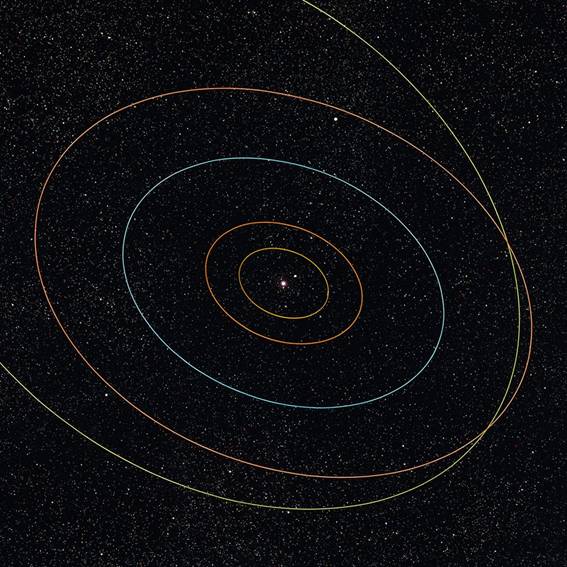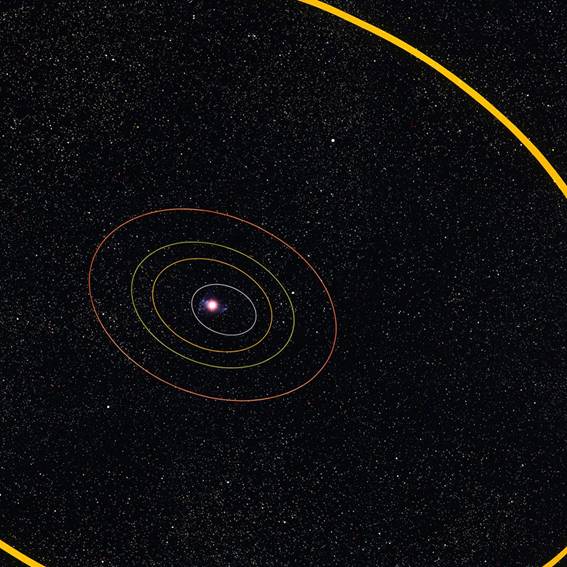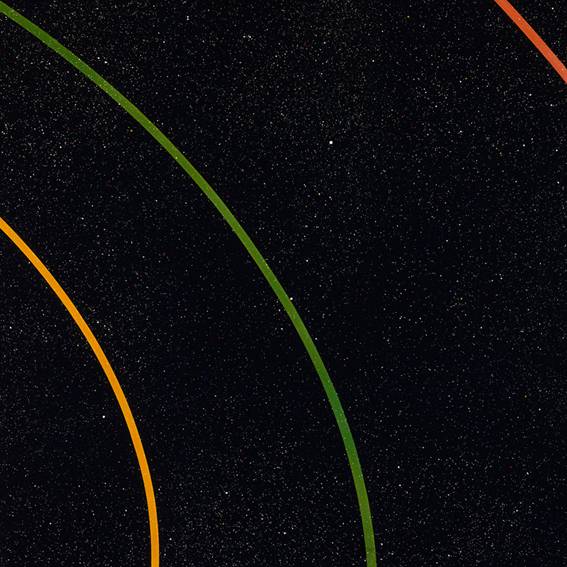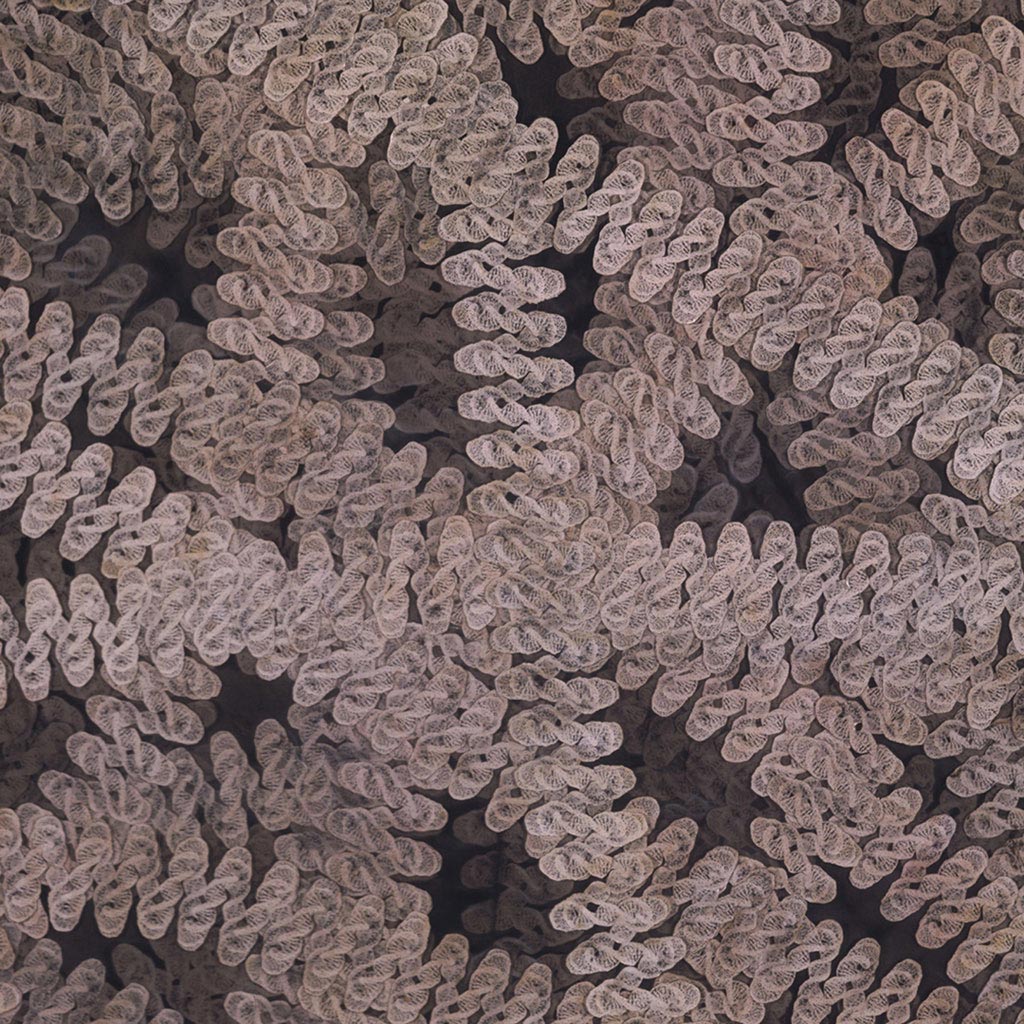
The following pictures are coloured frames of the 1968 American documentary short film Powers of Ten™ written and directed by Ray Eames and her husband, Charles Eames. The film is an adaptation of the 1957 book Cosmic View by Kees Boeke.
All the pictures are centred on the nucleus of an carbon atom, in a DNA molecule of a lymphocyte, in the hand of a person in a garden of Chicago.
The order of magnitude represent the length in meters of the side of the picture, i.e. +5 means a square picture 105m x 105m or 100000m x 100000m.
| +26 | ||
![]() |
The human mind is the tool we use to understand all scales.
At the far extremes of time and space it may well be our only tool.
Linde’s chaotic inflation theory models of the early universe . |
|
| +25 | ||
![]() |
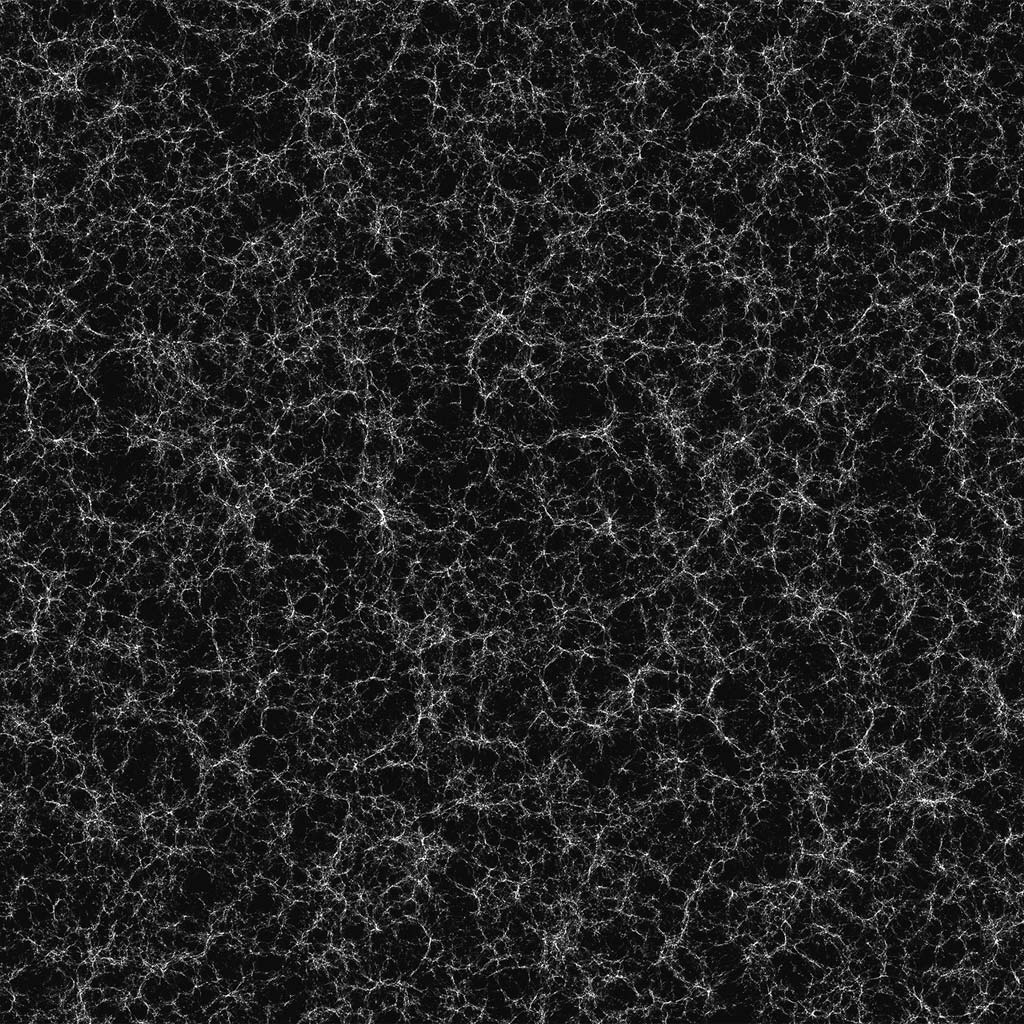
One billion years is a little less than one tenth of the age of the universe as we believe we know it to be. At this scale, we believe we do start to see some large scale structure in the universe. | |
| +24 | ||
![]() |
The Virgo Cluster of galaxies, a far larger group of galaxies than our own. The dominant galaxy – M87 – contains several trillion solar masses and an estimated 13 thousand globular clusters – compared to the humble 150-200 of our own. Light that left this order of magnitude at the time of the dinosaurs is only now reaching Earth. | |
| +23 | ||
![]() |
The scale of galactic companionship. This is comprised of
the Local Group of galaxies of which we are a tiny part; it is comprised
also of the Andromeda Galaxy and 30 other galaxies.
In 1923, Hubble proved that the Andromeda Galaxy was not a nebula within our Milky Way, but rather an independent galaxy 2.2 million light years distant. He showed that our Milky Way galaxy was no longer the center of the universe which gave us some sense of the true scale of our cosmic neighborhood. He later showed that all of the galaxies in the universe are moving away from each other. This means that the universe is expanding. In connection with that he also developed something called Hubble’s Law, which states that v=HoD. In other words, the speed with which a galaxy is moving away from us equals its distance from us times the Hubble constant. Although the value of Hubble’s constant was calculated by Sandage and Tamman to be approximately 50 Kilometers per second per megaparsec, there are some scientists who feel that this value is far too low. |
|
| +22 | ||
![]() |
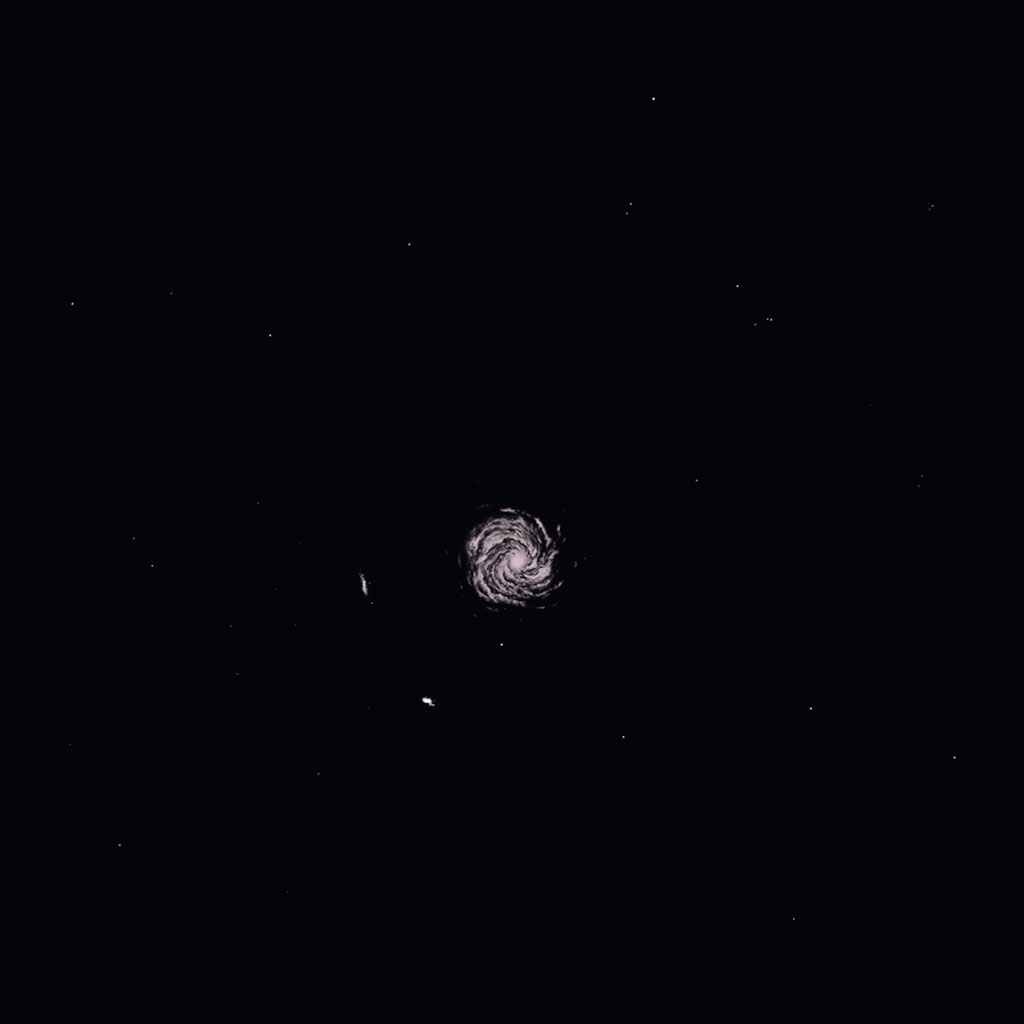
The two satellite galaxies of the Milky Way are the Clouds
of Magellan. This region is also home to 14 known dwarf galaxies.
In the mid-1970s, Vera Rubin began to study the rotation speeds of galaxies in an effort to understand why galaxies have different shapes (spirals, spheroids, irregular, etc). Since galaxies are vast collections of stars, nebulae, and other material, Rubin thought a good starting point would be to study the orbital patterns of stars in various portions of the disk at a range of distances from the center. After observing about 20 (and then 40, 100 and so on), Rubin noticed that the line was straight: meaning that the stars near the center of the disk, the ones half to the edge, and the ones at the edge of the galactic disk were all traveling at the same speed. [The result that was expected was something more familiar, like our own solar system, where those masses close to the center - like the planet Mercury - orbit quite fast (88 days), while by the time you get out to a planet like Pluto it takes 248 years for it to circle the Sun.] |
|
| +21 | ||
![]() |
The Milky Way galaxy home to a hundred billion stars many of which are grouped in star clusters or clouds. The Milky Way is a spiral. | |
| +20 | ||
![]() |
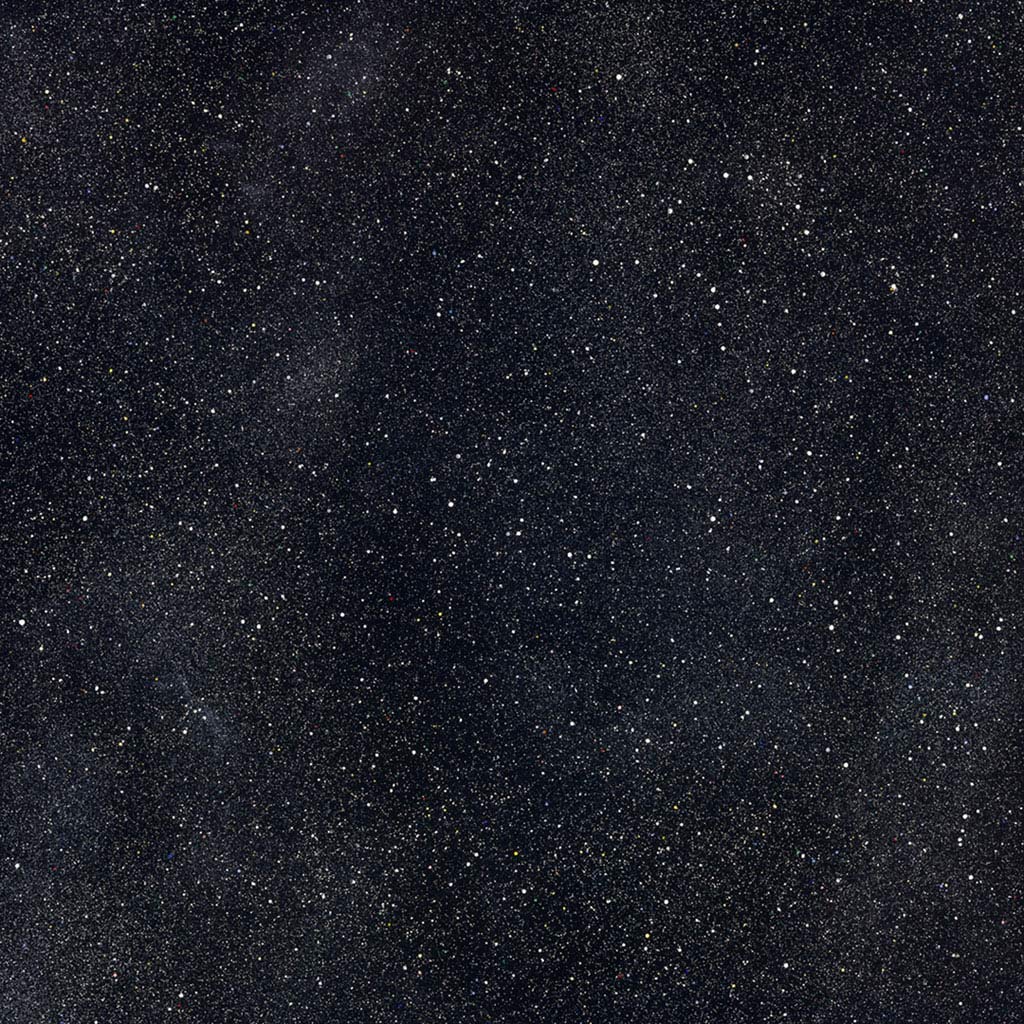
The scale of the structure of our galaxy and its rich broth
of stars.
One big challenge in astronomy is to measure cosmic distances. How do we know anything about objects 10 thousand light years away (10+20 meters)? This is emphatically a problem of scale. Though we can use triangulation by making two observations of the same object 6 months apart (in other words, when the Earth is at the two extremes of its orbit), this is only effective for measuring relatively short distances. For objects many thousands or millions of light-years away we cannot do anything active. Standard candles are one of the critical ways we have found to help us measure cosmic distances. The principle is quite simple: if you could find an object whose luminosity (brightness) you knew absolutely just by looking at it, then, by comparing the apparent luminosity with the absolute luminosity, you could figure how far away it is. In 1912, Harvard astronomer Henrietta Leavitt discovered an extraordinarily consistent pattern: that certain stars with variable brightness followed a very strict relationship between their absolute luminosity and the period of their variable brightness - they’re known as Cepheids after the constellation in which they were first discovered. |
|
| +19 | ||
![]() |
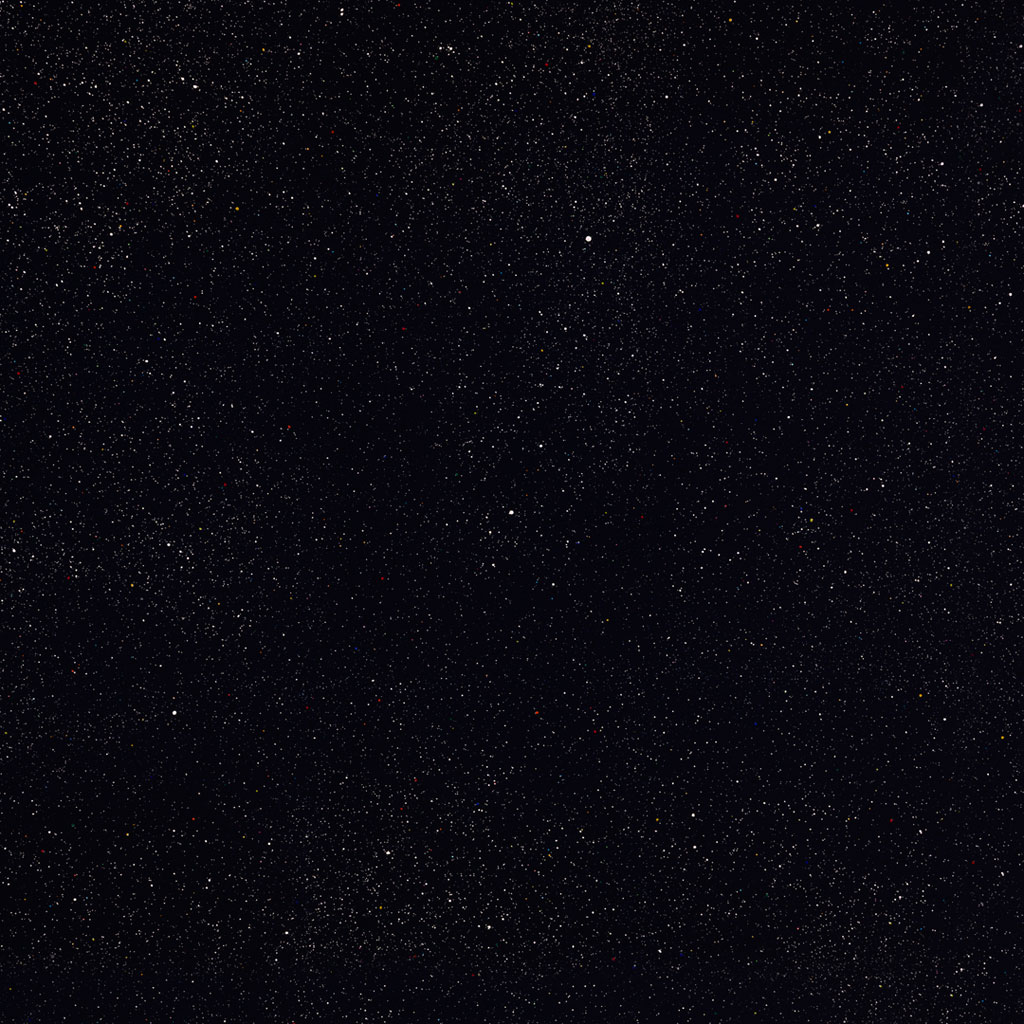
The scale of human astronomical knowledge before 1600 – before the invention of the telescope. Almost all the stars in the ancient constellations are at the scale of this frame. The closest known pulsar (a highly magnetized, rotating neuron star) is also found here. | |
| +18 | ||
![]() |
The bright red star is Arcturus, one of our not too distant
neighbours.
The telescope has contributed more to our understanding of the heavens than any other single physical tool. There are two kinds of optical telescopes: refractors and reflectors. |
|
| +17 | ||
![]() |
Roughly the scale of distance to our nearest stellar neighbor, Alpha Centauri. | |
| +16 | ||
![]() |
The light-year is the basic unit of measurement for cosmic
distance. It would take a beam of light one year to travel from one edge of
this frame to the other.
10+16 meters is an important landmark in space - 1 light-year, the distance a beam of light can travel in a year. |
|
| +15 | ||
![]() |
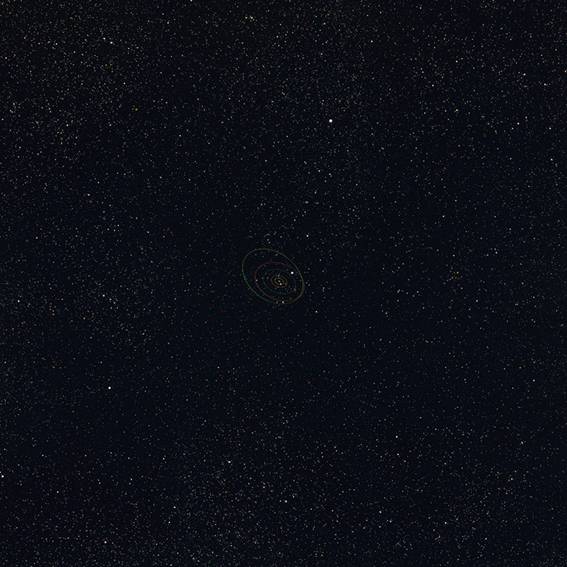
The vastness of space. The region of the Oort Cloud, which
holds comet nuclei – a sort of residue from the formation of the Solar
System. Some scientists feel it may even extend into the next power of 10.
Though we are beyond the 8 (or so) planets of the traditional solar system, there are objects here that are still within the thrall of the Sun’s gravitational pull. Although it is weaker here - no question (gravity falls off exponentially) - the longer interval comets and other objects are still centered around the Sun. |
|
| +14 | ||
![]() |
The scale of our celestial neighborhood. The essence of our solar system’s orbits strongly resemble the diagram that Copernicus drew in 1510, though it took Kepler to provide the elliptical nuances. | |
| +13 | ||
![]() |
The outer planets of our Solar System (Jupiter, Saturn, Uranus, and Neptune). Extending 3 billion kilometers beyond Neptune’s orbit is the Kuiper belt, a region of comets. Ours is a relatively flat planetary system; the exception is the outermost inclined orbit of the dwarf planet, Pluto, which was excluded as a full-fledged planet in 2006. | |
| +12 | ||
![]() |
The inner planets (Mercury, Venus, Earth, and Mars) with portions of Jupiter’s orbit encircling them. The asteroid and meteor belt is nestled between the orbits of Mars and Jupiter. The Sun is visible at the center of the Solar System. The position of the Earth relative to the Sun is also an important distance reference: an astronomical unit (AU) is the mean average distance between the two. | |
| +11 | ||
![]() |
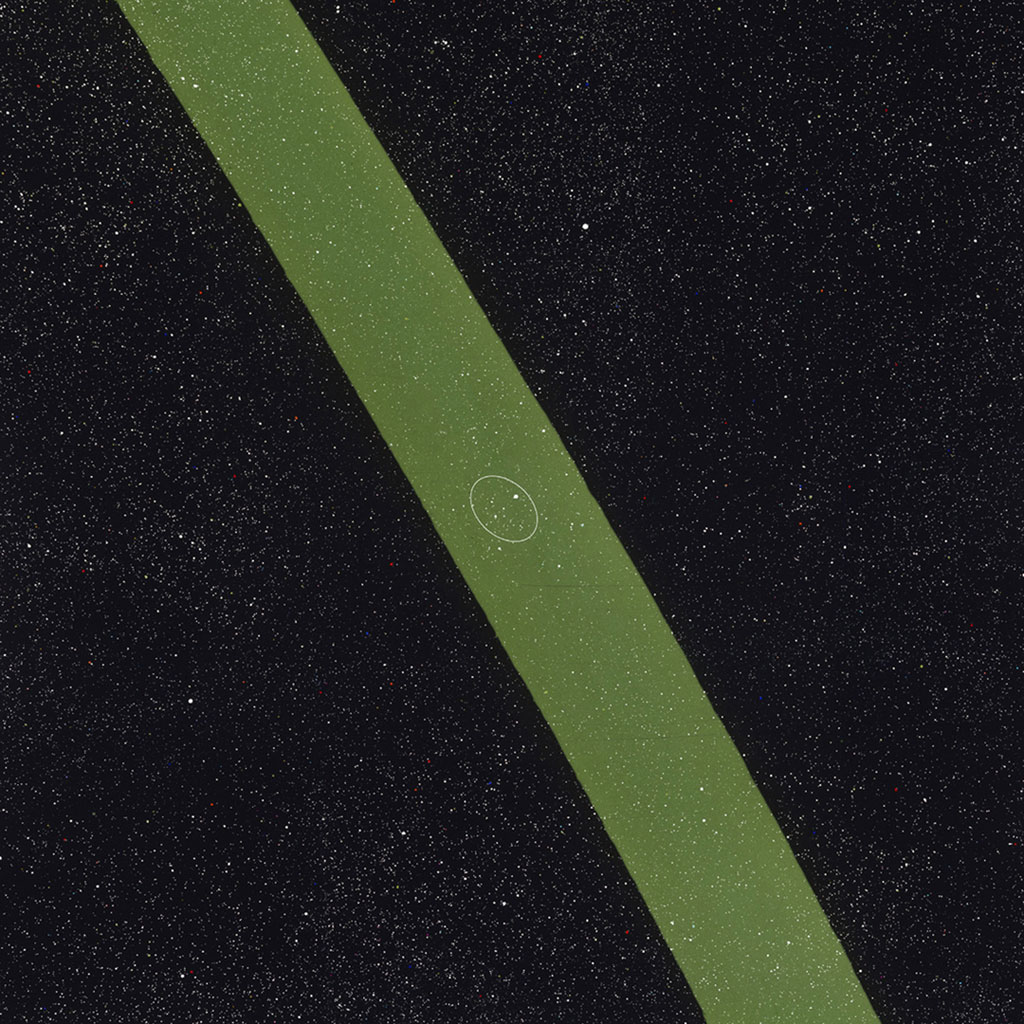
The realm of Earth and its planetary neighbors. We see
parts of the orbits of Venus, Earth, and Mars. The distance the Earth
travels through space in about six weeks.
The three arcs that you see represent the paths traveled by three planets; the green arc represents the six-week-long path traveled by the Earth each September and October. The other two paths are of Earth’s closest neighbors: Mars and Venus. |
|
| +10 | ||
![]() |
The distance the Earth travels through space in about four days. | |
| +09 | ||
![]() |
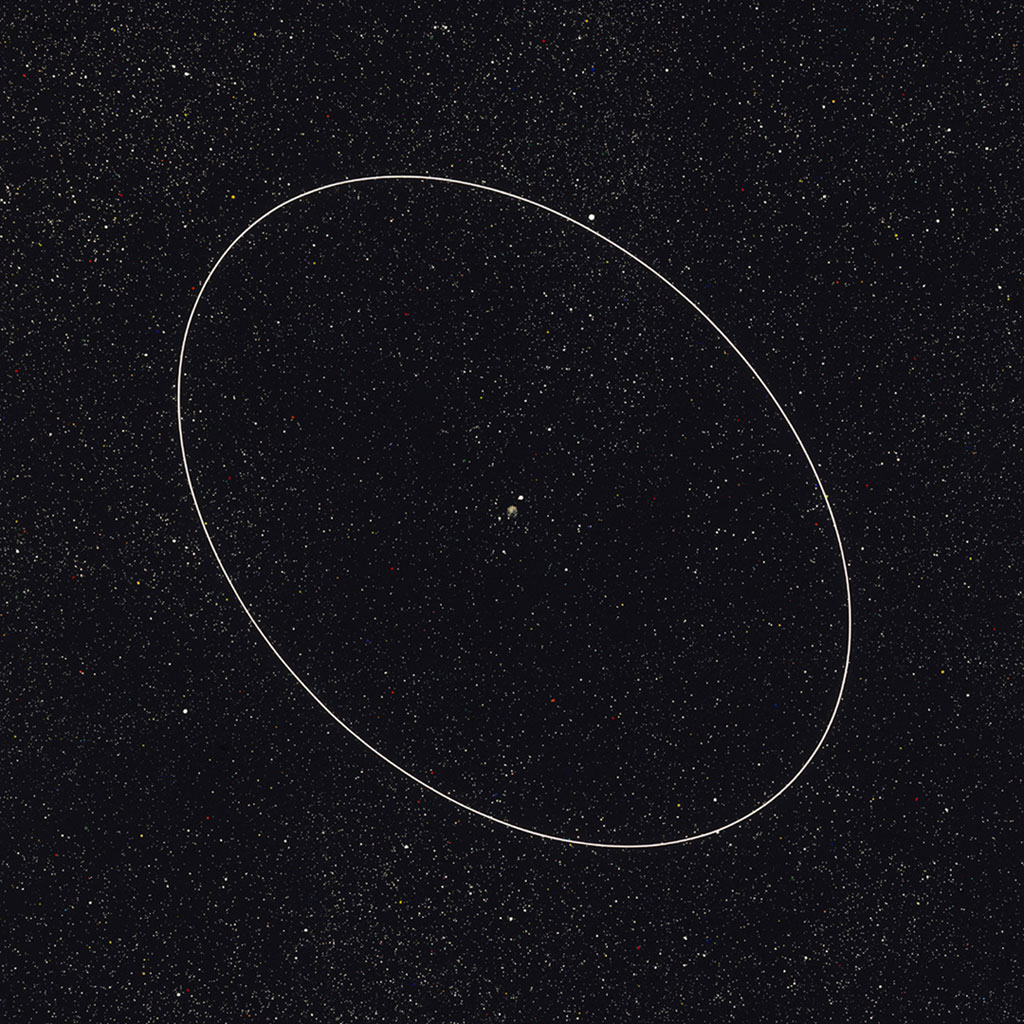
The orbit of the Moon traced in white – a path that affects the Earth’s tides and can brighten its nights. In one second, a beam of light would travel about one third of the way across this frame. And Man’s trip to this celestial body took three days. | |
| +08 | ||
![]() |
The distance the Earth travels through space (seen by the
orbital fragment within this frame) in one hour.
In terms of space, 10+08 is 100,000 kilometers or the distance that the earth travels in one hour. The Earth, the third planet from the Sun, and the fifth largest planet, orbits the Sun at an average distance of 93 million miles.
|
|
| +07 | ||
![]() |
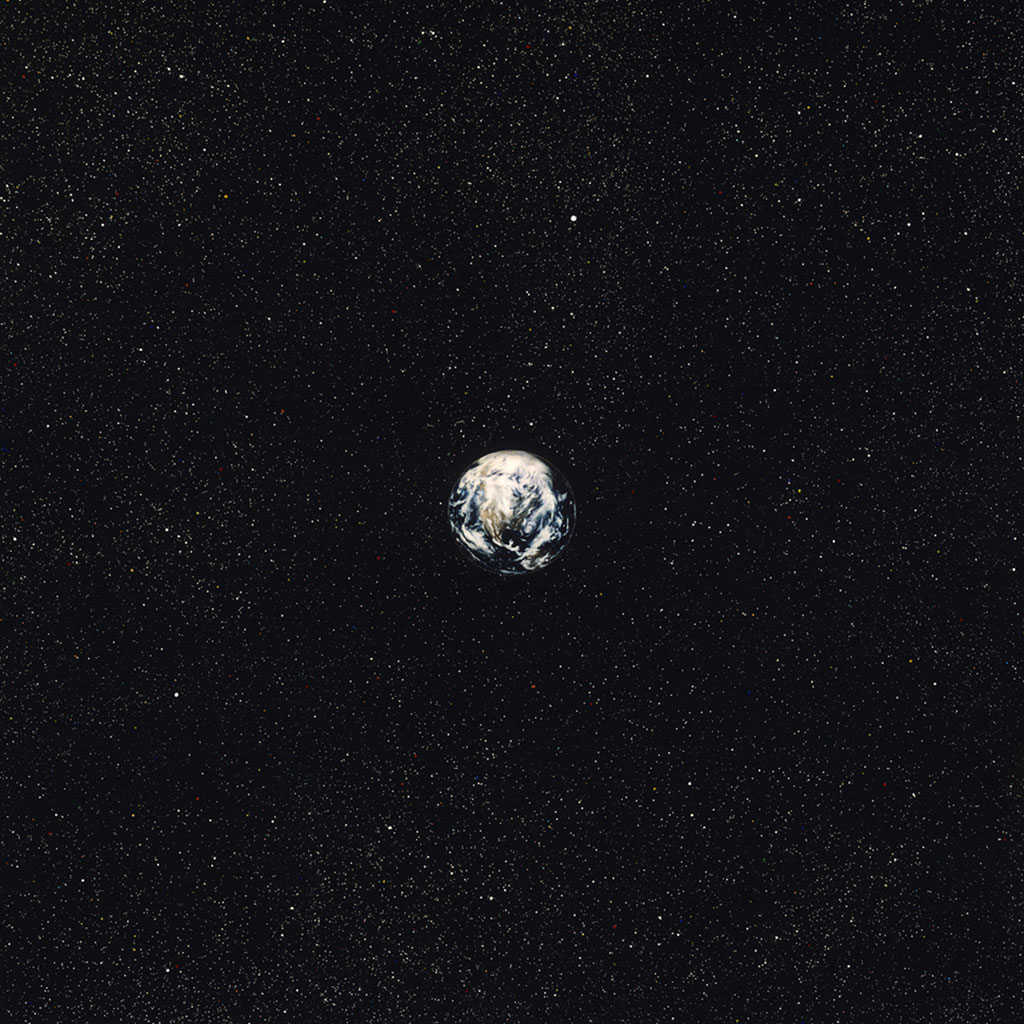
The size of the Earth. Its size can be a useful point of reference for considering cosmic scale: for example, the Earth is less than 1/100 the diameter of the Sun and 1/10 the diameter of Jupiter. | |
| +06 | ||
![]() |
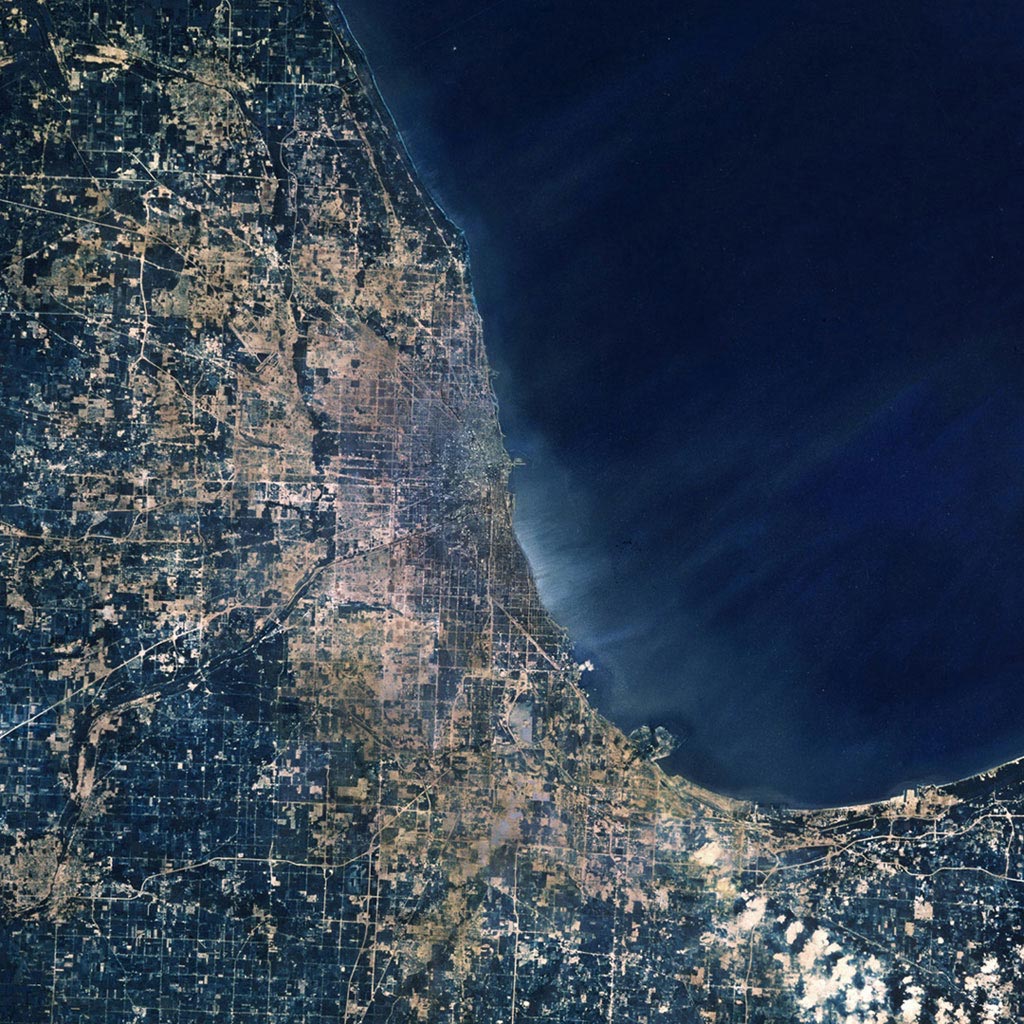
The scale of human regions (of states, provinces, and,
often, whole countries). We see all of Lake Michigan here.
10+06 is the scale of nations and continents. |
|
| +05 | ||
![]() |
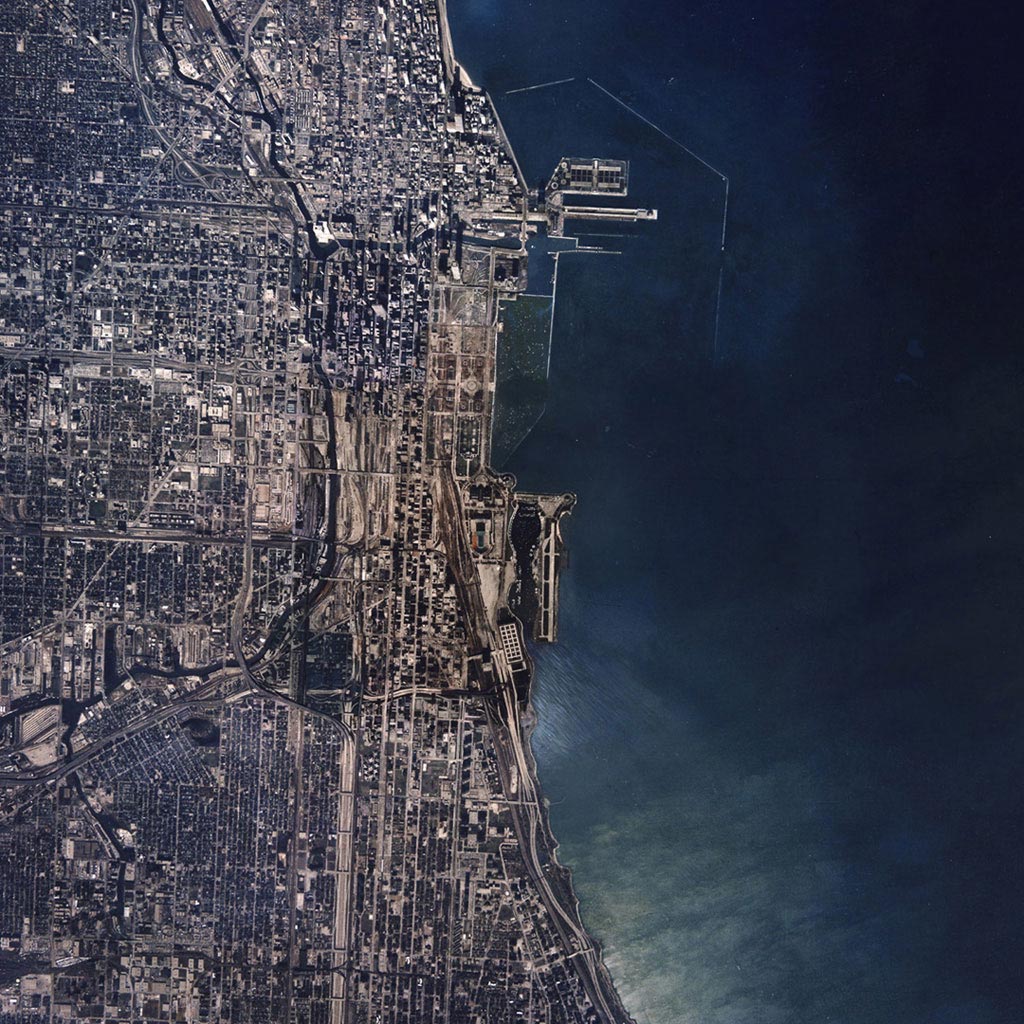
The scale of human cities. We can see the greater Chicago metropolitan area here. | |
| +04 | ||
![]() |
The scale of reconnoitring. The distance a column of army ants can cover in a day. | |
| +03 | ||
![]() |
The scale of a neighborhood or village. We can see Soldier
Field, Shedd Aquarium, the Field Museum and other public structures on the
Chicago waterfront.
This is the scale of the town or village - or the neighborhood of today’s modern city. It is also the scale of the everyday heroics of engineering. |

|
| +02 | ||
![]() |
A scale that contains most of the biggest living organisms,
buildings, and ships. A sprinter can run this far in about 10 seconds. The
Wright Brothers flew about this far on their first flight.
This is the scale of big buildings - not necessarily the biggest, but the substantial structures that make up the modern city. |
|
| +01 | ||
![]() |
The scale of this field and of human habitations. Most
buildings seem to be within this order of magnitude.
If the human scale was, in a sense, about the individual, then at this scale we begin to reach out to our most intimate community - our family. This is the scale of the home, of language, of conversation. |

|
| +00 | ||
![]() |
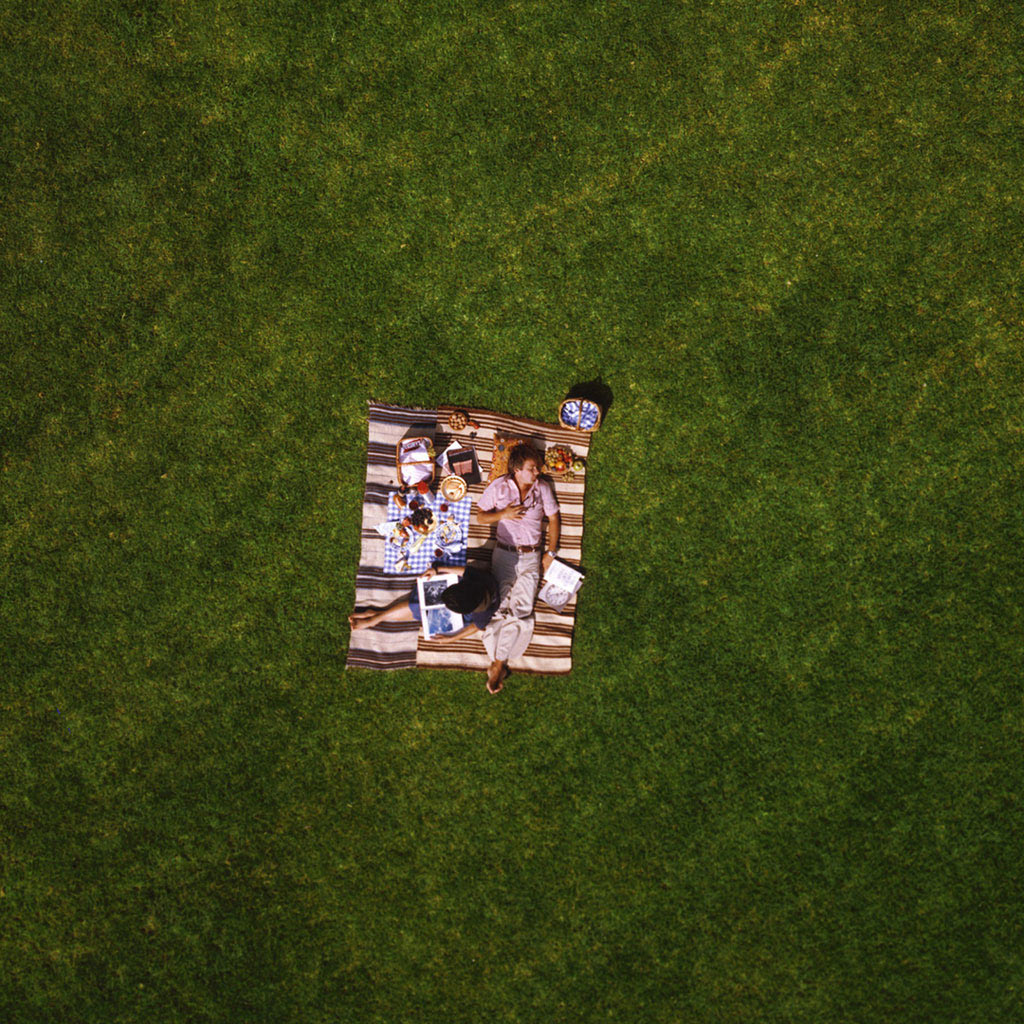
The welcoming scale of the picnic. This is the human scale,
the scale of human companionship, conversation, touch. We bring all the
other orders of magnitude into our human scale for consideration.
This is the human scale - roughly the size of a human being. |

|
| -01 | ||
![]() |
This scale is now intimate but familiar to our naked eye;
it is the scale of the sleeping man’s hand and what could be held within it.
This is the scale of the hand. For human beings, there has always been a special connection between the hand and the mind. Our brain is specially wired to learn using this connection. Perhaps this accounts for the primal fascination of the well-crafted object. This is a scale that we understand. We manipulate things at this scale, interrogate them with our touch, and then, from this touchstone of scale, we often try to apply our learning and metaphors to other scales. |
|
| -02 | ||
![]() |
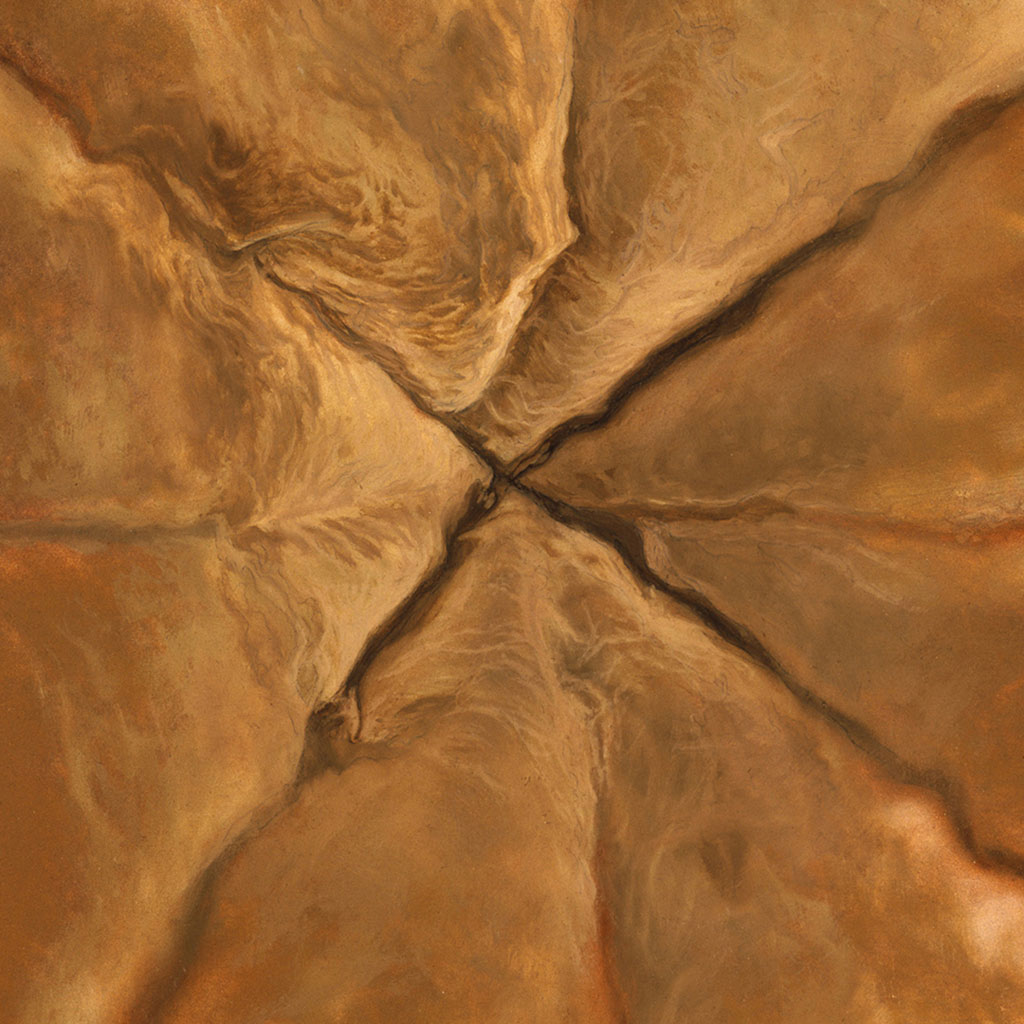
The seemingly fractal surface of the skin. This is the scale of delicate flowers and small creatures; the approximate width of an adult’s fingernail. In spatial scales: a centimeter. | |
| -03 | ||
![]() |
The scale of the creases of the skin – the white blood cell seen at 10-05 meters is in a capillary just below the surface of this image. The perforations on postage stamp rolls are about this size. | |
| -04 | ||
![]() |
The scale of precision surgery and fine blood vessels.
We are at the scale of biomechanics - the scale at which fine surgeons operate. The scale where cells communicate with each other, where the brain’s neurons begin to conglomerate into regions, where cells become vessels. |
|
| -05 | ||
![]() |
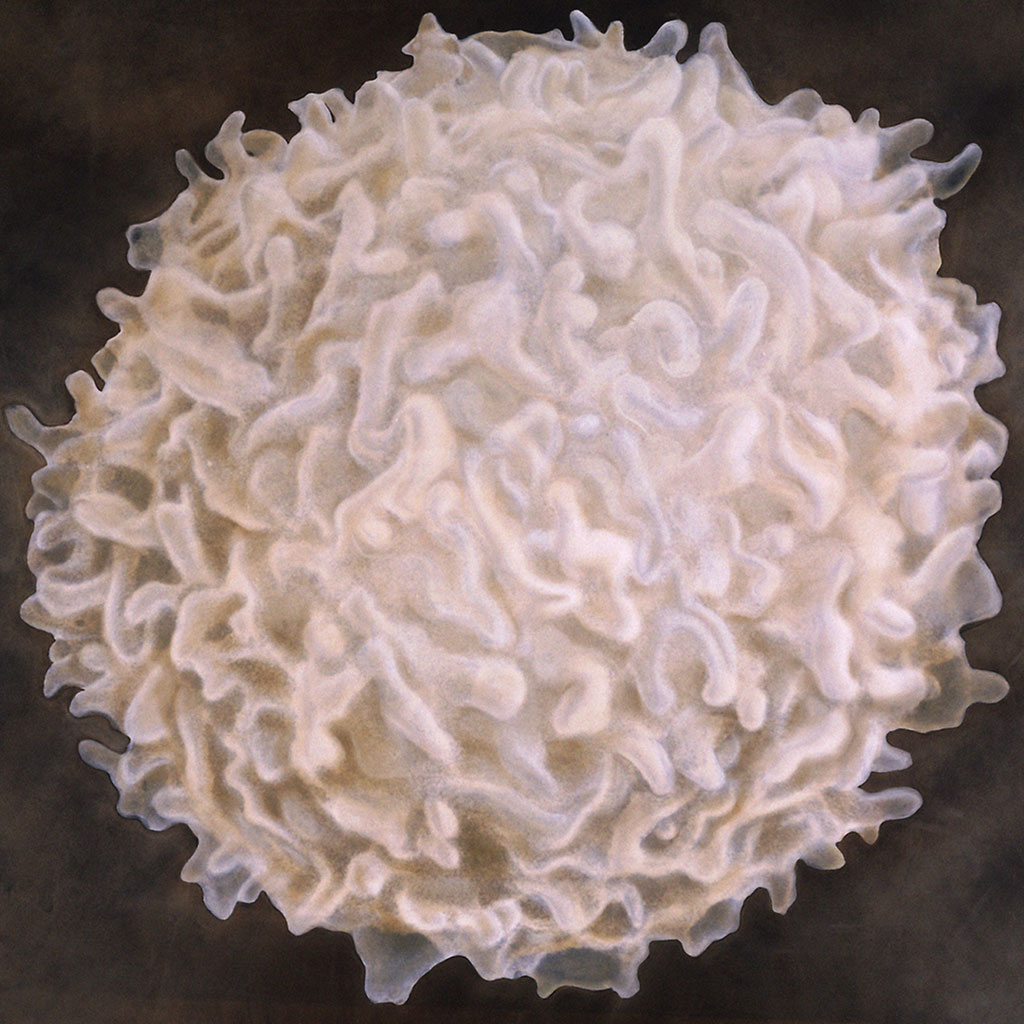
A Ruffly Lymphocyte, which is a type of white blood cell.
There are about 10+23 cells in
the human body, and this size is typical of most of them.
10-05 (100 microns) is also the scale of the jewel-like organisms called diatoms, once avidly collected during Victorian England’s microscope craze. These improbable organisms have a body of glass and, although related to algae, many have the capability of self-locomotion. And, of course, a beam of light of this wavelength would be considered infrared or ultraviolet. |
|
| -06 | ||
![]() |
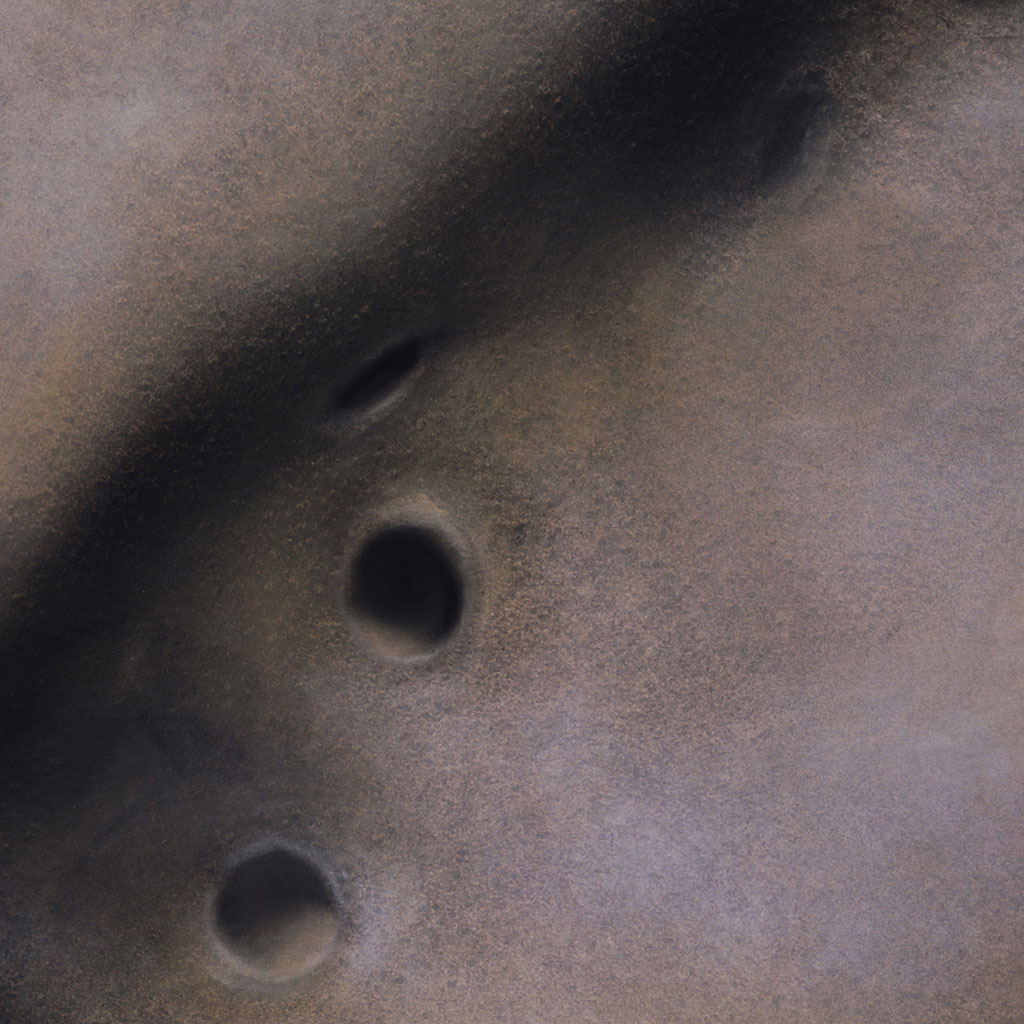
The wall of the cell nucleus. | |
| -07 | ||
![]() |
A portion of a chromosome.
100 nanometers = 1000 angstroms |
|
| -08 | ||
![]() |
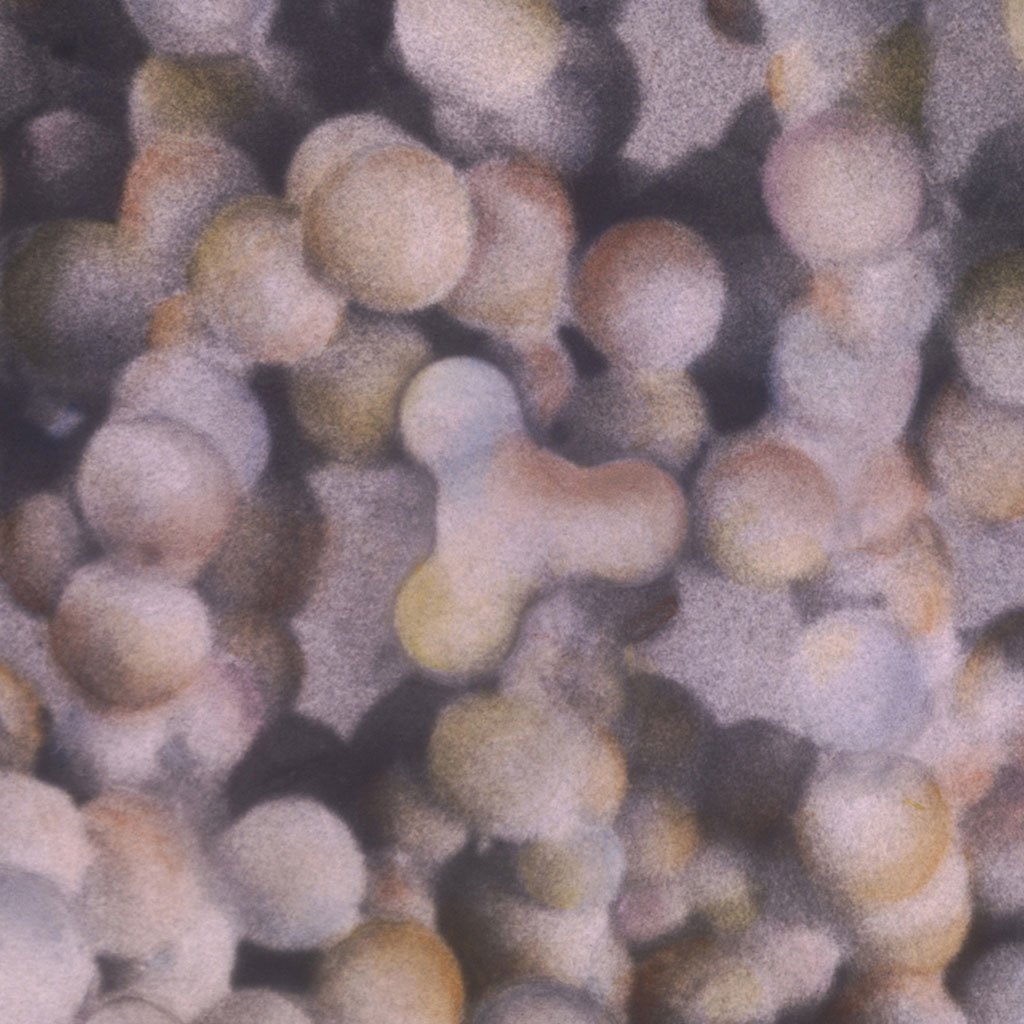
The scale of individual genes and simple viruses.
10 nanometers = 100 angstroms This is the scale of strands of DNA, of viruses and prions. |
|
| -09 | ||
![]() |
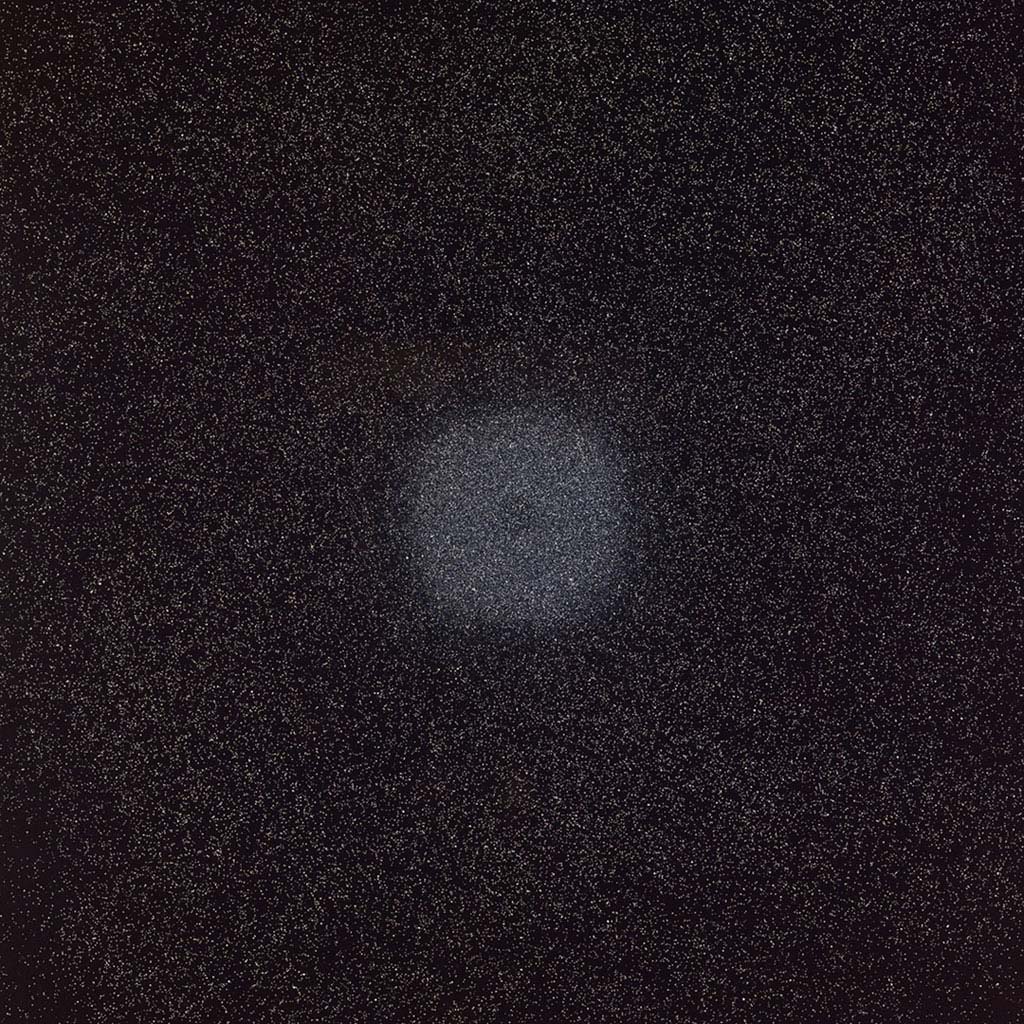
The scale of the base pairs of DNA, the building blocks of
the genetic message and fundamental unit of the mechanism of heredity.
1 nanometer = 10 angstroms This is the scale of simple molecules and the building blocks of DNA. We are now moving from the realms of pure physics and chemistry into the simplest structures of biology. It is no longer enough to know which atom is which, it is how and with which other ones they connect that becomes important at this scale. Part of the magic though, is that all the forces, subatomic and atomic that were in play before are included in the connections that make up life. Chemistry doesn’t stop being chemistry just because it is biochemistry, it just has a different kind of richness. |
|
| -10 | ||
![]() |
The scale of the outermost shell of electrons, which in
turn is part of the bond to the three hydrogen atoms around it. These are
NOT specific electrons we see here but, rather, their suggestion. A beam of
light with a wavelength this long would be an X-ray.
100 picometers = 1 angstrom |
|
| -11 | ||
![]() |
This is the scale of the innermost shell of electrons.
These are NOT specific electrons we see here but, rather, a suggestion of
their activity.
We are at the scale of the inner electron shell. This shell is not an actual shell or even an actual orbit of a planet, it is a kind of zone of the probability of finding these electrons of the inner shell. The journey of understanding electricity, grasping the unity of magnetism and electricity and the discovery of the electron, were key stepping stones in understanding this scale. Each discovery built on the last. A final reminder, all the images of the atom and smaller are different than the images of larger scales, such as the chair seen to our right. While the chair looks pretty much like that picture, this Powers of Ten image is, in a sense, a model of what things are like at this scale. We can not see anything at this scale, in the sense we usually mean it. This is because when we see, we see light reflecting off an object. Well, this electron shell is far tinier than the wavelengths of visible light, so there is no information to be reflected and taken in by our retinas. So we must model it instead. It is why there are no photographs of atoms in the way we would think of a typical photo. |
|
| -12 | ||
![]() |
Across this inner space act the forces that keep the electrons in the thrall of the nucleus. A wavelength of light this long (or short) is called a gamma ray. | |
| -13 | ||
![]() |
The vast nothing in the realms between the nucleus and its
orbiting electrons. The charged particles of the nucleus are in the distant
center – all part of the atomic scale.
As the vast emptiness of the interior of the atom dominates this power of ten in Space, this makes it an appropriate order of magnitude to consider this scale in Time. To get a feeling for how short this is, if you were racing to the Sun and were fast enough to get there in one second, after 10-13 seconds you would have traveled only half an inch. But although 10-13 seconds may seem impossibly small, as we have already seen, atomic clocks are more precise than this. This is the scale of certain lasers, used in surgery and used to manipulate time itself. A femtosecond laser (10-13 seconds is 100 femtoseconds) refers to how often a pulse of light is emitted in the laser. And many meaningful aspects of this scale in time are best manifested at this scale in space as well. |
|
| -14 | ||
![]() |
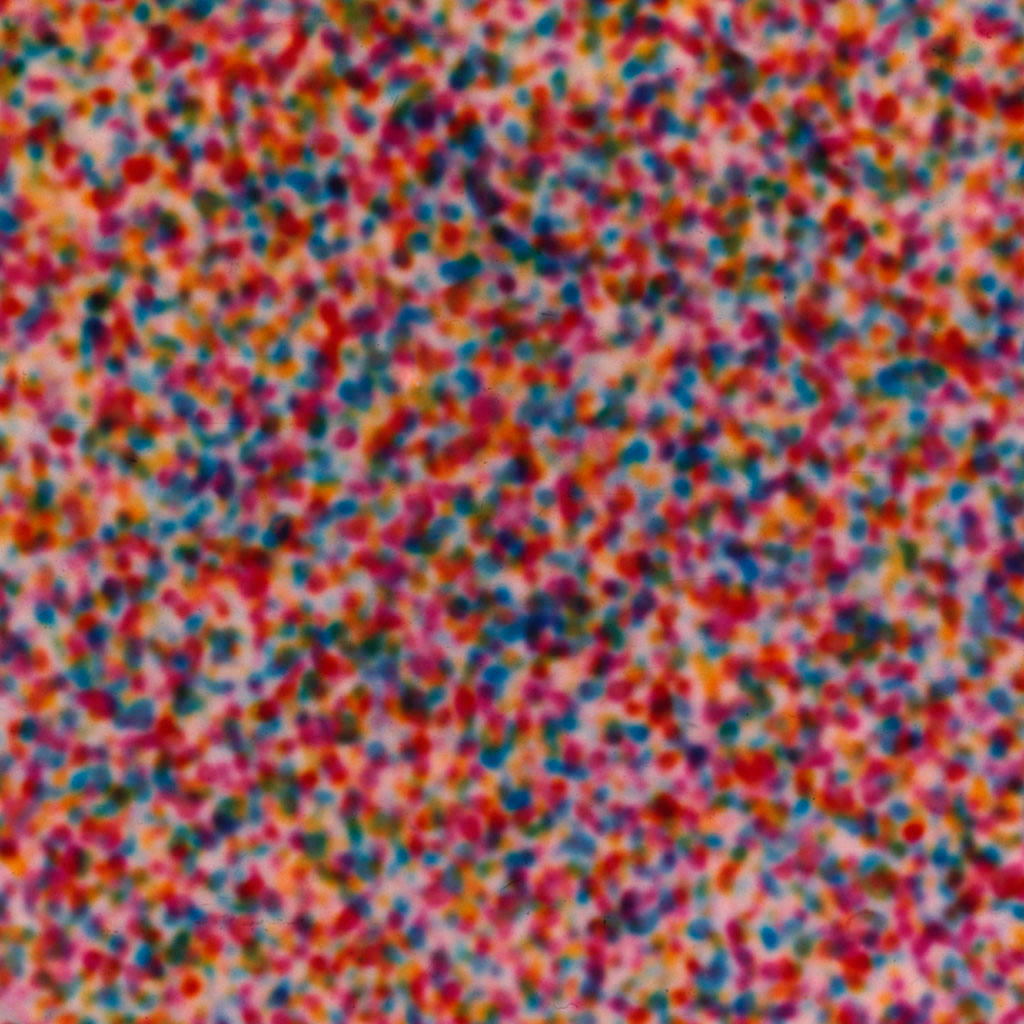
10 fermis is roughly the diameter of the tremendously dense
atomic nucleus of this carbon atom. Carbon is present in all organic
molecules.
This is the scale of the nucleus of the atom. The number of protons in the nucleus determines what element a given atom is. For example, the carbon atom has 6 protons - and 6 neutrons (the number of neutrons in an atoms nucleus can vary, but change the number of protons and you change what element it is). The image above shows a representation of the nucleus of a carbon atom. |
|
| -15 | ||
![]() |
1 fermi is roughly the size of a proton or a neutron, two of the universal modules that combine to make up matter throughout our universe. | |
| -16 | ||
![]() |
At the time the film Powers of Ten™ was made 10-16 meters was the scale at which the journey faded to black, still pushing forward into the mystery. At that time the quark theory seemed promising, but still fairly speculative. Today, all 6 hypothesized quarks have been found. | |
| -17 | ||
![]() |
This is the domain within which quarks operate. Important: our representations of the quark and its realm only symbolize these scales. Heisenberg's Uncertainty Principle tells us we can never know both the position and the momentum of such a particle at the same time. | |
| -18 | ||
![]() |
The size and scale of a quark – also the dimensions of electrons and positrons, the smallest particles known. Some scientists believe the journey in scale may continue still further toward the structures popularly described as “string theory.” | |